
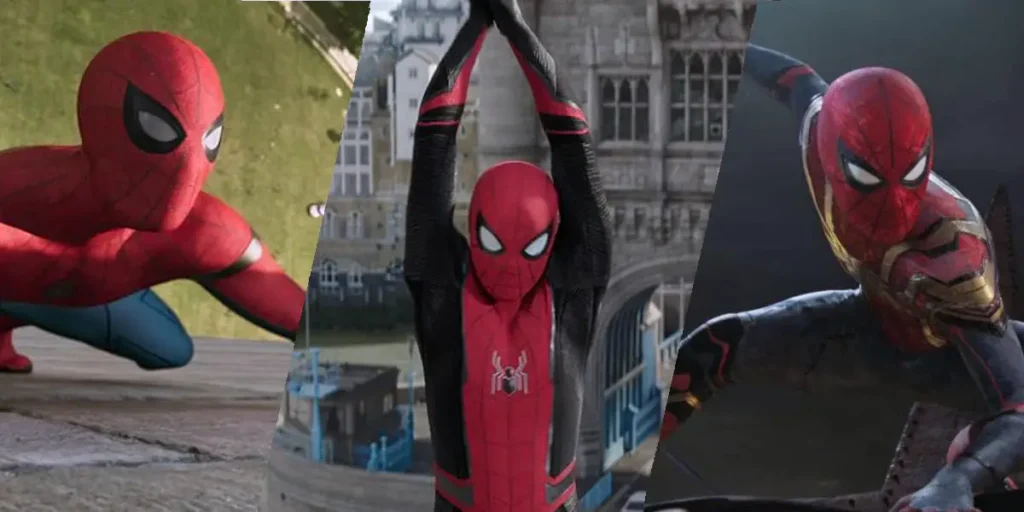
In our retrospective, we recap and analyze the three films in the MCU’s Spider-Man trilogy chronologically, and look at the story they tell as a whole.
Everyone loves Spider-Man! Or, at least, everyone knows of Spider-Man, almost certainly more than any other Marvel comic book character. His true name is Peter Parker, he got bitten by a radioactive spider, got spider-based superpowers as you do, lost his Uncle Ben, subsequently swore to fight crime, and with great power comes great… I forget the rest. But when this character joined the Marvel Cinematic Universe, or MCU, he got a trilogy of movies with Tom Holland (The Odyssey) starring as Peter Parker himself.
The movies in question are Spider-Man: Homecoming in 2017, Spider-Man: Far from Home in 2019, and Spider-Man: No Way Home in 2021. This trio of films, which I’ll call the Home trilogy, is already in a strange spot by being so entangled in the larger MCU storyline. But even in terms of their self-contained quality, the films are full of ups and downs. In fact, I’ll say upfront that I don’t consider any of them remarkably great. But I do find them all fascinating to talk about, especially with the general consensus on them fluctuating constantly over the years.
So, that’s what we’re doing. We’ll go through the three films in the Home trilogy chronologically, discuss each one – with spoilers aplenty, so be warned – and recap the overall story they tell as a whole. With that out of the way, let’s swing into the MCU Spider-Man Trilogy!
Spider-Man: Homecoming
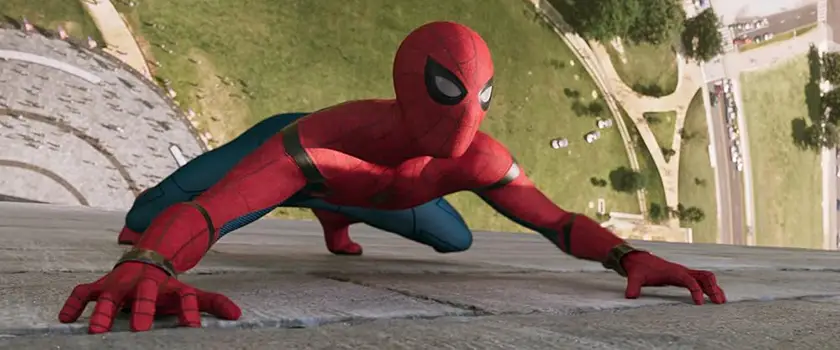
After making an appearance in Captain America: Civil War, Tom Holland’s Peter Parker got his first proper film with Spider-Man: Homecoming. We already learned from Civil War that he’s a high schooler superhero in Queens, New York. But now that he’s under the wing of Tony Stark/Iron Man (Robert Downey Jr., of Oppenheimer), Peter feels the urge to prove himself by thwarting the high-tech schemes of Adrian Toomes (Michael Keaton, of Knox Goes Away). Though he has the help of his best friend Ned (Jacob Batalon, Novocaine), he quickly finds himself in over his head.
Though Holland does well with his brief time in Civil War, this is the film that cements him as a perfect fit for this version of Parker. For one thing, he could actually pass for a teenager at this point in his life, unlike previous versions. He brings an endearing awkwardness that sells the character’s underdog status without losing the quick-witted energy you’d expect in someone who does what Parker does. Holland also nails the film’s heavier moments – what few there are – showing range that would be expanded in the sequels.
I like the idea that Spider-Man is a much more small-scale hero compared to other versions. He may be powerful, but he’s established as just a local hero helping with local problems. Him being early in his “career” sells why he’d have trouble taking down even somewhat low-key threats like Toomes’s forces. But then, when he loses his high-tech suit, it’s cathartic to see him still go up against those dangers and prevail with only his raw power and wits.
Homecoming is a much breezier Spider-Man movie than we’d seen before, so it’s good that the film is really funny. The school environment is filled with entertaining side characters, including Peter’s classmate, MJ (Zendaya, of The Drama). I’ll put on the hipster glasses and say she already won me over with this movie before she won over everyone else. This is also weirdly the prettiest movie in the Home trilogy. The effects aren’t great, but the colors leap off the screen and the angles – particularly in a Washington D.C. sequence – put you in Spidey’s inexperienced shoes.
Overall, Spider-Man: Homecoming is a decently fun flick. It’s also my least favorite of the trilogy, and the main culprit is Peter’s motivation. Nothing about the writing or acting indicates that Uncle Ben, whose death usually kickstarts Spider-Man’s heroism, ever even existed. Instead, Peter’s motivation is to get his big shot with the Avengers, until he remembers the value of remaining a lowkey hero. So, you’ve got a decent arc in there. But the film acts like there was always more to his choices than just wanting that opportunity.
When I see shots of Peter gloomily looking down on his friends, wishing to join them but sticking to his duty, I get the impression that he feels a legitimate sense of duty to do the right thing. My question is: where did that come from before he met Stark? Just a good nature? That’s fine, but it makes for a very basic hero, especially for someone this young doing things this dangerous. I just don’t have a firm grasp on what’s driving Spider-Man in this Spider-Man movie.
And I especially don’t get what he’s supposed to have learned. Stark tells Peter to stay close to the ground, Peter ignores him, and Stark takes away the suit. Peter finally obliges, but he eventually still goes after the threats against Stark’s orders. Except this time, he succeeds, and Stark prepares to make him a proper Avenger. Only for Peter to turn him down and say he’s learned the value of staying low. Even though he just proved he can handle going bigger, and he would join an intergalactic battle in Avengers: Infinity War with no hesitation. This makes no sense.
It doesn’t help that Toomes is a pretty toothless villain. He’s played to perfection by Keaton and has a great design for his Vulture suit. His reveal as the father of Peter’s crush leads to hilariously uncomfortable tension that ends with him chillingly threatening to kill Peter if he crosses him again. Except that never happens, and Toomes never actually does anything that gives him a sense of menace. He can’t even give us a decent climactic fight, which is done through poorly lit shaky cam on a cloaked plane where it’s impossible to make anything out.
I liked Spider-Man: Homecoming quite a lot when I first saw it. But it’s gotten worse and worse every time I think about it, and a rewatch has cemented these feelings. It’s a fun, often hilarious movie with great moments, and it’s “objectively” better than something like The Amazing Spider-Man 2. But it’s my personal least favorite Spider-Man movie for missing so much at its core, leaving no impact outside of setting up Holland’s future outings as the character. Thankfully, those outings would outshine this one in their own ways, so it’s all an uphill wall climb from here.
Spider-Man: Far From Home
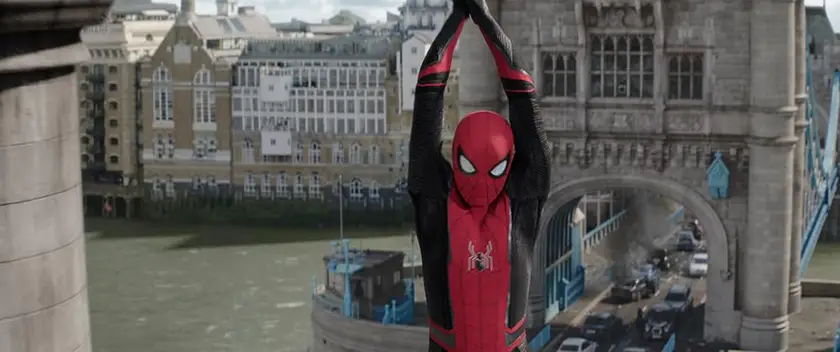
Well, if my opinion on Homecoming isn’t the hottest take here, then this one definitely is: for me, Spider-Man: Far From Home is easily the best film in the Home trilogy. It’s still not exceptional, but it gets the most right with the most interesting story of the bunch. The film takes place after Avengers: Endgame, in which half of humanity was revived after being dead for five years. However, after Tony Stark’s death, the recovering world is looking at Spider-Man to be the next grand hero leading the way forward.
At the same time, Peter’s class takes a field trip across Europe, where Peter is recruited to help the new hero Quentin Beck, aka Mysterio (Jake Gyllenhaal, of In the Grey), fend off the evil Elementals… Except not really, because it turns out Mysterio is a master illusionist who is scheming to become a beloved hero by taking down the destructive forces he himself concocted. Of course, this forces Spider-Man to step up as the real hero to take Mysterio down.
Right away, Far From Home gives Peter Parker something that Homecoming didn’t: actual turmoil. With Tony gone, he feels intense pressure to step out from his mentor’s shadow, with reminders of Tony literally hovering over him. He knows he needs to take on more responsibility – oh, that’s how the saying ends! – while also wanting to step up his personal life through a relationship with Zendaya’s MJ. Except this time, that inner conflict makes more sense and is more relatable because of the new circumstances.
The public’s need for new heroes in such an uncertain time gives Peter’s choices more weight and is perfect for a villain like Beck to come in and exploit. Things have gotten so crazy in the world that, as Beck puts it, people will believe anything. At the same time, the film doesn’t conclude that Peter should be the next Iron Man specifically. It shows their similarities, but we’re reminded that Tony the man was much more flawed than Tony the hero as the public knew him.
It’s that heightened hero worship that both intimidates Peter and entices Beck, but the former succeeds when he embraces his own strengths just because he needs to, not to step into a legend’s shoes. He even winds up with MJ by the end, and I can’t remember the last time I was ever rooting for characters to get together as much as these two.
Mysterio is a great foil to Peter in that he wants all the attention and glory that Peter fears. His use of illusions is genuinely clever, keeping both Peter and the audience guessing and paranoid. And that’s not even including the film’s most elaborate sequence of him assaulting Peter with trippy vision after trippy vision. Beck is pathetic enough to be funny but deranged enough to be a threat since he – unlike Toomes – actually tries to kill the people he threatens to kill, including a whole group of totally innocent children just to keep his schemes hidden.
Now, Far From Home doesn’t escape all the trappings of Homecoming. While the tone is relatively more dramatic, its lightheartedness sticks out even more in a film that comes after Infinity War and Endgame. The events of those movies are so monumentally traumatic and world-changing that they need a much more serious follow-up than this. Plenty of superhero films have mixed fun and seriousness together, but this one can’t pull it off without sometimes feeling fluffier than it should be.
The action is definitely better than Homecoming. The Elemental ruse allows for more elaborate fights and moves for our hero, the scope of Beck’s final ploy makes for a more intense and creative climax, and Spider-Man just has more thrown at him in rapid succession to keep the tension up. Far From Home may also have the most satisfying use of spider-sense in any movie, both narratively and in how the sequence is shot. Setting the movie mostly in Europe also makes it visually distinct from other live-action Spider-Man movies, although the setting isn’t used to its greatest visual potential.
Unfortunately, the already iffy effects from Homecoming take an even greater hit here. You could argue the Elementals looking fake gets a pass because… well, they are fake. But when the rest of the action also has almost comically flat lighting and explosions from time to time, I chalk it up to the same cut corners that would only get worse in the MCU afterwards. It’s just not as pretty a film in general compared to Homecoming, though it’s far from bad in that department.
Spider-Man: Far From Home was well-liked when it came out, but it’s since become the black sheep of the Home trilogy. Maybe that’s because it falls awkwardly in between the pure jauntiness of Homecoming and the darker somberness of No Way Home, or maybe it’s too outside the norm for a Spider-Man movie. Whatever the reason, I’m definitely the odd one out in calling this my favorite of the trilogy, even if its flaws are more apparent nowadays. Everything about the film just gels better than in the movies before and after it. How would things fare from here? Well… it’s complicated.
Spider-Man: No Way Home
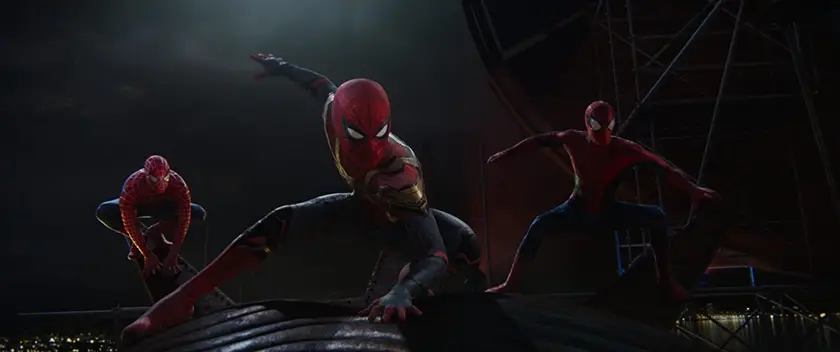
In the mid-credits scene of Far From Home, Spider-Man is framed for Mysterio’s attacks and has his secret identity exposed to the world. So, what do we now? Bring in characters from other Spider-Man continuities, apparently. Peter asks the sorcerer Doctor Strange (Benedict Cumberbatch, of The Phoenician Scheme) to make everyone forget that he’s Spider-Man. But when he keeps adding caveats that mess up the spell, he decides it makes more sense to have everyone forget the video that outed him. Oh, I mean the spell goes haywire and summons characters from across the previous two series of Spider-Man movies.
Villains like Norman Osborn (Willem Dafoe, of Nosferatu) show up, as do the fellow Spider-Men played by Tobey Maguire (Molly’s Game) and Andrew Garfield (In the Hunt). With that, the whole dilemma of Peter’s identity being public suddenly takes a major backseat… And you can probably see my main issue with this movie. We have the first movie to ever begin with a fully outed Spider-Man, which should open up tons of personal stakes and ramifications on its own. But instead, this was somehow chosen as the time to do a crossover with other Spider-Man movies, to a point where basic logic is bent and twisted to make it happen.
I thought my initial disappointment would diminish with time. But when the early stretch of the movie itself is exploring Peter’s new life, the abrupt shifting of gears still feels as forced and unnecessary now as it did years ago. Which is why it still shocks me that I overall enjoy Spider-Man: No Way Home. While the idea is deeply flawed, the execution is handled with a shocking level of gravitas and intelligence.
When Maguire and Garfield are talking to Holland’s Parker about their lives and how they relate to him in the wake of tragedy, it doesn’t come across like the laughable fanfiction I’d first expected. The dialogue is exactly what you would want these characters to say to each other given what’s going on, and everything is still centered around the Spider-Man we’re supposed to be focusing on. You could know nothing about Maguire or Garfield’s movies but still understand who they are and why they matter to Peter now.
This is Holland’s best performance as the character to date. He’s dourer, more hardened, but also more earnest than ever before. The notion of his responsibility is also pushed to its limits when he wants to redeem what he recognizes as tragic villains. Because he’s the outsider looking in, and because of how he’s grown over the other movies, this goal comes across as very fitting. He’s encouraged by his Aunt May (Marissa Tomei, of The King of Staten Island), whom I haven’t mentioned because she’s been a non-presence until now. But the character is wonderful here, proving she’s Peter’s aunt through her own selfless bravery.
The major villains themselves are just as believable and don’t feel solely like fan service. Osborn and Otto Octavius (Alfred Molina, of Raiders of the Lost Ark) pick up right where they left off and are used exactly how they’re needed to. Osborn in particular is terrifying. He’s like a demon from a past that Peter never had, but one that nonetheless is here to haunt him just for his decision to be Spider-Man. Between him and the well-directed dark moments like May’s death, this is the weightier tone I think a lot of people want in a Spider-Man movie. It’s nice that we finally got here.
Now, I don’t know where other villains like Electro (Jamie Foxx, of Baby Driver) and Curt Connors (Rhys Ifans, of The King’s Man) came from, but it sure as hell wasn’t their original Spider-Man movies given how differently they act. These guys do feel like fan service for the sake of it, and it’s painfully obvious that the actors who play Connors and Flint Marko (Thomas Haden Church, of Wake Up Dead Man) are only voicing their characters’ CGI forms. Doctor Strange fares better, but he’s really only needed to crowbar this plot into existence and give us a fight between him and Spider-Man.
No Way Home boasts some of the best imagery and most visceral hand-to-hand action in the Home trilogy… as well as some of the shoddiest effects and most basic filmmaking that was clearly restricted by the COVID-19 pandemic. You can’t get characters all in the same frame as much as you’d like since production needs to be more cautious, for instance. I understand the situation, but the film doesn’t hold up incredibly well now that the pandemic is behind us (thank God).
To be fair, it’s amazing the movie looks as competent as it does given those circumstances. Peter swinging through an evening sky and brooding over a rainy night are perfect Spider-Man iconography, as is the fantastic tracking shot of him slowly walking through a room when he senses Osborn’s “Goblin” persona has awakened. In general, the film is more willing to take its time, letting heavy or even just bizarre moments sit with you longer. Even outside the theater, these pauses serve a point other than applause moments.
This all brings us to an ending that, sadly, is almost as shoddy as the inciting incident. After depowering the villains and sending them home, Peter tells Strange to cast one more spell that makes the world forget Peter Parker even exists. Because… I guess the multiverse’s tearing revolves around his identity? Would erasing everyone’s memory of Spider-Man instead fix the problem? The initial spell already made little sense to begin with, but now its flimsy logic is being used to effectively reset Peter Parker’s entire place in the MCU.
Part of me loves what a cruel resolution this is. Peter goes from the enthusiastic, energized kid we saw in Civil War to someone who loses literally everything. His final interaction with MJ, in which he chooses to let her go, is nothing short of devastating. But the way the sacrifice is decided upon and carried out makes it feel less like a natural conclusion and more like Marvel’s quick way of getting to start over with the character, without the previous MCU baggage. Spider-Man must be the scrappy, unprivileged loner again, so here we are.
Even though, in the upcoming Spider-Man: Brand New Day, Peter Parker will still apparently get in with MJ and probably Ned. In which case, what was the point of making this sacrifice in the first place? I can’t say for sure since the film isn’t out as of writing this, but the whole thing just feels off.
Spider-Man: No Way Home is such a weird movie. It’s one of the most blatant forms of nostalgic pandering we’ve ever seen, but it’s often handled so well that I forget my cynicism. It makes a lot of bold choices, but at the cost of the boldest, juiciest choice the last movie made. The premise and resolution are both incredibly problematic, but there’s a really good film sandwiched in between them. I’m still impressed that it works more often than it doesn’t, but it has way too much baggage for me to call it a great end to the character’s Home era.
Thoughts on the MCU Spider-Man Trilogy
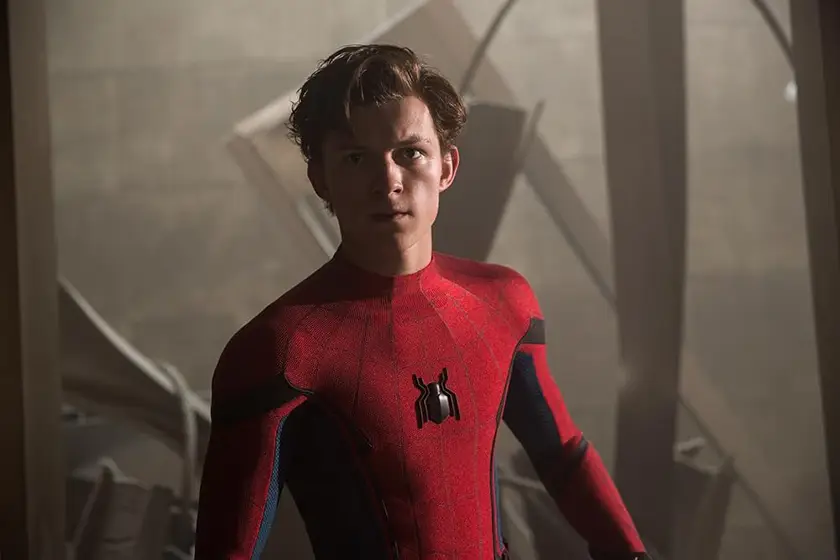
If you couldn’t tell by how many moving parts I had to establish from the wider MCU, the Spider-Man Home trilogy can only loosely be called a “trilogy.” But that’s par for the course for a lot of MCU characters, so I won’t hold it against Spider-Man just because he’s the definitive Marvel hero. Still, these Spider-Man movies are weird in how, as one big story, they do a lot right while also having tons of cracks at the seams. With a lack of established motivation, many extraneous circumstances, and a huge last-minute swerve to the multiverse, the signs of an ill-defined plan are in plain sight.
Plus, while director Jon Watts is clearly talented, the style he brought to all three films doesn’t stand out nearly as much as you’d want for a character this huge. There are flashes of it, but rarely is there anything that feels as epically huge or deeply intimate as what the best Spider-Man movies have brought us.
All those complaints aside, every film in the Home trilogy still has a lot to offer and tells at least part of a great story that almost anyone should enjoy. Homecoming has a quirky charm and innocence, Far From Home has solid character growth and even a weirdly meta look at superheroes, and No Way Home has an emotional culmination of generations of Spider-Man movies. All three films have generally good senses of humor, really likeable casts anchored by a great lead, a fair bit of solid action, and the difficulties that we all want to see this character deal with.
We’ve watched a kid from Queens step into a complex world before he’s ready, face the consequences of entering this world, overcome personal losses, and finally be forced to start a new life. On paper, it’s maybe the best multi-film storyline for any MCU character, and a lot of that strength – if nowhere near all of it – comes through in the final product. It’s hard to know where Tom Holland as Spider-Man will go from here, and it’s even harder to know what people will think of it. But despite the road bumps getting here, we’ll probably always be curious to see him do whatever a spider can in this universe.
The first three movies in the Spider-Man MCU Trilogy are now available to watch on digital and on demand. Spider-Man: Brand New Day will be released globally in theaters on July 29, 2026. Read our retrospectives on the Before Trilogy, the Matrix movies, and the How To Train Your Dragon trilogy!