
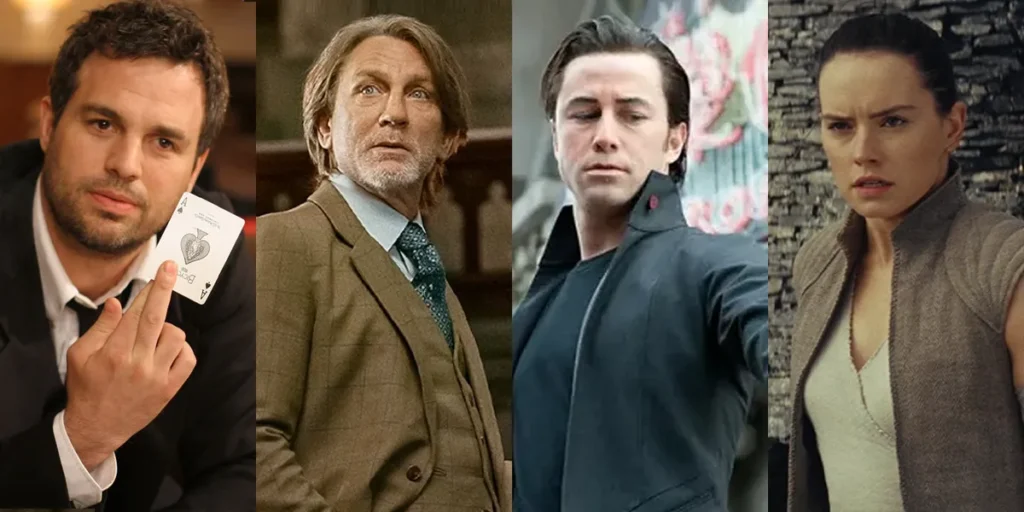
It’s time to look over all of the diverse, original films of writer/director Rian Johnson, including Wake Up Dead Man, ranked from worst to best!
Rian Johnson is one of the most fascinating filmmakers and writers working today, and one of my personal favorites. He started out from humble beginnings with a small indie, and he and his closest associates have gone on to work on some of the most successful and widely discussed films of the past ten years.
He hasn’t always been universally loved by moviegoers, and I think you all know exactly when he received most of that disdain. But his subversive, original stories, crisp and lavish cinematography (on behalf of longtime collaborator Steve Yedlin), and ability to weave between a variety of genres have allowed him to persevere as a respected talent in the business whose craft becomes more refined with each film he makes. And with Wake Up Dead Man now under his belt, many will be discussing where it ranks in his filmography as a whole. I’ve done the same thing, and so let’s go through all of Rian Johnson’s films, ranked from worst to best!
7. Brick (2005)
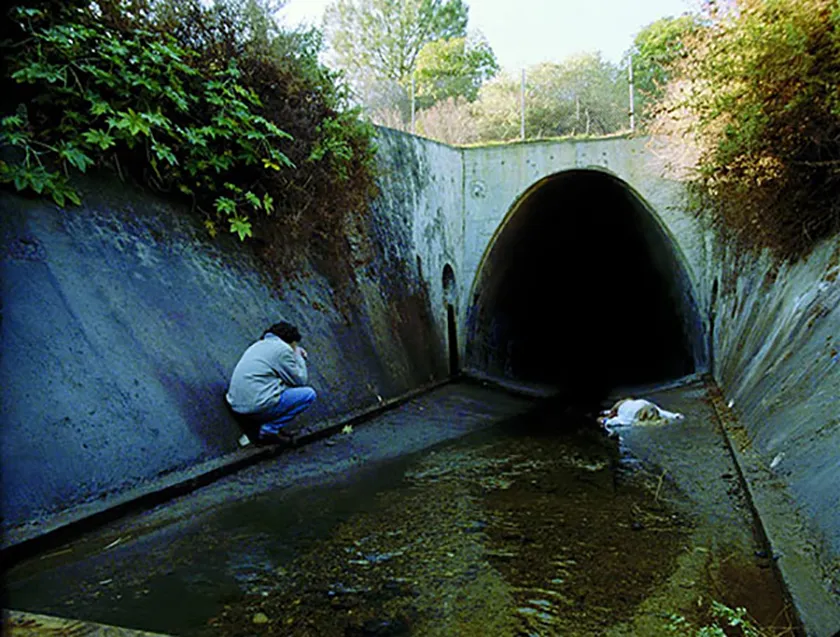
For his feature-length debut, Johnson went for a noir mystery with the unique setting of a high school environment. Teenage student Brendan (Joseph Gordon-Levitt, The Dark Knight Rises) finds himself entangled with a criminal underworld when his ex-girlfriend Emily (Emilie de Ravin, Remember Me) goes missing, seemingly linked to an illegal drug deal. Brick is a noir through-and-through, and the high school setting creates an interesting lens for the gangs, secrets, betrayals, and other typical tropes we see in the more “adult-centric” movies of this genre. This makes Brendan feels more vulnerable as he ends up getting in way over his head, forced to face the physical and emotional consequences of his persistent search.
The dialogue is also clearly paying homage to classic noirs… though at the cost of these high schoolers not sounding anything like high schoolers. The attempts to make their lines sound young and fresh while also making them sound old-fashioned and cinematic really don’t work for me. They feel out of place and compromise the merits of having teenagers in these roles. Brick looks incredible for its minimal budget. It resembles a student film in ways that add to its charm and show how much talent Steve Yedlin had even in the early days of his career. And Johnson himself shows a lot of the abilities and stylistic flair that he would polish in his films to come. As for this first outing, Brick is a good, fun, bittersweet mystery despite the cracks at the seams, and it paved the way for some of today’s most exciting filmmaking talent.
6. The Brothers Bloom (2008)
The Brothers Bloom is the often-forgotten black sheep of Johnson’s career, but I really don’t think it deserves to be. Already boasting a more high-profile cast than Brick, the film stars Mark Ruffalo (Poor Things) and Adrien Brody (The Brutalist) as Stephen and Bloom, two brothers who have grown up pulling off cons using scenarios scripted by Stephen and acted out by Bloom. They set their eyes on eccentric heiress Penelope (Rachel Weisz, The Favourite) and take her on a journey across the world, but Bloom begins a romance with her that complicates Stephen’s plan… or does it?
That’s one of the most intriguing aspects of The Brothers Bloom. Stephen is established as such a good schemer that we’re constantly questioning how much of what we’re seeing has gone according to his designed story. Is he planning on conning his brother in the long run? Has anything we’ve seen been unwritten by him? Or is he trying to create something entirely different out of this setup?
That mystery is carried by the bizarrely charismatic relationship between Stephen, Bloom, and Penelope. Brody gives a great performance as the shy, uncertain, paranoid Bloom that you hope can find the “unwritten life” beyond his conning days that he’s looking for. Ruffalo keeps you guessing, and Weisz makes her character’s many oddities feel surprisingly authentic. Johnson always manages to infuse genuine character and emotion into his famous/infamous expectation subversions, and this film, especially its resolution, is no exception. The Brothers Bloom also has my favorite score from Johnson’s composer and cousin Nathan Johnson, which sizzles with old-school flavor and adapts to each situation perfectly. The film doesn’t lean into its meta potential as hard as it could have, and the offbeat humor misses almost as often as it hits, but The Brothers Bloom still comes through as an overall funny, charming, and surprisingly heartfelt tale.
5. Star Wars Episode VIII: The Last Jedi (2017)
Read also: All Star Wars Movies Ranked from Worst to Best
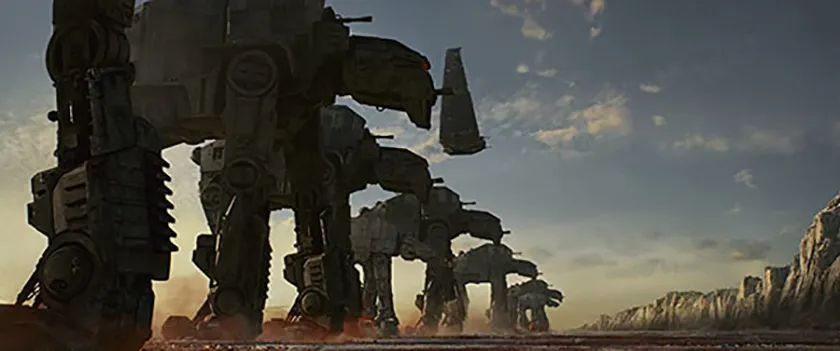
I’m sure some Star Wars fans will want this film to be ranked #5000 out of the possible 7. The Last Jedi is Rian Johnson at his biggest, most subversive, and most polarizing. This eighth Star Wars “episode” picks up after The Force Awakens, with Rey (Daisy Ridley, Sometimes I Think About Dying) confronting Luke Skywalker (Mark Hamill, The Long Walk) and uncovering the events that led him to his self-imposed exile, while the rest of the Resistance tries to escape the now-dominant First Order.
The Last Jedi holds its characters, and the entire saga, under a microscope, challenging perceptions of identity, duty, and the line between humanity and legend at nearly every corner. Every big choice is welcome, often necessary, and pulled off with all the emotional weight and grandeur you’d want in a Star Wars movie. This is easily the best-shot, best-looking film in the entire franchise, with framing devices and set pieces that fit right in with classic Star Wars iconography and memorably represent the themes of the story.
I even like the much-maligned subplot with Finn (John Boyega, Breaking) and Rose (Kelly Marie Tran, Raya and the Last Dragon) trying to save the Resistance, as it gives Finn the drive to fight for more than just himself and shows us glimpses of the broader galaxy’s systemic issues. But they are just that: glimpses. The Last Jedi is given credit for its boldness, but its biggest problem it is that its larger worldbuilding is too safe. The central characters and relationships are handled extremely well, but everything surrounding them is so minimally explored, forcing us to infer way too much regarding what led to where we are now. But that doesn’t stop The Last Jedi from being the best, most innovative film in the series under Disney’s reign, and the only entry of the Sequel Trilogy that understands the core of its franchise’s story and allows it to evolve.
4. Glass Onion: A Knives Out Mystery (2022)
After breaking into the murder mystery genre with 2019’s Knives Out, Rian Johnson crafted a sequel in Glass Onion that continues the laughs, thrills, and surprising social relevance of its predecessor. Detective Benoit Blanc (Daniel Craig, No Time to Die) returns to find himself on a trip to Greece, where he meets tech billionaire Miles Bron (Edward Norton, A Complete Unknown). When a murder occurs, Blanc must step in and unravel the pasts and motivations of the other guests.
Glass Onion is packed with bigger, crazier twists and turns than Knives Out, and not only does it maintain its focus, but that excess is precisely the point and a defining aspect of the film’s themes. The use of noise, blaming, and needless complications all reflect how those very tools can be used to mask a greater danger that continues to get ahead. This is easily Johnson’s funniest film to date, and his passion and adamant rage towards the state of the world come across clearly, especially in the film’s insanely cathartic climax.
But Glass Onion still thrives as the kind of fun mystery most people would come in wanting to see, with standout characters that you either love to root for or love to hate. The story takes a little time to really get going, but it picks up exponentially the more it moves along, simultaneously catching you off-guard and having you face-palm at the surprises that were always hidden in plain sight. Johnson and Yedlin also visually keep the energy up in just the right places, taking full advantage of the film’s exotic location and especially the extravagant, glass-covered building most of the story takes place in. Glass Onion may not be quite as fresh a murder-mystery as its 2019 predecessor, but it’s absolutely worthy as a follow-up and a great film in its own right.
3. Wake Up Dead Man: A Knives Out Mystery (2025)
Wake Up Dead Man is largely the least “subversive” Knives Out movie, but it’s hard to care when it’s also the heaviest and most mind-bending. Craig again plays Blanc, who is summoned to investigate a murder in a small-town church, at the center of which is the troubled Reverend Jud Duplenticy (Josh O’Connor, Challengers). Duplenticy is the clear protagonist and the single best character in the series outside of Blanc. His noble faith-based intentions are pitted squarely against not only the callously corrupt Monsignor Wicks (Josh Brolin, The Running Man), but his own unsavory past and the dark impulses that make him human. Rather than bashing religion as a whole, Wake Up Dead Man shows how easily its institutions can be poisoned by those either acting in bad faith or in too deep to make the right choices.
This is Johnson’s best-looking movie outside of The Last Jedi. The church setting lends itself to grand, sweeping, sometimes grizzly imagery that’s right out of an epic Biblical story. While the film retains the typical Knives Out humor, it’s noticeably darker, even leaning on the fringes of psychological horror in a couple of places. It all feels justified, as Wake Up Dead Man is a slow descent into a miniature religious war, using so many manipulative tactics that even the viewer may start questioning what’s real.
Blanc may not be the focus like in Glass Onion, but he’s still challenged to look deeper within himself to navigate his suspects’ complicated world. The film still presents a good mystery with moving parts that catch you off guard, but this is a case where you come for the genre goods and stay for an examination of what happens when religious needs and human frailty nastily collide.
2. Knives Out (2019)
A big hit with critics, a big hit with general audiences, and the start of a new era in Rian Johnson’s career, Knives Out uniquely turns the whodunit film genre on its head in a way no films, even its sequels, can quite recapture. Daniel Craig makes his first appearance as Benoit Blanc, a detective who must investigate the supposed suicide of mystery novelist Harlan Thrombey (Christopher Plummer, All the Money in the World), and the dysfunctional family he’s left behind.
What follows is a different story than most probably expected going in, but one that still keeps you on your toes. It also gives you an increasingly likeable protagonist in family nurse Marta Cabrera (Ana de Armas, Ballerina). The ensuing mystery is cleverly, seamlessly intertwined with strong, surprising commentary on the history of entitlement, subjugation, and how we treat certain people, with parallels that could be endlessly analyzed and discussed.
Some of the best film characters in recent years come from Knives Out, including Blanc and a hilariously unhinged Chris Evans (Materialists) as one of Harlan’s grandsons. Even the most scarcely used of these characters contribute something to the film’s ideas and personality, and they’re all just the right level of over-the-top without going too far. Knives Out is also packed with smart foreshadowing, tight editing, slickly composed music from Nathan Johnson, and a mansion filled with countless visual flourishes that make up some of the best production design Johnson’s ever had in his movies. Everyone brought their knives out for this one, and they all carved out a brilliant, funny, heartfelt, stylish, and boldly topical film that’s one of my favorites of the 2010s.
1. Looper (2012)
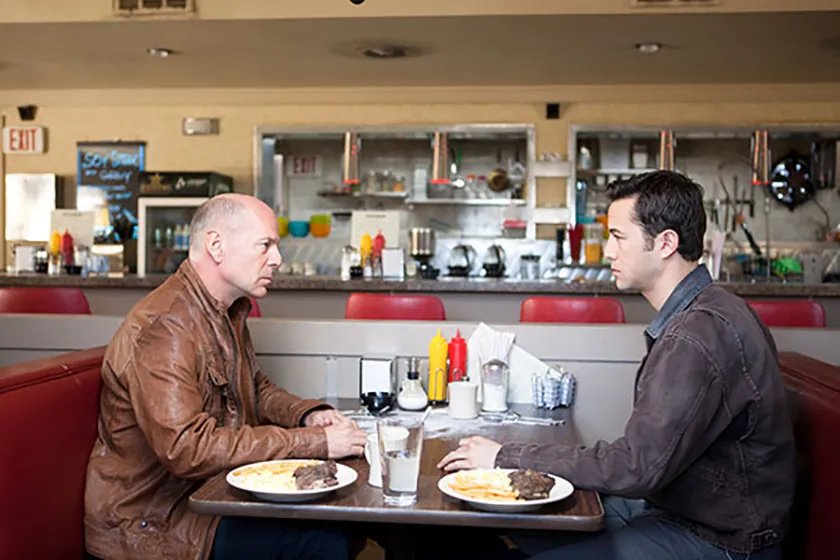
Looper was many people’s introduction to Rian Johnson, myself included. And even today, it remains my favorite film of his and one of my favorite films, period. The sci-fi/action flick takes place in a future where time-travel exists illegally and assassination targets are sent back in time to be killed by “loopers.” One looper, Joe (Joseph Gordon-Levitt), is given the target of his future self (Bruce Willis), who escapes and seeks to better his life through drastic means.
That premise alone is already amazing, but it’s made even better with the relationship between Joe and “Old Joe.” Joe’s altered actions change Old Joe’s memories in real-time, and their differing views on the same life – their own – give fascinating insight into both of them. You can see the roots of Old Joe’s current mental state in Joe, and getting the upper hand requires Joe to look inward at his cold, hardened, short-sighted perception of time and people.
Looper is by far Johnson’s darkest, most aggressive film, leaning into the white-knuckled action and gritty uncomfortableness that its R rating allows. Like Wake Up Dead Man, it occasionally reminds me of a horror film (which makes me really want to see how Johnson would take on that genre), and Steve Yedlin and Nathan Johnson impressively adapt their usual styles to match that tone. Yet in the face of selfish needs and hardship, the importance of love and compassion slowly creeps its way into the story and becomes critical to its powerful conclusion.
Looper’s second half shifts the focus to a single mother (Emily Blunt, Oppenheimer) raising her son (Pierce Gagnon), who are both caught in Old Joe’s crosshairs. It’s not initially clear why the story is taking this route, but by the end you see that these two are pivotal to Joe’s arc and future. Johnson again takes a mind-bending scenario and infuses it with urgently personal themes. With its ingenious premise, darkly twisted portrayal of time-travel, exciting action, and beautifully realized emotional core, Looper stands tall as the best film in a director’s lineup already filled with great films.