
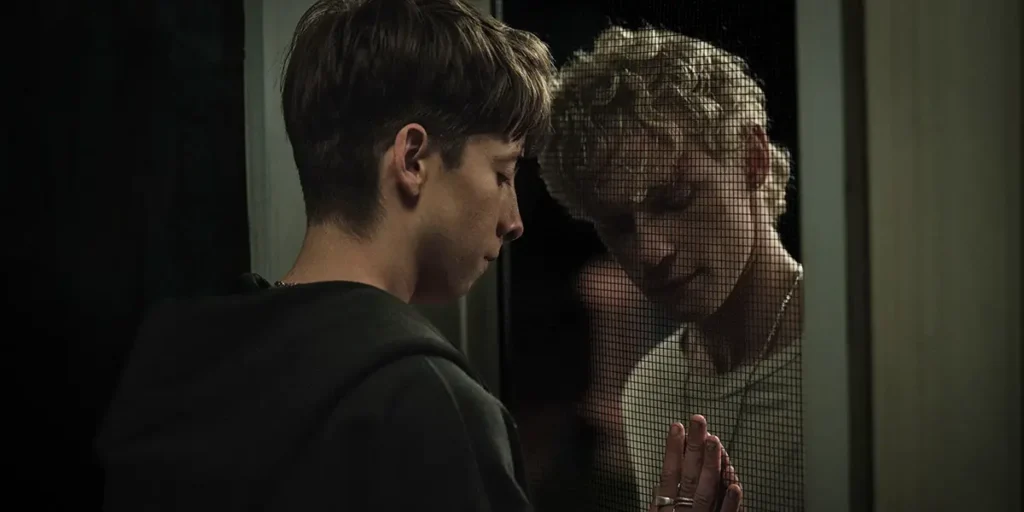
Leviticus, a queer horror-drama about the spread of fear, tells a soul-crushing tale of being cast out for not fitting social norms.
Director: Adrian Chiarella
Genre: Horror, Sci-Fi, Thriller, Romance, Queer
Rated: R
Run Time: 88′
U.S. Release: June 19, 2026 in theaters
U.K. Release: September 2, 2026 in cinemas
Pride month represents a time of acceptance, empathy, freedom, and self-love. It also reminds us of the system that has kept many in denial and paranoia for so long. Queer stories, told in any form, always attract attention. They’re especially effective through the lens of horror. Leviticus demonstrates this by telling the story of two young men falling in love and of a community, guided by fear and hate, actively trying to erase their existence.
Naim (Joe Bird, of Talk to Me) is at an age where he’s beginning to explore his identity and sexuality. He’s a shy, mostly quiet boy with no friends other than his mother, Arlene (Mia Wasikowska, of Crimson Peak). Ryan (Stacy Clausen, of Thrash) seems to be far more confident and easy-going. Both share a secret: they’re not attracted to girls. Following a series of lustful encounters with each other and others, members of their local church find out about their affair, summoning an entity that takes the shape of the person Naim and Ryan desire the most to hurt and prevent them from loving who they love.
There’s nothing subtle about what Leviticus is trying to convey. Writer-director Adrian Chiarella directly tackles the effects conversion therapy has on those in the LGBTQ+ community. By trying to uphold an old system, you’re only creating trauma and resentful individuals. The horror here doesn’t come from a creepy creature stalking our leads; it comes from a human place. We’re living in the 21st century—2026 as of this film’s release—and there are people, even parents, who would much rather see children lying dead on the sidewalk than let them be happy as who they are.
Bird and Clausen take on two roles that are more defined than your average tragic gay couple in a drama. Leviticus smartly establishes Naim’s relationship with his mother. At first glance, they seem to get along and have playful banter, and they do. It reveals his sheltered upbringing, which explains why he is constantly drowning in self-shame. As Naim begins to develop feelings for Ryan, who is exploring his options, Bird portrays a desperate need to be chosen. Desperation can lead someone to retaliate if they feel unwanted, and in Naim’s case, he uses Arlene’s playbook to hurt Ryan, outing him and accidentally setting in motion the events that later trap them both in the terrifying predicament of oppression by their church.
Naim could easily have been the kid an institution wronged. Just another victim. Instead, he’s a product of his mother’s beliefs, seeking to break free from such hateful patterns, both physically and spiritually. Clausen’s Ryan appears to fit the bad-boy archetype. Yet, there is a tenderness and vulnerability to how he’s portrayed that make him instantly easy to admire. He can be protective and rough, but also a frightened child who needs somebody to rely on.
While Leviticus has such a strong hold on its themes, I can’t quite say the same for its set pieces. After all, it is a horror movie: I should be worried when our characters are in direct danger from the demonic entity following them. That’s not really the case, though it’s not for lack of trying. Conceptually, having this shapeshifting creature take on Naim and Ryan’s form should automatically create a sense of tension and uncertainty.
Occasionally, it does, but mostly it feels gimmicky. In addition, since they’re the only ones able to see this entity, it falls into the trope of protagonists everyone thinks are crazy or making up what they’re experiencing. The set pieces that do stand out are the ones that, again, are more human-based. That includes a group of teens attempting to commit a hate crime against Naim and Ryan, Arlene ignoring her son’s signs of distress, or the rituals performed to “fix” these kids’ lives.
As Leviticus wraps up, Chiarella cleverly leaves the audience with a sense of uncertain hope. The kind of hate the queer community is subjected to will forever scar them emotionally and physically, but it’s important to remember you’re not alone in this journey. Leviticus might not fully succeed as a conventional genre piece, but it doesn’t need to in order to be effective. Its message of empathy and what happens when you force people to live in fear of each other is so strong that you forgive some of the film’s shortcomings. During an exciting time for this kind of movie, following Backrooms and Obsession, Leviticus continues to prove that there is no better genre for exploring the anxieties society is living through than horror.
Leviticus: Movie Plot & Recap
Synopsis:
Two teenage boys must escape a violent entity that takes the form of the person they desire most: each other.
Pros:
- Effectively creates horror through human experiences rather than relying on the supernatural side of its narrative.
- Joe Bird and Stacy Clausen go beyond stereotypes in queer media to bring to life two flawed yet beautiful characters.
- Strong themes tackling the consequences of oppressing individuals for who they are.
Cons:
- It’s rather basic in presentation.
- The set pieces are well done, though they don’t leave much of an impression.
Leviticus will be released in US theaters on June 19, 2026 and in U.K. cinemas on September 2, 2026.