

With 2025 nearing its end, let’s go through some of its films that need more love. Here are 14 overlooked and underrated movies of 2025!
The end of another year is here. Which means it’s time to have one last hurrah, say goodbye to 2025, and make our year-end Best Films lists before everyone’s had time to see everything. (Here’s ours.) But while certain movies prepare to soak up widespread awards praise, others are overlooked and forgotten for reasons I can’t always place. Or, some underrated films get more negative attention than I feel they deserve. I found myself feeling that way towards a lot of movies this year in particular, which is why we’re going over 14 films: 7 overlooked and 7 underrated.
As always, “overlooked” refers to films that I’d have figured would at least be widely talked about within the film community but got largely ignored. It’s not like I’m wondering why a $5,000-budget foreign indie would go unnoticed, for instance. “Underrated” is what you’d assume: movies that I believe got undeservedly mixed to negative reviews, even if they’re not all amazing. It’s become my tradition to bring some extra love to films like this, except this is the first time the new Russo brothers movie isn’t in my Underrated section. I doubt they were even trying.
With that said, let’s look over 14 overlooked and underrated movies of 2025!
7 Overlooked Movies of 2025
1. Magazine Dreams
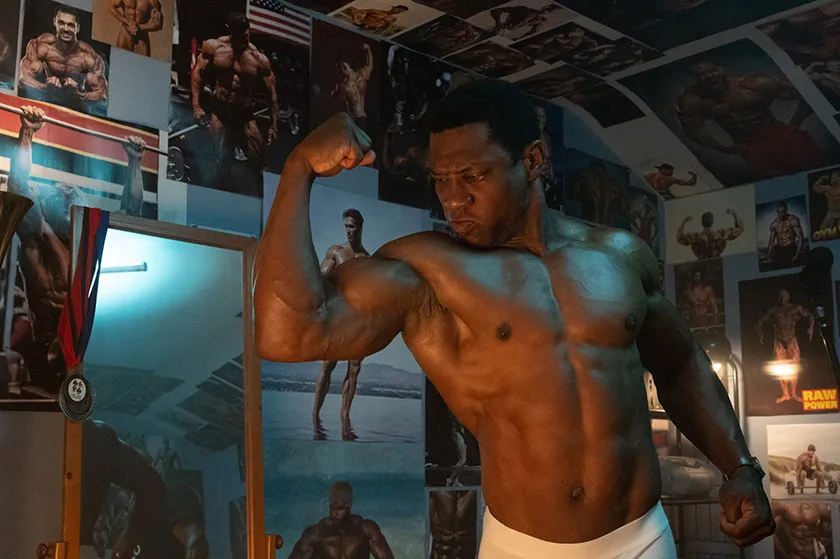
Okay, I know exactly why this one got overlooked: its lead actor was convicted of assault and harassment. The Jonathan Majors issue is its own discussion, but as a film, Magazine Dreams is a transcendent showcase for his acting. Majors (Ant-Man and the Wasp: Quantumania) plays aspiring bodybuilder Killian Maddox, whose struggles to achieve his dreams send him down a spiral of fragile hypermasculinity that puts Travis Bickle to shame. Whatever you think of Majors, he gives an all-time great performance here. He’s darkly funny, horrifically disturbing, and relatable in a way that makes you – without an ounce of irony – cringe every time his crippling awkwardness gets the best of him.
Magazine Dreams puts a fresh spin on its themes of toxic incel behavior by contrasting Maddox’s freakishly huge size with his pathetically fragile personality. It also highlights the cyclical nature of the self-destruction we see in men like him, which fuels the larger system of his industry, which in turn worsens his own conditions, and so it endlessly goes. It’s a cesspool that’s often very hard to watch but illuminating all the same. Had Majors not gotten into the trouble he did, I’m certain Magazine Dreams would have been a – I swear this wasn’t intentional – major awards contender for his performance. And if you can separate the art from the artist, you’ll see why.
2. The Surfer
How did we as a society let a Nicolas Cage thriller slip under the radar? The Surfer is about an unnamed man (Cage, Pig) who takes his son (Finn Little) to his childhood beach house that he’s trying to purchase. Not only is he struggling to secure the funds, but the new locals prove to be rather… unfriendly. In the same way someone shoving you into the dirt and pissing on your face is “unfriendly.” This whole movie is the slow descent of Cage’s character into madness, the cause of which is made increasingly unclear as the film turns into a sunny, heat-soaked haze. Director Lorcan Finnegan had previously done a film called Vivarium, and both movies show his knack for creating a darkly surreal experience.
What makes this one so good is that you feel Cage’s total hostile isolation from everyone else around him, to a point where it not only doesn’t feel real, but you almost wish it wasn’t real. But like a wide-open beach with no shade, there’s nowhere to hide. You can read into the themes of alienation and how far someone will go to belong, or you can just sit back and let the feelings that come from those themes wash over you. It’s probably easy to tell whether you will or won’t like the movie based on this description, but it at the very least deserves a more widespread discussion.
3. Don’t Let’s Go to the Dogs Tonight
With a title this nonsensical, I don’t blame anyone for skipping it. But Don’t Let’s Go to the Dogs Tonight is a charming look at a potentially uncomfortable point of view. It takes place in the middle of the Rhodesian Bush War, where 8-year-old White Zimbabwean Bobo (Lexi Venter) attempts to understand and cope with the love she has for people on opposing sides. The film can be unfocused, jumping from thread to thread without much cohesion, but it’s held together firmly by Venter’s debut performance. She’s naïve but not foolish, trying to learn the workings of a complicated world in her own eclectic way.
Centering the film around the point of view of a young child brings a sense of wonder and magic to what could have been a much bleaker story. Even the most cynical people in Bobo’s life can’t help but see the humanistic value she brings. But Don’t Let’s Go to the Dogs Tonight doesn’t shy away from those difficult truths either. It gives us enough of a taste of the surrounding reality and opinions to make for a balanced experience. Again, not an entirely focused one, but one that sheds light on a very specific time in history in a universal, timeless way.
4. The Life of Chuck
Read also: Top 15 Best Stephen King Movies, Ranked; The Life of Chuck: Movie and Ending Explained
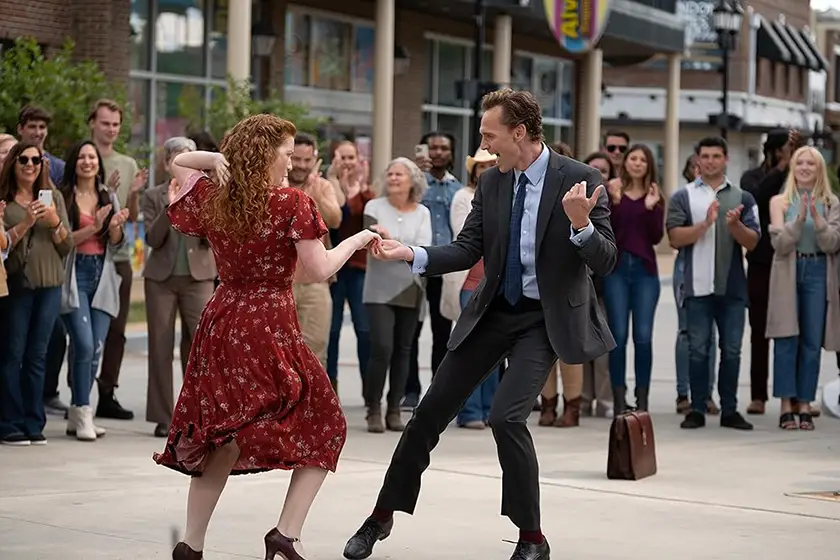
I’ve talked about this film so much that it’s hard to not repeat myself. But if more people actually gave it the time of day, we wouldn’t have that problem. The Life of Chuck is an adaptation of a Stephen King novella, with Charles “Chuck” Krantz (Tom Hiddleston, Loki) being an accountant on the verge of retirement. That’s all the media seems to care about, even though the world is nearing its end times with structures and societies collapsing. What makes Chuck so important to this world? Who is Chuck? Well, the movie goes through his past to find out, and the answers are somehow very simple while potentially mind-boggling.
Once more, it’s almost impossible to be concise with this movie, but it’s largely an exploration of how anyone, even someone as ordinary as an accountant, is their own sort of miracle just by being alive. Moments that we think are commonplace really define everything about us, and the universe in our heads continuously grows even when the lives we lead may look unremarkable. There are also tinges of horror, science fiction, and even musical to support the film’s story, making the whole thing feel like a grounded fantasy that’s drenched in emotional earnestness. Oh, and it’s directed by Mike Flanagan and narrated by Nick Offerman (Dumb Money). What about this warrants it remaining overlooked?!
5. Americana
After you’ve had fun watching Sydney Sweeney in The Housemaid, you could see her in another film that came out earlier this year. Sweeney plays an aspiring singer who teams up with hopeless romantic Lefty Ledbetter (Paul Walter Hauser, Springsteen: Deliver Me from Nowhere) to retrieve a highly valuable Lakota ghost shirt. But they clash with many other parties with their own vested interest in the situation, leading to the types of high-stakes action and showdowns you’d expect in a Western thriller. Another present genre staple is the quiet misery a lot of these characters are experiencing, which balances out the nuttier moments with a real sense of gravitas.
Americana isn’t a constant downer, as it makes room for fun dynamics and running gags, including a boy who claims to be the reincarnation of Sitting Bull. But it wants to pay tribute to old Westerns as much as it wants to deconstruct their roots, and it finds a good middle ground to achieve both. Sweeney is great as usual, but Halsey (MaXXXine) surprisingly steals the show as a deeply troubled mother with the most heartfelt storyline in the film. If you like movies with many parties getting involved in entertainingly complicated webs of tension and death, but want some soul under the surface, I can’t see you going wrong with Americana.
6. Splitsville
It’s ironic that people criticize Materialists for being a romantic comedy without much comedy, when a true Dakota Johnson comedy went completely overlooked this year. Splitsville tests the limits of polyamory when new divorcee-to-be Carey (Kyle Marvin, The Climb) gets involved with the open marriage of his best friend Paul (Michael Angelo Covino, Riff Raff) and Julie (Johnson), only for his separated wife Ashley (Adria Arjona, Hit Man) to find her own convictions challenged. The result is maybe not an indictment of open relationships, but a definite indictment on these people having open relationships. This quartet of unstable lovers brings out the worst and funniest in each other as their desires change, their actions escalate, and the situation spins out of control.
Splitsville is just plain funny, often downright hilarious. Its physical and performance-driven humor are especially top-notch, peaking with a fight sequence that’s worth the price of admission alone. But as off-kilter as it can get, everything is elevated by the legitimate investment that everyone brings to their roles. There are kernels of relatability at everyone’s core that help you at least understand why they’re making their poor decisions and feel for them the whole way through. Though something like the new Naked Gun has a higher laugh-per-minute ratio, Splitsville is my personal pick for the best, most well-rounded comedy I’ve seen all year.
7. Plainclothes
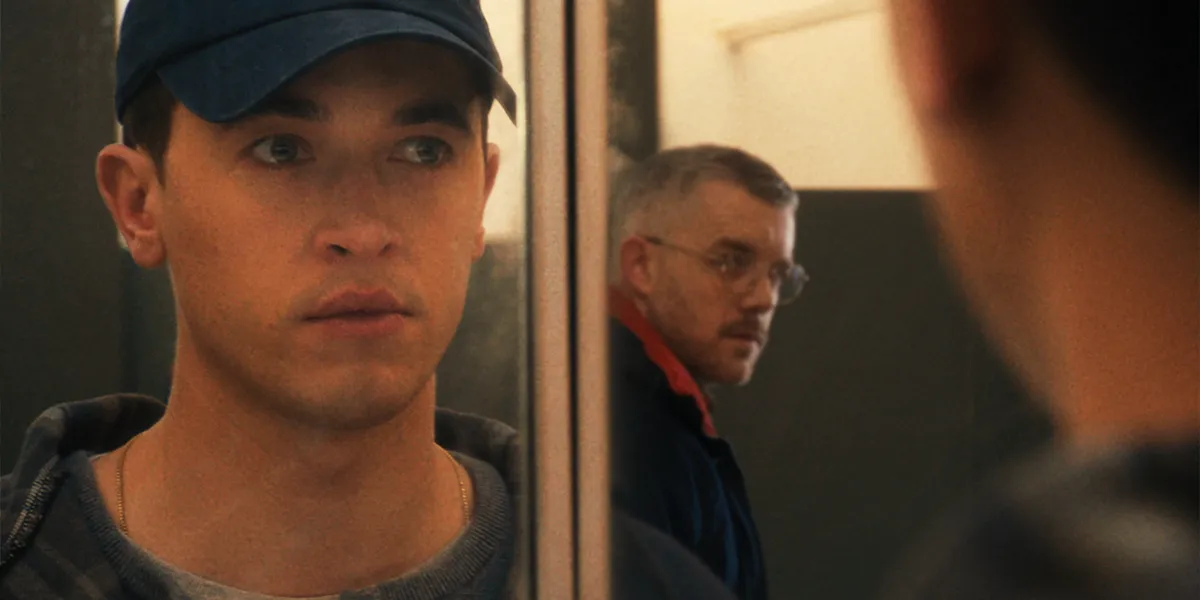
I never would’ve expected much mainstream attention for Plainclothes, but I’m surprised that it’s made no waves in critic or awards circles since its Sundance debut this past January. It tells the kind of story that’s sadly too real and too recent: Lucas (Tom Blyth, Wasteman) is a cop who partakes in stings to seduce, oust, and arrest gay men in 1990s New York. But he soon catches genuine feelings for Andrew (Russell Tovey, Looking), one of his targets whose personal life interferes with his own feelings.
These aren’t big names, but they’re not super obscure actors either, so it’s borderline criminal that neither of their performances stand a chance at getting nominated. Their moral conflict, pain, and muddled senses of self make for one of the most haunting experiences in a film this year. The filmmaking around them is just as serene and tragic, with first-time director Carmen Emmi taking several risks in how he portrays settings and time like a fever dream. Those risks may alienate some viewers, but I ate them all up. Plainclothes was never going to be a widely recognized movie, but it should have had some sort of presence. It’s one of the year’s best films; plain as that.
7 Underrated Movies of 2025
8. Love Me
Of all the underrated films listed here, Love Me is the one whose negative response I most understand. It takes place long after the extinction of humanity, when an artificially intelligent weather buoy (Kristen Stewart, Spencer) falls in love with a satellite (Steven Yeun, Nope). That is a weird-ass story, but for me, Love Me makes it consistently interesting even if it doesn’t always work. The progression of the AIs’ bond feels scarily accurate to how they – let’s be honest here – will actually do it in real life someday. Contrast that with the perfectly captured desolation of life on Earth, and the opening chunk of this movie is wholly engrossing.
The middle portion, in which the AIs go from stiffly robotic to full-on human-like in their exchanges, is where I can see Love Me losing people. It’s done in a cleverly off-putting way, but the characters’ leaps are way too abrupt, and the visuals aren’t strong enough to justify how long one particular setup plays out. But the film rebounds in the endgame when our leads have fully formed but very different perceptions of what being human even means. Just when you think their programming has been overridden, you find that it’s still at the foundation of their newly developed “humanity.” Love Me is weird, trippy, and not always logical. But it brings up a lot of scary points in what turns out to be an unsettlingly emotional story.
9. Wolf Man
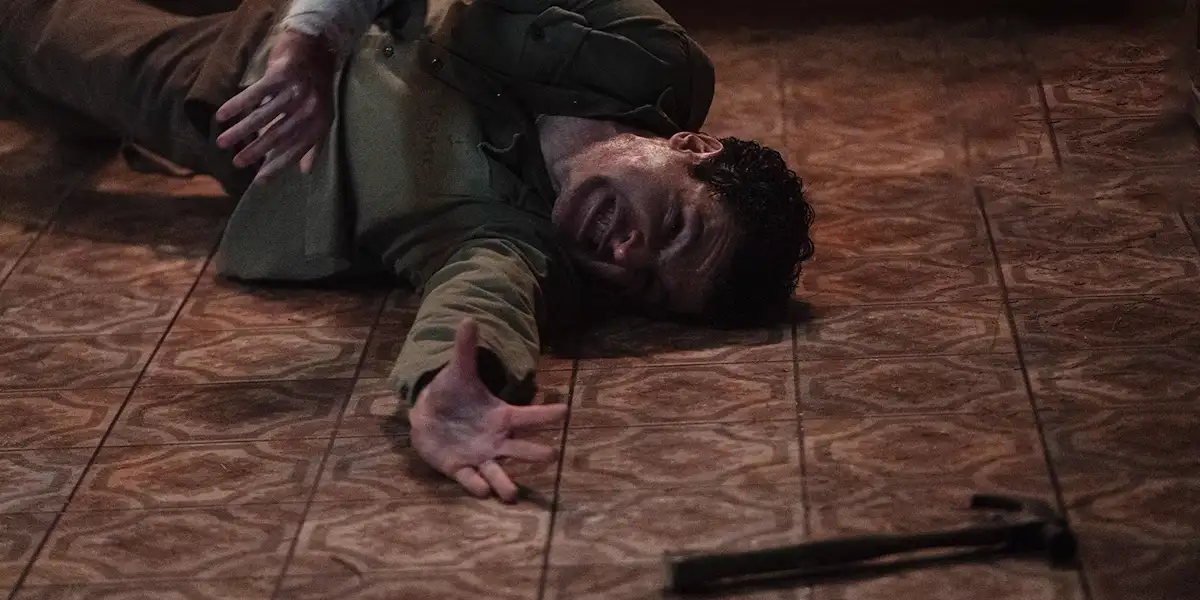
I admit to having softened on Wolf Man a bit since my more enthused review of it, but I still stand by the film as being a pretty clever reinterpretation of the classic werewolf tale. Blake (Christopher Abbott, Poor Things) and Charlotte (Julia Garner, Weapons) are a married couple trying to reconnect, deciding to do so by visiting Blake’s old woodland home. Only for a wolf man to attack him, beginning the transformation we all know. Wolf Man’s best qualities are largely frontloaded, as it greatly establishes everyone’s inner conflicts. Blake is repressing the overly harsh nature he may have inherited from his father, and Charlotte’s work has kept her from being close to him and their daughter (Matilda Firth, Disenchanted).
This makes Blake’s transformation a lot more tragic because he’s now forced against his will to become a different type of heartless monster, which is made even more devastating when you learn what happened to his father. Abbott sells everything amazingly as the well-meaning father, the suffering victim, and the beast flat-out, aided by how slickly and creepily director Leigh Whannel captures his point of view. But like Love Me, the speed at which he bridges the gap to his final mental state is abrupt, taking away from how much it could’ve been milked. Wolf Man has all the bones of a genius reimagining with only some of the accompanying meat. But damn is that juicy, tender, succulent human meat tasty… uh oh.
10. The Woman in the Yard
This film’s negative reception confuses me, even after reading several people’s thoughts. The Woman in the Yard is not at all a complex story: a newly handicapped widow (Danielle Deadwyler, 40 Acres) is relying on her two children (Peyton Jackson and Estella Kahina) in their new farmhouse, when they’re suddenly haunted by a woman in black (Okwui Okpokwasili, The Exorcist: Believer) standing in their yard. The whole film is very stripped-back and non-flashy, which doesn’t help it stand out compared to other horror films. But that’s one of its biggest strengths in my eyes: it focuses almost entirely on this family and their fractured relationship, making this one of the most character-driven horror movies of the year.
The titular woman doesn’t do much at first, but that’s the point. By simply looming over the family, she lets them tear themselves down. She’s also – big shock – symbolic of the darkness within Deadwyler’s character, but I have no issue with obvious symbolism if it’s executed as grippingly as it is here. Deadwyler conveys her grief, rising anger, and helplessness so well that she’s almost physically exhausting to watch. I can’t fathom why Woman in the Yard got panned other than maybe it’s just not innovative in any way. But with how many movies trade away substance for spectacle, maybe we needed a reminder of what an old-school ghost story can do.
11. M3GAN 2.0
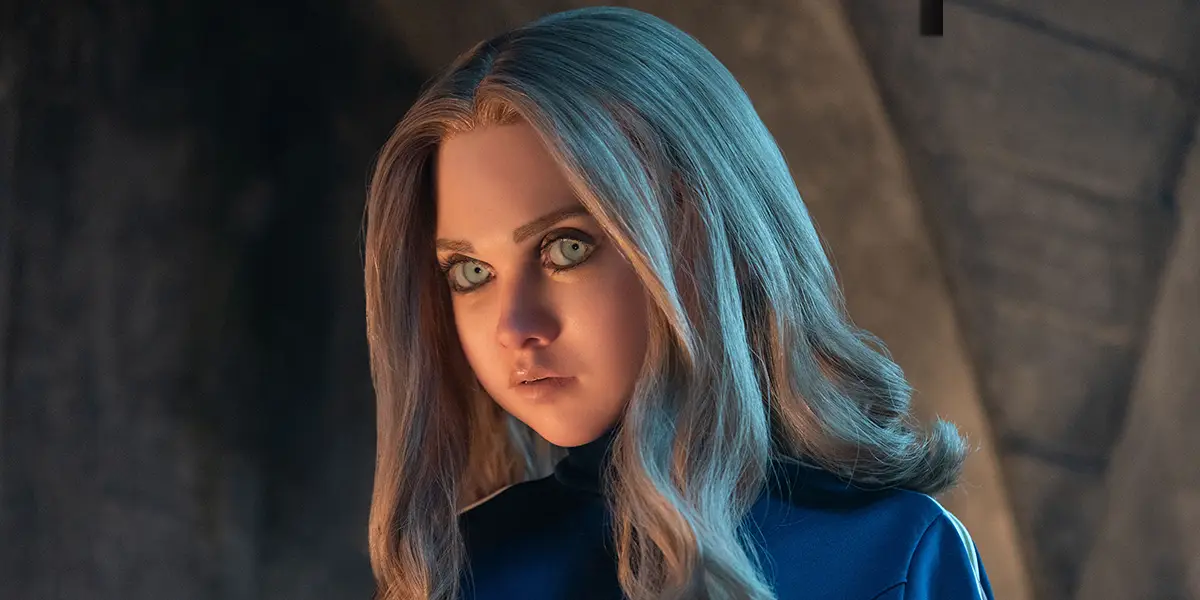
The original M3GAN is campy fun. This movie is campy fun. So, how did this one lose people? Two years after the first film, a rogue AI named AMELIA (Ivanna Sakhno, Ahsoka) has been let loose, forcing mother-daughter duo Gemma (Allison Williams, Regretting You) and Cady (Violet McGraw, Thunderbolts*) to rely on the surviving M3GAN (Jenna Davis) to fight her. This sequel trades the original’s horror tone to be more of an action-thriller, a shift that I was always open to and believe was made rather smoothly. Balancing ridiculous fun with what’s meant to be an earnest story is clearly tricky, but the commitment to playing even the biggest absurdities straight keeps that balance intact.
I really didn’t think I’d buy M3GAN’s development from malicious machine to genuine ally as well as I did. Every reason for every bit of change she experiences makes sense for what both movies have established her as wanting. And while we’re surrounded by the scarily increased use of AI, the film uses the contrast between M3GAN and AMELIA to highlight the responsibilities that we have in incorporating AI into our lives. Yes, the plot can fall into cliché territory with a particularly bad villain and some awkwardly forced moments. But if I were to think up a best-case answer to, “What if the funny dancing robot girl was in an action movie?” M3GAN 2.0 is about as consistently enjoyable as I could imagine.
12. Highest 2 Lowest
I know Spike Lee’s Highest 2 Lowest was generally well-received by critics. But I have seen some die-hard hatred for it, and it’s not exactly lighting up year-end lists like I really think it should. This is a remake of the Akira Kurosawa classic High and Low, this time featuring a modern-day record label mogul (Denzel Washington, Gladiator II) whose friend’s son is kidnapped and held for ransom. Highest 2 Lowest is slathered in so much cheese, theatrics, and random choices that would kill most other movies. And for many, they did. But the film has one clear advantage: unabashed sincerity. Denzel Washington’s performance takes what could have been insufferably preachy writing and makes me believe it. He owns every scene, including a kinda sorta rap battle with the kidnapper that, I’m sorry, is raw as f**k.
If the original film illustrated the disparity between wealthy and unwealthy, this remake shows someone reaching the top but yearning for the honesty and passion of the world now beneath him. A world that Lee shows us through shots of New York City that are objectively gratuitous but so infectiously fun. New updates to the story like the heavy presence of social media are really smart as well. And Howard Drossin’s score? Please listen to “The Chase” and tell me you’re not sucked into whatever it could be accompanying. Highest 2 Lowest is every definition of the term indulgent, but it’s so on my wavelength and so heavily commits to itself that I frankly welcome all the indulgence possible.
13. After the Hunt
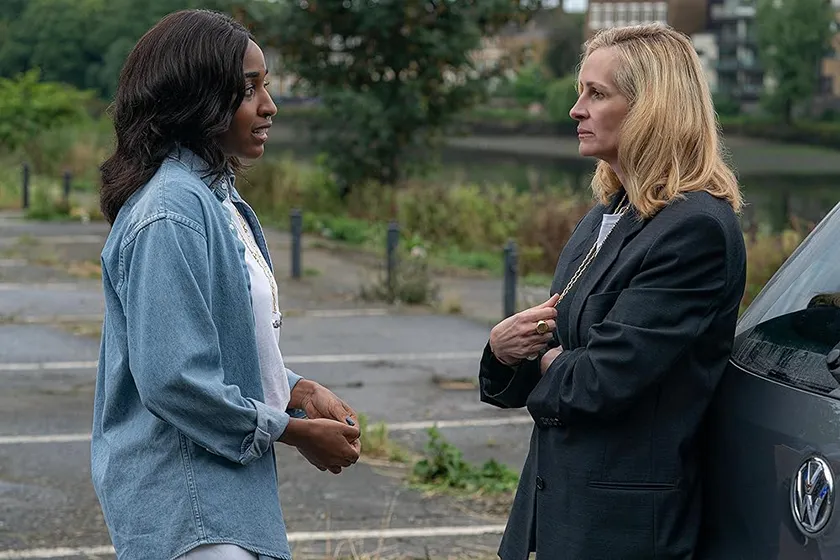
A movie that dissects cancel culture and the motivations of SJWs? I wonder how that rubbed people the wrong way. In fairness, After the Hunt is a very murky movie. It’s about a professor (Julia Roberts, Wonder) whose colleague (Andrew Garfield, tick, tick… BOOM!) is accused of sexual assault by her pupil (Ayo Edebiri, Bottoms). Is it true? Well, we never find out for sure. But the response on Roberts’s part slowly unravels to reveal a repressed, self-denying, maybe even jealous side to her. It possibly speaks to the way her generation looks at the more emboldened, outspoken youth beneath her, and why her peers appear to champion equal rights but then not be allies other times.
But Gen Z isn’t off the hook either, as Edebiri’s tact and history are thrown into question when she keeps pushing beyond the wrongs done to her and onto the personal secrets of Roberts, not knowing when enough is enough. All while nothing truly seems to change, and both generations are left with no better understanding of one another. The characters are tough to figure out, but the acting and directing are so good that the ambiguity usually works to the film’s advantage. Some flourishes don’t work, like a few plot contrivances and the odd scene that gets dragged out. But After the Hunt still got me scratching my head in all the right ways, and I appreciate it for looking at a well-worn issue from an uncertain point of view.
14. The Running Man
I did a whole mini-essay on why 2025’s The Running Man is an excellent movie that easily trumps the 1987 Arnold “classic.” But in short, this retelling of Stephen King’s novel adds all the angst, dark storytelling, and quality worldbuilding that the premise demands. Ben Richards (Glen Powell, Top Gun: Maverick) is a working man in a dystopian future, desperate for money to save his sick baby. He enlists in the game show The Running Man, in which he must survive 30 days of being hunted in public. True to its name, The Running Man hits the ground running and refuses to stop, putting Richards through the wringer with an angry, snarky, frantic tone that matches his character.
Director Edgar Wright’s endless knack for action leads to some of the year’s most exciting fights and chases, all in a world that brilliantly looks like something that could feasibly happen to us in either the near or distant future. Everything keeps escalating at an overwhelming pace as Richards realizes just how much the contestants and viewing audiences alike are exploited in an endless cycle of distraction, forced to play into the game while looking for a way out. Outside of a jarring ending (which still has its own merits), this film trumps the original in every way. We’ve been yearning for great spectacles with actual weight, and then this one comes to either be shunned or met with a collective, “Eh, s’fine.” Please give it a chance when you can.