
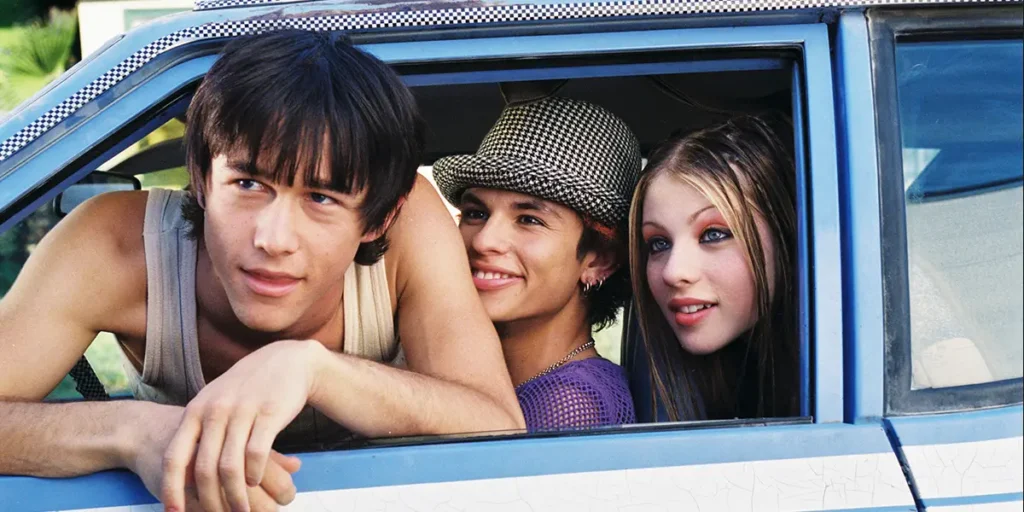
A new digital remaster of Gregg Araki’s 2004 cult classic Mysterious Skin brings his most devastating and potent film to an entirely new audience.
Director: Gregg Araki
Genre: Coming of Age
Run Time: 105′
Original Release: May 6, 2005
4K Restoration Release: August 14, 2026 (New York); August 21, 2026 (Los Angeles), with a national rollout to follow
In 2004, Gregg Araki, one of the 90s and 2000s’ most revered arthouse directors, came out with his most staggering drama yet, Mysterious Skin. The film was an adaptation of Scott Heim’s equally devastating and ambitious debut novel of the same name. At the time of its release, Araki barely had the finances to finish the film, much less the money to pour towards perfecting its final look.
Through the Academy Film Archive, the UCLA Film and Television Archive and in conjunction with the Sundance Institute, Araki’s 2004 cult classic has been digitally remastered for new audiences to experience as Araki always intended.
Opening up in the summer of 1981, Mysterious Skin follows the lives of then eight-year-old Brian (George Webster) and Neil (Chase Ellison). While both little boys play on the same little league baseball team, they do not have much else in common. Brian comes from a typical nuclear family and hasn’t quite found his way out of his shell yet. Neil is more self-sufficient than most boys his age and lives with his single mother and her rotating roster of boyfriends.
After one little league game, Brian finds himself in his basement with a bloody nose and no knowledge of what has happened over the past several hours of his life. This would prove to be the first of many episodes where Brian develops nosebleeds, passes out and blacks out for hours of time. While he quits the team right after the first unexplainable incident, Neil stays on as the star player and develops an extremely close relationship with his coach.
Cut to ten years later, the boys have grown up to be two very different young men. Brian (Brady Corbet, of The Brutalist) is introverted and reserved, finding it hard to make friends and completely consumed by the belief that he was abducted by a UFO as a child, which is what has caused his nosebleeds and blackout periods. Neil (Joseph Gordon-Levitt, of Killer Heat), on the other hand, has become a captivatingly charming yet emotionally aloof male escort, working hard to make money off the closeted men in his small town.
As Brian seeks to remember what happened to him that fateful night all of this started, Neil is seemingly chasing experiences in order to forget his past. When Brian suddenly remembers Neil’s face, he begins an attempt to seek him out in pursuit of the truth of what happened that night and why he can’t remember any of it himself.
With Mysterious Skin, Araki dives into the mind of both Brian and Neil in their eight-year-old mental state to portray the surreal experience of processing trauma you don’t fully understand. The most traumatic night of young Neil’s life is accentuated by the vibrant colors of Fruit Loops and other sugary cereals crushed on his baseball coach’s kitchen floor. For Brian, his memory can only place a UFO coming down to the roof of his house as the standout moment of his most traumatic year. A memory which, in the future, only he can seem to place.
Cut to their adult years, Araki shows the ways in which the boys have never emotionally moved on from that fateful season of their lives. Brian never did find his way out of his shell, still seemingly living in the memory of who he was as a young boy rather than developing into the young man he has become. Neil, always forced to act older than his age and exposed to overt sexuality both in his personal and familial life too early on, is still acting out like a little kid when the world doesn’t go his way.
While the boys have aged, they feel frozen in time trying to grapple with the unfortunate reality of who they have become. While Brian seeks out the truth with a surprising fearlessness and Neil lives his life with an expected recklessness, the two have been forced into these positions where they need to look out for themselves because no one did when they were younger.
The most potent part of Mysterious Skin is its plainness in the characters’ adulthood as opposed to its fantastical elements used to depict their childhood. As the boys age, there are no colors as vibrant in Neil’s life as those of the sugary cereal crushed on the kitchen floor, nor no moment in Brian’s adulthood that feels as clear and tangible as the moment he saw the UFO.
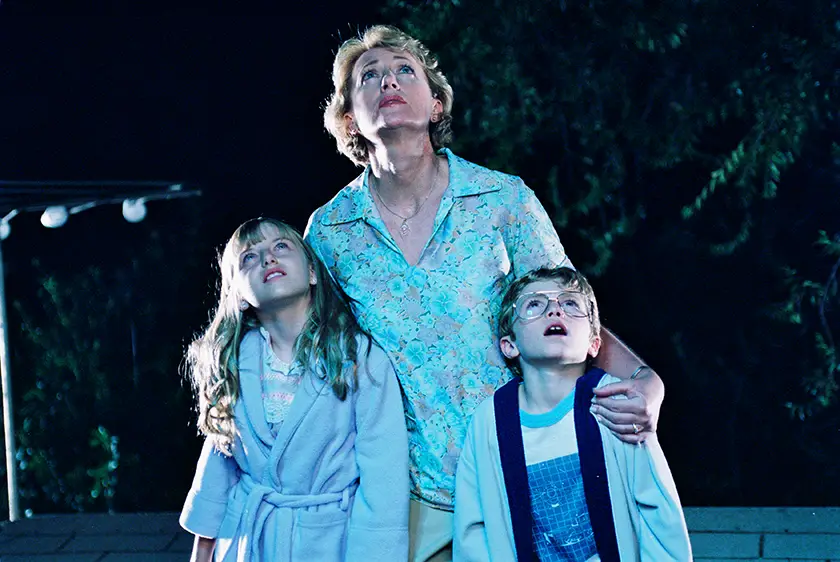
While the boys had their unlimited imagination available to them to capture and transform any moment of true sorrow as children, as young adults they have to take on what has and what is happening to them with absolutely no ability to sugarcoat it. They see the world for what it is because the masks of make-believe were ripped off them so viciously as children.
Mysterious Skin is by far Araki’s most devastating work. The performances in this film from emerging artists Joseph Gordon-Levitt and Brady Corbet are some of the strongest turns from young actors in recent memory, not only underlining but extenuating Araki’s brilliance in this film. His depiction of childhood trauma and the ways in which it can manifest to completely alter one’s life is as potent, heartbreaking and relevant today as it was over 20 years ago.
Mysterious Skin: Movie Plot & Recap
Synopsis:
Two young boys experience a traumatic event they internalize in completely different ways, changing the trajectories of their lives in different yet disastrous ways.
Pros:
- Gregg Araki uses fantastical elements to mask a devastating reality that emphasizes the way in which children process trauma.
- Joseph Gordon-Levitt’s performance specifically puts him in an entirely new league of up-and-coming young actors.
Cons:
- The film is graphic and plain in its depiction of sexual assault in a way that’s uncomfortable for viewers, particularly in the modern-day film’s stratosphere.
The new 4K Restoration of Mysterious Skin is out now in theaters in New York and will open in Los Angeles on August 21, 2026, with a national rollout to follow.