
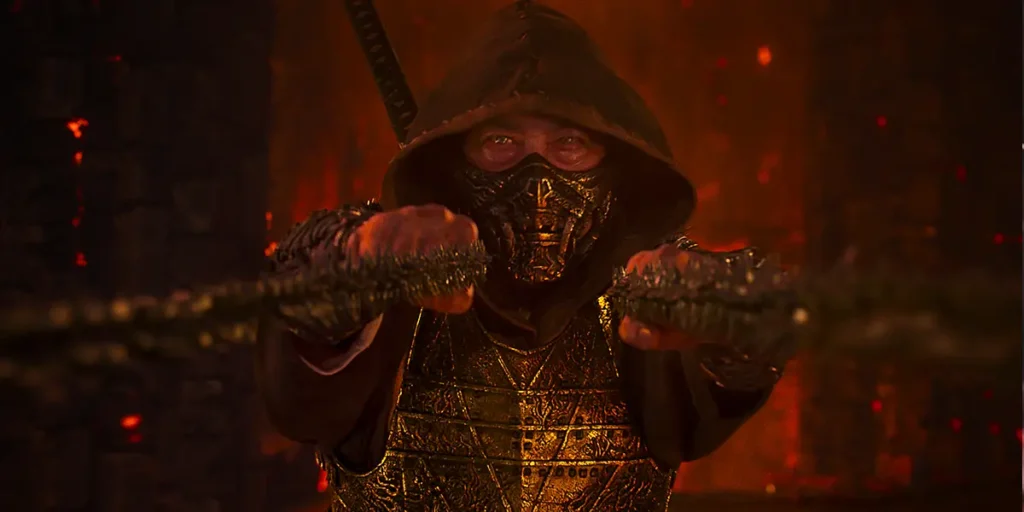
Despite top-tier action talent, Mortal Kombat II fails as both an action movie and an adaptation of one of the greatest pop culture-defining video games.
Director: Simon McQuoid
Genre: Action, Adventure, Fantasy, Sci-Fi, Martial Arts
Run Time: 116′
Rated: R
U.S. Release: May 8, 2026 in theaters
U.K. Release: May 15, 2026 in cinemas
When one watches a film called Mortal Kombat II, one knows they will not find high art, a thought-provoking narrative, or fully realized characters. That comes with the title of Mortal Kombat. After all, the only thing fans of Ed Boon and Jon Tobias’ video games want out of these films is fights: lots and lots of fights. In that regard, a genre enthusiast like me would normally eat a film like this up.
There isn’t anything cooler to see on the biggest of all IMAX screens than a series of intricately choreographed fight sequences, if it’s shot with high energy and looks visually incredible.
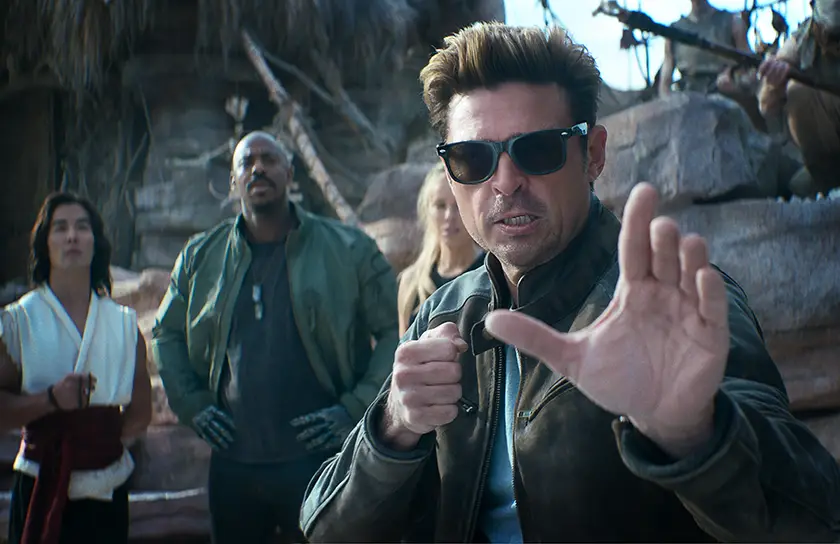
I’ll give Simon McQuoid’s sequel to his 2021 film two things, and two things only. First, this is a non-stop brawlfest from beginning to end. Second, after the first film teased the promise of a Mortal Kombat without, y’know, actually doing one, this sequel is dedicated entirely to the titular fight tournament. The plot, which is essentially nonexistent, is summarized as follows: villain Shao Khan (Martyn Ford) wants to take over Earthrealm. Mortal Kombat is unleashed. A group of elite fighters, led by Lord Raiden (Tadanobu Asano), must assemble to stop him, but they are one competitor short. This is where they turned to washed-up Hollywood actor Johnny Cage (Karl Urban), who joins them on a fight tournament that will save the world.
Then, the fighting begins. Most people know what they’re getting into when they buy a ticket for a film called “Mortal Kombat,” and McQuoid more than delivers on that premise of endless fighting. There’s only one problem: the succession of action sequences that populate this 116-minute snoozefest rarely impress, if at all. A massive step down from McQuoid’s last go-around in the world of Boon and Tobias’ video games, which at least tried to give some legible fighting to the viewers, this sequel gives us Mortal Kombat with little to no tangible stakes or emotional weight, even if punches are thrown, limbs are severed, and different powers coalesce in a bevy of mindless action scenes.
It is a thunderously dull sequel that offers nothing of interest to the viewer, not even a fight scene worthy of the anarchic mania of Paul W.S. Anderson’s 1995 transposition of the game, which at least had a sense of emotional grandeur in the action. That wasn’t a great movie, but it kicked tons of ass, because the action was legible and in-your-face, while The Immortals’ Techno Syndrome scene boomed on the speakers. It’s a simple but immensely enjoyable viewing experience. Maximalist action. Over-the-top one-liners. Great music. What more could you ask for? In the case of McQuoid’s Mortal Kombat II, none of the action possesses that same energy, even though cinematographer Stephen F. Windon desperately tries to make each setpiece as violent as possible.
Windon is such a massively underrated cinematographer, who has shot some properly great action through his multiple collaborations with Justin Lin, notably in many installments of the Fast & Furious franchise. In Mortal Kombat II, his photography is so flat and devoid of any desire to capture bodies in motion doing cool stuff that we, the audience, become disengaged in what’s happening. Everything is of no consequence, even when major figures, characters whom fans have developed a close emotional connection with via the video games and various pieces of transmedia, bite the dust.
In this movie, I couldn’t tell you who any of the characters are. They possess no personality of their own that would make their participation in the tournament feel emotionally engaging to the viewer. When a resurrected Kung Lao (Max Huang) fights against Liu Kang (Ludi Lin), this confrontation is supposed to mean something, given their close friendship, but it only registers as yet another fight scene with superpowers. When Scorpion (Hiroyuki Sanada) eventually shows up and says his iconic catchphrase, “GET OVER HERE!”, that moment has zero impact in the context of this movie and falls completely flat, because we’ve never developed any tangible connection with what’s occurring on screen.
Even worse, the main antagonist of the picture, Shao Khan, a menacing, terrifying figure, is reduced to yet another mindless baddie who simply wants to “take over the world.” There isn’t a scene with him that heightens the stakes or gives Raiden’s hopes of winning the tournament feel urgent. Even Johnny Cage, the best character of the Mortal Kombat universe (according to me), is pitifully wasted. Urban’s casting is undoubtedly inspired, and he certainly has fun portraying him in various action setpieces (the film’s only memorable quips come from him), but his characterization here is as boring as the rest of the pack. There isn’t a scene or an action beat that makes him stand out. It’s a complete waste.
So we essentially have one blandly composed and edited fight scene after another, with limited thrills and zero tangible stakes. The IMAX photography isn’t any better, either, because most of the large-format scenes are reserved for split-second establishing shots, or teases for fight sequences that end up being shot…in 2.39:1. For instance, the frame slowly opens up as Johnny Cage is about to fight Baraka (CJ Bloomfield), but the rest of the scene is shot in scope. What’s the point of teasing an IMAX-shot fight if you’re not going to deliver on that promise? It also makes the cardinal mistake of, once again, wasting the martial arts skills of Joe Taslim, who has a limited bit part as Noob Saibot/Subzero, and Hiroyuki Sanada, whose Scorpion is arguably the most textured character of these films, but his impact is so minimal in the picture that one immediately forgets him when he leaves the climax.
In short, while Mortal Kombat II certainly gives us a Mortal Kombat, the film itself is completely devoid of anything remotely fun or interesting for action and video game fans to have a good time. It’s a lethargic affair that barely functions as an action movie, and works even less as an adaptation “made for the fans.” Fans deserve so much better than this, and to think they can contend with an endless parade of references with no weight and listless action is honestly insulting. If this is “for the fans,” fans need to raise their standards by watching Kenji Tanigaki’s The Furious, which doesn’t waste Joe Taslim’s talents. That movie comes out on June 12. It kicks all sorts of ass, and then some. Save the date.
Mortal Kombat II (2026): Movie Plot & Recap
Synopsis:
As Mortal Kombat begins, Lord Raiden enlists the help of washed-up actor Johnny Cage to help his team of combatants defeat the tyrannical Shao Khan, who threatens the very safety of Earthrealm and its inhabitants.
Pros:
- Karl Urban’s casting of Johnny Cage is inspired.
- Hiroyuki Sanada’s presence is always welcome.
- There’s an actual Mortal Kombat.
Cons:
- The film is essentially a succession of one blandly shot action scene after another.
- The plot is thin and makes little to no narrative sense as the film progresses.
- Characters are barely developed and add little to no urgency in the action.
- The visual effects look cheap and lack the grandeur and scale of Paul W.S. Anderson’s 1995 adaptation of the video game.
- The use of IMAX aspect ratio changes is baffling and poorly conceived.
Mortal Kombat II will be released in US theatres on May 8, 2026 and in UK & Irish cinemas on May 15.