
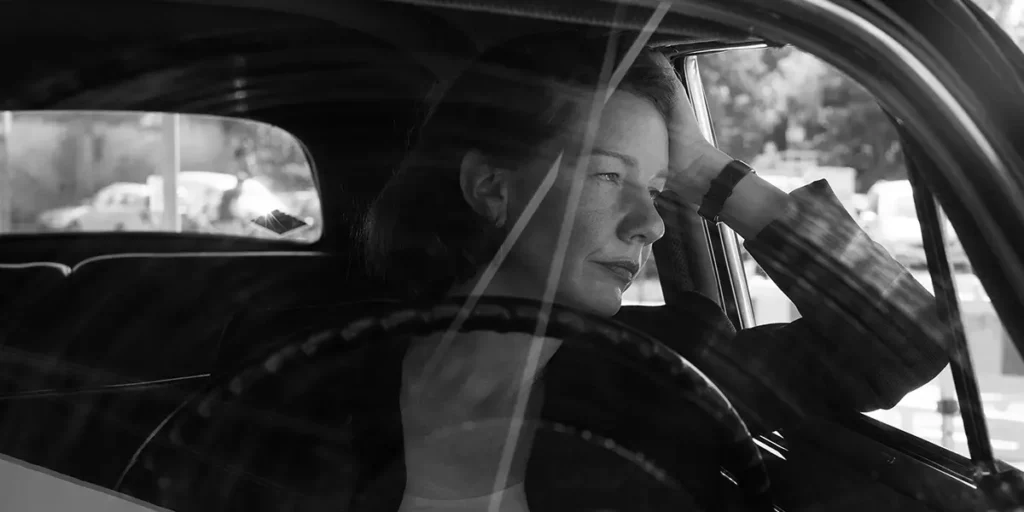
Sandra Hüller shines in Fatherland, Paweł Pawlikowski’s latest gorgeous journey to find the people and places we call home.
Director: Paweł Pawlikowski
Genre: Drama, Biographical, Period Drama
Run Time: 82′
Cannes World Premiere: May 14, 2026 (In Competition)
U.S. Release Date: This fall in theaters
U.K. & Ireland Release Date: October 23, 2026 in cinemas
“Where is home?” This question is posed to Nobel laureate Thomas Mann (Hanns Zischler) at a press conference. It’s also a perfect summation of the concerns of Fatherland, Paweł Pawlikowski’s typically beautiful rumination on exile and expectation. The Polish director is a master of empathetic tales of souls looking for a place to call home, and his latest thrums with intelligence and the graceful, economical filmmaking that make him one of Europe’s most fascinating filmmakers working today.
Pawlikowski returns to features after Cold War won him Best Director at Cannes eight years ago, and Fatherland is all about going back to fertile ground, the loving bosom of lands that welcomed you once upon a time. The film opens with Mann’s son Klaus (August Diehl, of The Ice Tower) talking on the phone to his sister Erika (Sandra Hüller, of Anatomy of a Fall), making plans for her and their father to return to Europe from Los Angeles.
Klaus resides on the French Riviera, but Łukasz Żal’s stuning black-and-white cinematography lets us know all is not sunny for poor Klaus. The rain beats down on the palm trees with no sign of respite. In an impressive static long take focused just on Klaus, Diehl captures the fraught mindset of a man who needs to see his family, and all with minimal but effective body language and cadence. He needs to see them as they are the only ones he knows looking for positivity. In a speech, Thomas cites Clemenceau’s declaration that “Germans love death”. Fatherland and its characters reject such fatalism, seeking simple pleasures as they go.
It’s 1949, and Erika and Thomas are returning to Europe for him to receive the Goethe Prize and commemorate the 200th anniversary of Goethe’s birth. As the great polymath thinker was one of Mann’s biggest influences, he is an ideal candidate for the prize. However, Germany is in the very complicated throes of defining her postwar self. Mann has to receive two versions of the prize, one in western-controlled Frankfurt, the other in Soviet Weimar.
From their first arrival in Frankfurt, this whole trip seems pre-determined to haunt the Manns. The destroyed buildings and scarcely changed tastes in music and fashion serve as the scars of war, freezing the whole place in its horrid history. The cinematography locates us in time and mood; the lines of the Manns’ faces look aged by their return to Europe, a reflection at their disgust at the slow progress of Nazification. Everywhere they go, there are reminders of what has barely begun to be left behind. When Erika meets her ex-husband Gustaf Gründgens (Joachim Meyerhoff), the acclaimed Nazi actor (and inspiration for Klaus’ novel ‘Mephisto’), she can only hold polite conversation for so long before slapping him in the face.
Though Thomas is the better-known figure, Erika is the real focus of Fatherland. A fascinating character in her own right (A war journalist and actress who married W.H. Auden just for a passport), Erika is imbued with her father’s fierce intelligence, and has relative youth on her side to use it to its full potential. She serves as Thomas’ driver and assistant, but she (and we) are offered several reminders of her own career and abilities. She reminisces with fellow correspondent Betty Knox (Anna Madeley) about their work during the war, and shouts down drunken louts singing Nazi-era anthems. This combination of an intellectual front masking powerful emotion is right in Hüller’s wheelhouse, and she’s hypnotically magnificent as Erika, allowing her to step out of the shadow of her famous family and have her own voice.
Meanwhile, Zischler is masterful in a relatively subdued role, a stoic but understanding father figure whose calm exterior allows him to quietly excoriate any antagonist with a well-planned line. This is not the Mann we know of his controversial and fraught sexuality, but an old man trying to help his children find the future.
Pawlikowski and co-writer Hendrik Handloegten don’t dumb anything down in their script to make it accessible; to do so would have been a disservice to these characters. Many elements of Fatherland will invite comparison to Cold War and Ida, from the monochrome look to the decrepit locales. Going from a romance to a story of father and daughter bonded by tragedy means this can’t have the same enveloping passion as Pawlikowski’s previous masterpiece, but that’s not Fatherland’s job. It is a journey across a ruined land looking for hope.
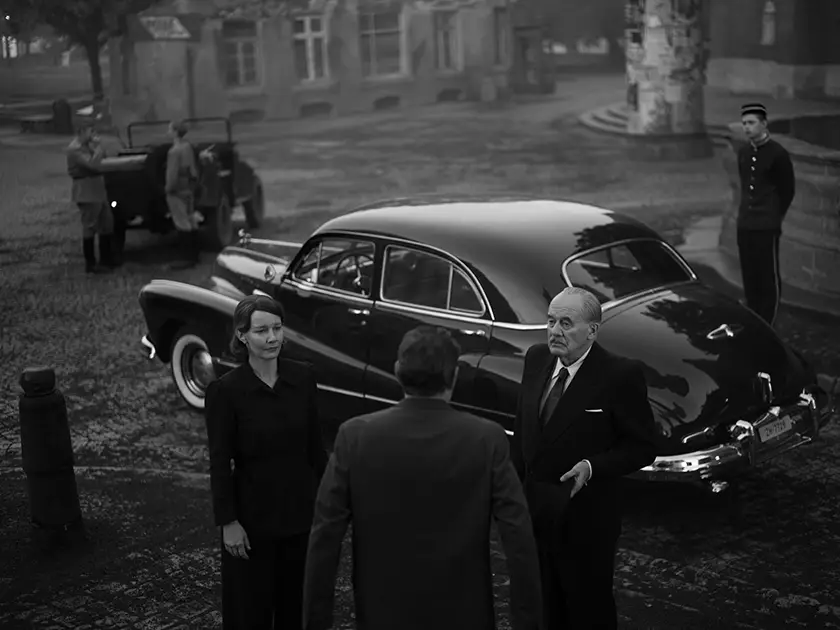
True joy can come later, but the Mann family are starting from a low base, and working their way up towards some sense of happiness, along with the rest of postwar Germany. When they cross the border into East Germany, an empty café is their first stop. No-one else is around, but their being there shows that life goes on, and something as simple as a chat over coffee is still a valuable thing. A performance of a proposed new anthem for the East stresses the desire for peace, or at least for a lack of war. Fatherland reminds us to find hope wherever we can.
Fatherland defies audience expectations. At 82 minutes, it may not appear to ask or offer very much, but Pawlikowski and Piotr Wójcik’s edit ensure it covers everything it needs to say. The formal rigor of Fatherland entices, but the emotional depth is what stays with you. Its chatty front slowly melts to show that even the most acclaimed and intellectual of people just need a moment to connect. The tear-inducing finale sees father and daughter enjoy a tender moment in shared appreciation of a piece of great art. Fatherland should be appreciated in a similar way.
Fatherland (Cannes 2026): Movie Plot & Recap
Synopsis:
Author Thomas Mann and his adult daughter Erika return to postwar Germany, but their visit comes with unexpected emotional complications.
Pros:
- The intelligent script and sensitive direction treat the intellectual characters with respect while never putting them on pedestals
- The cast is outstanding, Hüller especially
- The cinematography and edit are beautiful in their economy
Cons:
- The (mostly) subdued emotional beats may frustrate some viewers
Fatherland premiered at the Cannes Film Festival in Competition on May 14, 2026. The film will be released by MUBI in U.K. and Irish cinemas on October 23, 2026 and in U.S. theaters this fall.