
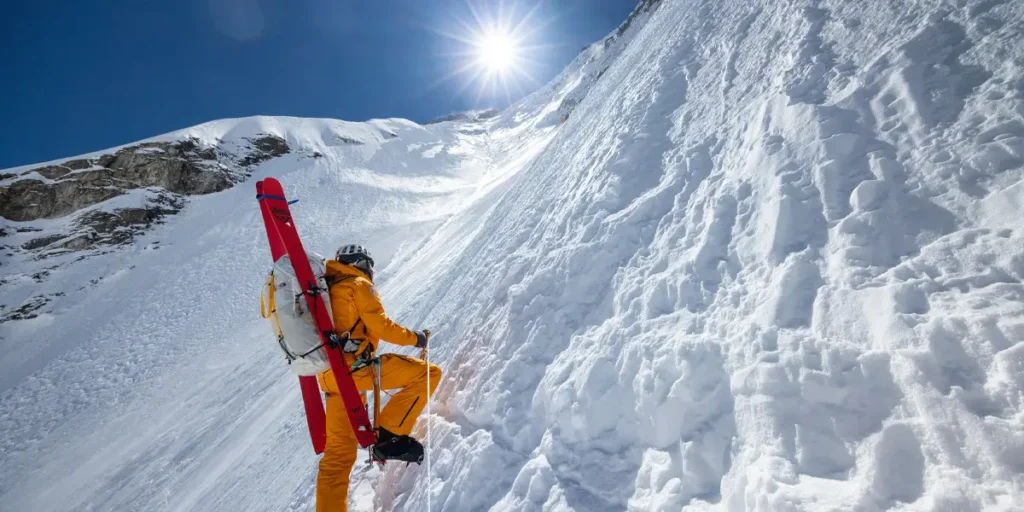
Elizabeth Chai Vasarhelyi and Jimmy Chin’s Everest: The Other Side is a breathtaking, gripping documentary that raises difficult questions about filmmaking ethics.
This review contains spoilers for Everest: The Other Side.
Directors: Elizabeth Chai Vasarhelyi and Jimmy Chin
Genre: Documentary
Run Time: 110′
Rated: PG-13
Venice World Premiere: September 3, 2026
U.S. Release: October 30, 2026 in theaters
U.K. Release: TBA
There are certain expectations an audience has when watching a film like Everest: The Other Side, from directing duo Elizabeth Chai Vasarhelyi and Jimmy Chin. Just like their previous documentary Free Solo, Everest chronicles someone’s attempt to achieve the impossible, as they challenge themselves to do something incredibly dangerous, and potentially deadly, involving heights.
Since both National Geographic-produced movies use state-of-the-art technology and have teams of specialized cinematographers accompany their subjects on the journey, the first expectation – which Everest absolutely fulfils – is for the movie to feature spectacular, breathtaking shots that follow the journey up close.
The second has to do with its subjects themselves. In Chin and Vasarhelyi’s previous documentary, free soloist climber Alex Honnold set out to climb Yosemite National Park’s 3,200ft El Capitan with no ropes. In Everest: The Other Side, elite ski mountaineers Jim Morrison and Hilaree Nelson aim to realize their lifelong dream of climbing and skiing down the North Face of Mount Everest. Given the extreme risk undertaken by Morrison and Nelson, there’s an implied assumption that the filmmakers wouldn’t have seen the project to completion if something had happened to Morrison or Nelson, as it would have turned what’s being marketed as a “near-impossible expedition to one of the most remote places on Earth” into a much more tragic, morbid tale.
Yet this is exactly what happens in Everest: The Other Side, a film that definitely delivers on a visual level, with gorgeous cinematography that places you with the team at all times, but that also introduces both its subjects and the filmmaking team in a way that really gets you to care about them… Only for one of them to die in an avalanche not long after the start of the movie.
To the filmmakers’ credit, there had been plenty of clues foreshadowing that moment. “I am scared of dying, and I don’t want to leave my kids […], but I can’t control that”, says Hilaree Nelson before embarking on the expedition to Manaslu – in preparation for the Everest one – that will end with her death, her partner Jim finding her body hours later with the help of two Sherpa climbers. Not long before that, we saw her teenage sons, Quinn and Grayden, share that they were scared about the trip their mother was about to embark on.
We’re even shown a clip of the whole family going on another climb, and Hilaree forcing a thirteen-year-old Grayden to keep going even if he didn’t want to. “I hated it,” he later tells the camera, “I don’t like climbing mountains.” That scene, followed by another where Hilaree jokes about wanting to “die young as late as possible”, initially sparked a lot of laughs at my screening; after all, we were expecting to eventually see her succeed.
The film soon assumes a completely different tone when Hilaree does die, leaving her two sons without a mother, and Jim – who, we soon learn, had already lost an entire family to a tragic accident in the past! – without a partner. Eventually, Jim decides to try the climb one more time, and “complete this project for Hilaree”; what happens next is just as tense, enthralling, moving, and ultimately rewarding as you wanted it to be, but even then, it’s hard not to think about a team of filmmakers who made the conscious decision to keep filming even after tragedy struck – and about the increasingly blurred line between documenting grief and turning it into a narrative.
The idea of how much responsibility a director has when filming a documentary that puts its subjects at risk is something that Free Solo had already tackled, in a poignant scene that saw Jimmy Chin admit to his crew that he was torn on whether they should have even kept making the movie. In that scene, halfway through the film, he noted that the team could even accidentally cause someone’s death if, for example, someone were to drop a piece of equipment on the free soloist, and proceeded to ask an even more fundamental question: since the presence of the camera is putting pressure on their subject, wouldn’t that make them complicit if he were to fall?
It’s hard not to think back to that scene halfway through Everest: The Other Side, when Elizabeth Chai Vasarhelyi has a similarly candid conversation with her then-husband (the pair filed for divorce during production, after 13 years of marriage). “The worst happened, and I don’t know how to get my head around that,” she says, asking her husband how many people who had eaten at their dinner table had since died. “A lot,” Chin responds, yet just like Jim Morrison, he sees the project to completion, ultimately delivering a compelling, thought-provoking adventure that gets us invested in the whole team.
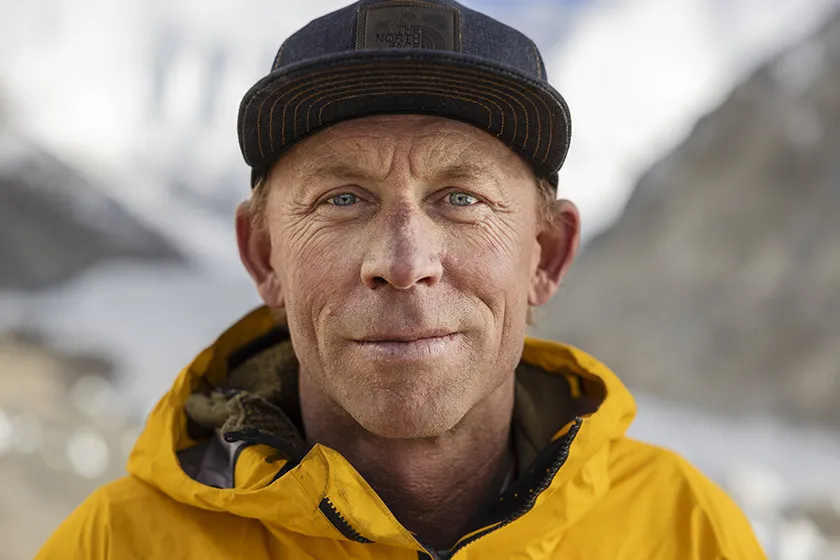
More than that, Everest introduces its crew in much more depth than Free Solo did: high-altitude photographer Erich Roepke breaks our hearts when we learn that he lost his dad on another mountain, years before, and shares that he doesn’t even know if his father realized, before he died, that Erich survived the avalanche that almost killed them both. We come to really care about the Sherpa team, particularly Pur Bahadur “Yukta” Gurung, whom we witness pull through after a near-fatal injury during the expedition; Yukta and another member of the film’s Sherpa team, Pemba, both died in another avalanche last month, as we only learn in the film’s end credits, which also leaves us on a sour note.
Everest: The Other Side is not a bad film; in fact, in many ways, it’s even better than Free Solo, as it tells us more stories and contains some shocking events that will hold your attention throughout. More importantly, it offers a fascinating analysis of the filmmakers themselves, and what their need to keep telling these stories – and to keep placing themselves and their cameras alongside people undertaking incredibly dangerous expeditions – actually says about them.
Yet, at the same time, one can’t help but wonder about the ethics of Chai and Chin’s filmmaking when this (admittedly gripping and entertaining) documentary’s most affecting scenes are those that capitalize on grief and trauma. Is Everest: The Other Side a captivating, thought-provoking project that works more as a psychological analysis of the filmmakers themselves than as a documentary about a world record-breaking ascent? Or is it a more exploitative film that uses immense tragedy and personal loss to entertain, the likes of which shouldn’t be made again in the future? To quote Elizabeth Chai Vasarhelyi, “I don’t know how to get my head around that”.
Everest: The Other Side (2026) – Movie Plot & Recap
Synopsis:
Elite ski mountaineers Jim Morrison and Hilaree Nelson attempt to climb and ski down Mount Everest’s North Face, but an unexpected tragedy changes the course of their expedition and the documentary itself.
Pros:
- Spectacular, breathtaking cinematography
- Tense and enthralling throughout
- Gets you invested in both its subjects and the crew even better than Free Solo does
- Raises fascinating questions about risk, grief and filmmaking ethics
- Emotionally powerful and often unexpected
Cons:
- Its treatment of tragedy can feel exploitative
- Ethical questions surrounding the filmmakers’ role remain unresolved
- Some of its most affecting moments rely heavily on personal grief and trauma
Everest: The Other Side had its World Premiere at the 2026 Venice Film Festival on September 3, 2026. The film will be released in US theatres on October 30, 2026.