
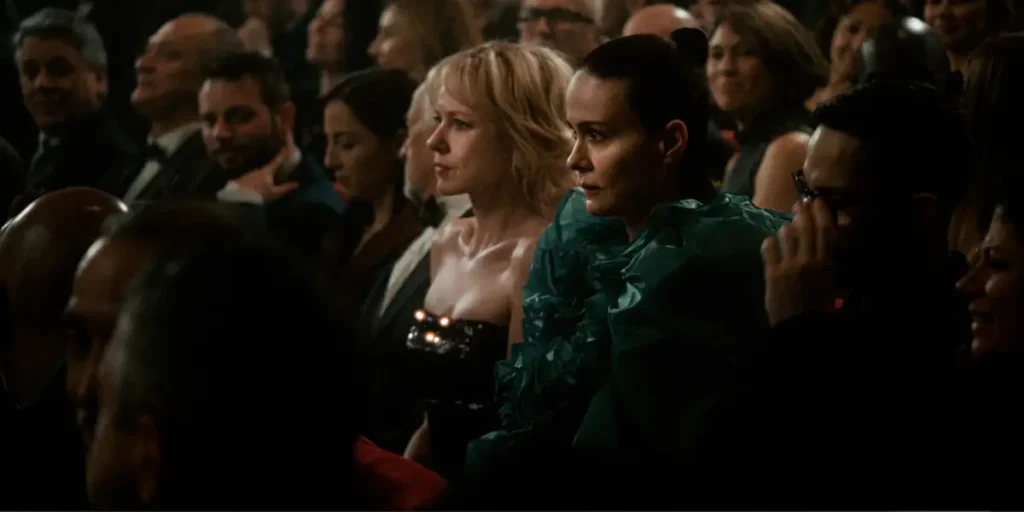
Sarah Paulson gives the best performance of her career in Cody Fern’s debut Closing Night, with Naomi Watts and Dianne Wiest right beside her.
Director: Cody Fern
Genre: Family Drama
Run Time: 115′
TIFF Screening: September 12, 2026
U.S. Release Date: TBA
U.K. Release Date: TBA
When Cody Fern was young, an aunt told him his mother had been denied an abortion while pregnant with him. That’s a heavy thing to hand a kid. Fern grew up carrying that story and trying to understand the complicated relationships it created. Closing Night is what came out of that, and it hands Sarah Paulson the role of her life. Fern calls the film emotionally autobiographical and narratively fictional. It’s the first half of that phrase you feel most strongly in the room watching it and should pay close attention to.
Sandra Vale (Paulson, of American Crime Story) is a famous actress of stage and screen preparing to open a production of Bertolt Brecht’s Mother Courage and Her Children. She’s been estranged from her family for thirty years but invites them to opening night for reasons they can’t fully understand. Her sister April (Naomi Watts, of The Friend) races to New York to keep her adrift son Theo (Toby Wallace, of Babyteeth) away from his aunt. Then Sandra collapses onstage, and the awkward hospital reunion reveals that Theo and Sandra have already met.
I’m going to be that guy. Paulson should be nominated for an Oscar for this. It’s the best work she’s ever done, and I don’t think festival fever is talking. Sandra is acerbic, difficult, and used to being the most important person in any room, and Paulson won’t soften her for us. She’s also fragile in ways Sandra has never been able to cope with. Fern wrote the part for Paulson without telling her, then sent it to her agent to keep things formal. She cried while reading it, and before it’s over, you’ll know why.
Watts is frazzled, manic, and exhausting in exactly the right way. April has spent decades trying to hold a family together with a barely-sticking band-aid, and Watts shows you both the effort and the cost. She’s the kind of person who can get on everyone’s nerves while also being the one person keeping everything from flying apart.
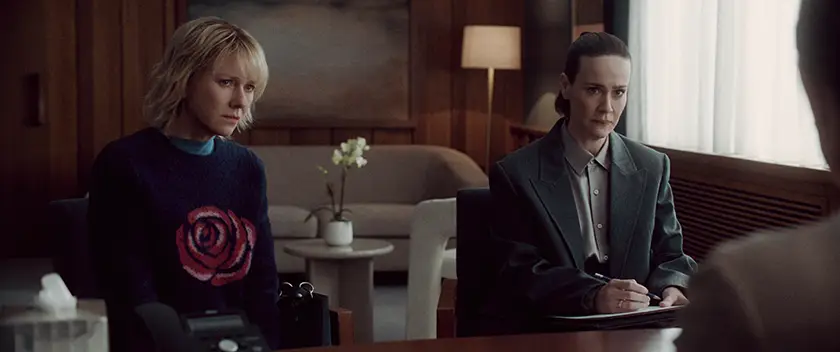
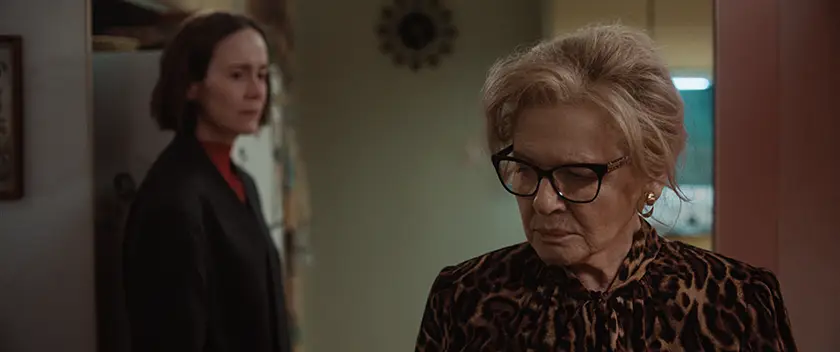
Wiest gets one of the oldest tricks in the cinematic book and makes a meal of it. The film spends a long stretch discussing her character before she actually appears, with various attempts to get her into the hospital turning into a comic mess of crossed wires. By the time Wiest finally shows up, boozy and flushed, we’ve already built her in our heads. Then she delivers a series of near-muttered six-word takedowns and takes over the room. Forty years into her career, the two-time Oscar winner can still make an entrance. Getting three performances this good in one movie is rare. Getting them from Paulson, Watts and Wiest at the same time feels almost unfair.
Fern and co-writer Devon Bostick have a long history together, and that matters here. Bostick wasn’t brought in simply to punch up a finished script. The two worked through several rounds of revisions together, with the story gradually becoming something bigger than the autobiographical spark that started it. Fern originally wrote Theo as much more of a protagonist, but the pair eventually shifted the focus toward the complicated women surrounding him. That gives Closing Night a fuller arc than a simple autobiographical retelling ever could.
Fern also built the shoot around his actors. On an independent budget, he gave a full day to one scene between Paulson and Wiest. The turning point involving the whole family got two. That’s an expensive thing to buy, and you can plainly see what it bought. The camera stays with these people long enough for performances to change in front of you instead of cutting away because the schedule says it’s time. Fern specifically wanted the actors to have room to breathe rather than pulling away from a moment simply because it was convenient for a cut.
Yves Bélanger, who shot Dallas Buyers Club and Brooklyn, knows how to hold a face without crowding it. Élise de Blois’ production design gives each home its own personality, from Sandra’s orderly brownstone to the more chaotic spaces surrounding the rest of the family. Dany Cooper’s editing understands when a scene needs another beat. Even the theatrical lighting during Mother Courage gives Sandra’s public life a different texture from the family scenes.
The reference points help explain the register. Fern keeps Mike Nichols in his head and says he’s watched Postcards from the Edge several thousand times and it happens to be Paulson’s favorite film as well. That lineage is all over Closing Night: famous women, family wreckage, and jokes landing inside real pain. The film was called Mother Courage until late in the process, and honestly, I liked that title better. There’s something wonderfully loaded about putting that play inside a story about mothers and the sacrifices they make.
When the originally cast Toni Collette was unable to play April, Watts came aboard on Paulson’s recommendation after the two worked together on All’s Fair. The sisterly shorthand between them isn’t something you can fake. Wallace and Odessa A’zion, as Theo and his partner Lucy, hold their own but have less room to make an impression, often literally standing at the edges while the three older women tear into one another. A’zion brings a more contemplative side to a performer who has made a habit of playing volatility, but I wanted more of that new shade.
Some people walked out calling this camp or melodrama. I’d push back on both. Camp needs some distance from its own feelings, and there’s none here. Melodrama needs the plot to manufacture the emotion, while Closing Night lets the characters do it themselves. Just because something carries an emotional price tag doesn’t make it melodramatic.
Fern says nobody in Closing Night ever says “I’m sorry,” “I forgive you” or “I love you.” The film is his way of saying them. Paulson, Watts and Wiest spend the movie finding their own ways to express all three without ever saying the words. That’s what makes the film hit as hard as it does. Fern didn’t make a movie about mothers from a safe distance. He put his own complicated history on screen, worked through it with Bostick, and trusted three extraordinary actresses to make it hurt.
Closing Night (Tiff 2026): Movie Plot & Recap
Synopsis:
After thirty years of silence, a celebrated stage actress invites her estranged family to the opening night of her new play, and a collapse onstage forces three generations into a room with everything they never said.
Pros:
- Paulson’s best screen work, with Watts and Wiest at the same altitude
- Fern bought his actors time, a full day for one scene, and you can see every minute of it
- A script with a complete arc that never moralizes about any of its three women
Cons:
- The ending will land differently depending on what you bring to it
- Sandra’s acerbic streak is a wall to climb in the first half hour
- Wiest is held back so long that some will want more of her
Closing Night was screened at TIFF on September 12, 2026.