
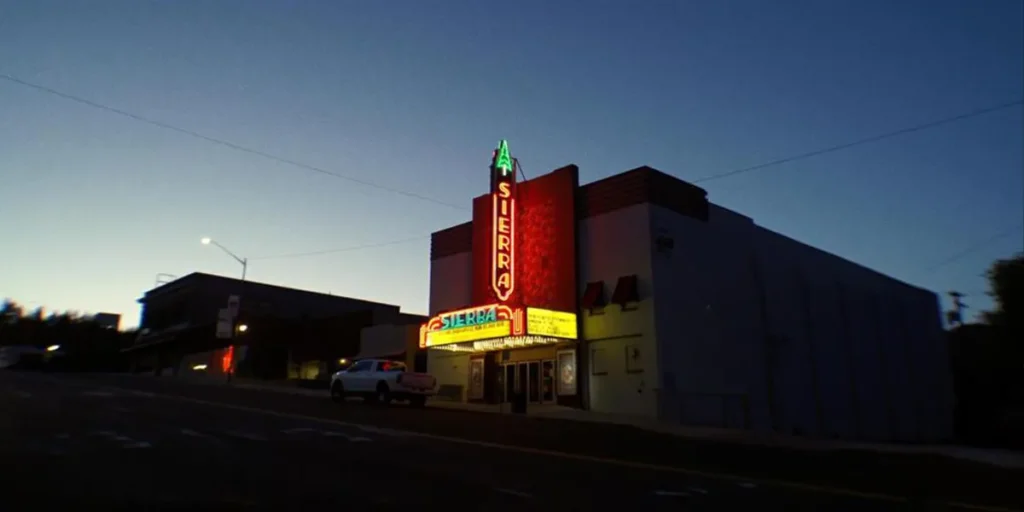
Rustin Thompson’s The Last Picture Shows is a simple yet fun documentary about the last remaining small-town cinemas in Western United States.
Writer and Director: Rustin Thompson
Genre: Documentary
Run Time: 78′
U.S. Release: August 7, 2026 (NY); August 21, 2026 (LA)
U.K. Release: TBA
Where to Watch: In U.S. theaters
Rustin Thompson’s The Last Picture Shows is all about the love for the cinematic experience. Most importantly, it’s about how it can be preserved, and about the people who are trying to preserve it. Mind you, it’s also a documentary focused on a very specific type of cinema in a specific area of the United States, but even through such a particular lens, it manages to feel like it’s talking about cinema in general and all kinds of cinephiles all over the world. Thus, it has the power of making its viewers nostalgic for experiences they might not have actually had, ending in a surprisingly hopeful manner.
In order to make The Last Picture Shows, Thompson travelled thousands of miles through ten different states in the U.S., looking for various small-town cinemas. Some of them still work; others have been transformed into Subway restaurants or live concert venues, and others have simply been demolished or abandoned. The point of The Last Picture Shows is to show that cinemas used to be the pride of these kinds of small towns, usually located downtown or on the main avenue, and through the years have had to fight against other forms of entertainment, and more modern inventions such as the TV or, of course, streaming.
Now, since The Last Picture Shows was shot a couple of years ago, it also deals with the consequences of COVID. Many of the people interviewed in the documentary – the owners, projectionists and managers of the cinemas – talk about how the pandemic and the lockdowns affected their jobs, and how things have not necessarily been the same since those days. Most importantly, the movie includes interviews with a film professor and historian, who says that the pandemic made people forget certain traditions, such as going to the cinema, and that returning to a tradition after some time can be difficult for any person.
Thankfully, The Last Picture Shows is not all doom-and-gloom. In fact, the movie works best when it’s trying to feel like an homage to cinema and the cinema experience. It includes several pictures and old-timey videos of old cinemas, many of them having been built in the early twentieth century. There are comparisons between their first years of operation and their current state, and even scenes from movie classics such as Cinema Paradiso, just to make it clear that the film is all about the love of cinema and going to the cinema. To a certain point, The Last Picture Shows also feels like a tribute to these small businesses, and the important role they’ve had in shaping culture and entertainment in places where there probably weren’t many other things to do.
Additionally, there’s a whole section dedicated to drive-ins. Decades ago, the U.S. had more than eight thousand drive-in cinemas; today, it’s got a bit over four hundred. Nevertheless, Thompson manages to interview the owner (nowadays, former owner) of a specific drive-in cinema, which has existed for more than sixty years. Its golden years may have been long gone, but the place is still pretty popular, attracting a good number of clients every night, mostly families. Much like a single-screen small cinema, the drive-in feels like a product of a time long gone, but it still has its fans.
The Last Picture Shows also touches upon the financial challenges all these cinemas must take on, and through the aforementioned interviews, manages to say something about the relationship between the businesses and the studios. In short, most of the owners and managers who appear in the film believe they know their audiences better than the studios, and that if they were allowed to control which films to project and for how long, they would do better business. The Last Picture Shows uses notorious DC flop Shazam! 2: Fury of the Gods as a sort of case study, with the interviewees saying that Warner Bros. made them show the movie for at least two or three weeks, despite most of the showings being empty, and them knowing that there were better and more successful movies out there that they could have shown instead.
This proves that small-town cinemas cannot be treated the same way as multiplexes or theatre chains. These must work like independent businesses with dedicated fans and customers, and not as a part of a bigger plan devised by the studios, which, apparently, don’t understand that the people who go to Cinemark or Regal aren’t the same as the ones who go to a single-screen, independent cinema built in the 1920s in the middle of a small town in the desert. It’s also interesting to hear the owners saying that their customers would appreciate watching older films, something that has actually started to happen in the last couple of years (and after this documentary was shot), with anniversary re-releases in cinemas turning out to be extremely popular.
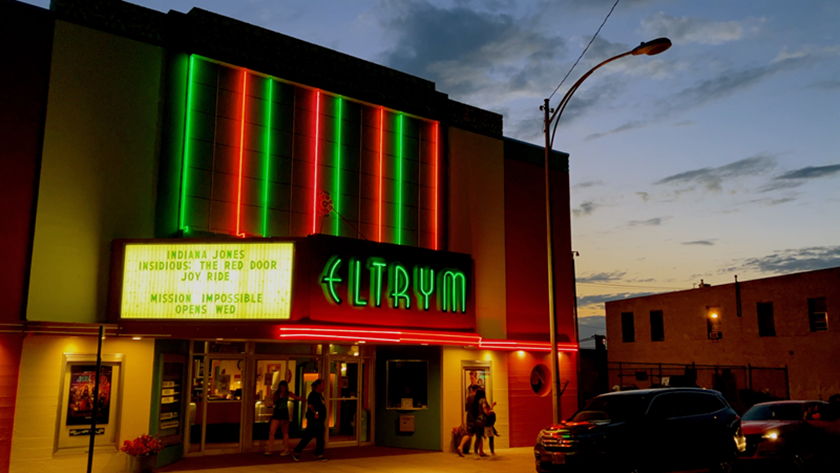
Now, despite all the problems these cinemas face, The Last Picture Shows doesn’t feel like an obituary for the cinematic experience. In fact, the movie concludes rather optimistically, with onscreen titles telling the viewer about the fates of many of the cinemas that were showcased in the film. All of them still work; some were sold to rich movie-lovers who will keep them operational, and even the one that was transformed into a live concert venue has started showing movies again. Like the film historian says at one point, human beings are social creatures and are always looking for things to do as a group, to gather, to look for culture together. That’s why cinemas won’t die.
It was a pleasure watching The Last Picture Shows. Yes, it could have been more visually arresting (there’s one particular interview, in fact, that keeps getting interrupted by people walking in the background, which feels both endearing and frustratingly unprofessional) and definitely longer, and at times, it relies too much on nostalgia. But in the end, the film made me miss a kind of communal cinematic experience that I’m too young (and non-American) to have had. And it also made me appreciate cinemas even more, making it clear that, as long as cinephiles and lovers of culture and social gatherings exist, the cinema as an experience outside the house will never die. It survived the radio, TV, the Internet and streaming, and I’m sure it will keep surviving through even more.
The Last Picture Shows: Movie Plot & Recap
Synopsis:
Documentarian Rustin Thompson travels thousands of miles through ten states in the U.S. to hear and record the stories of old, run-down, existing, closed and surviving small-town cinemas.
Pros:
- Nostalgic and entertaining.
- Showcases little-known stories about small cinemas.
- Interesting interviews.
- Feels more relevant than ever.
Cons:
- At times, it relies a little too much on nostalgia.
- It could have been longer!
The Last Picture Shows will be released in theaters in New York on August 7 and in Los Angeles on August 21.