
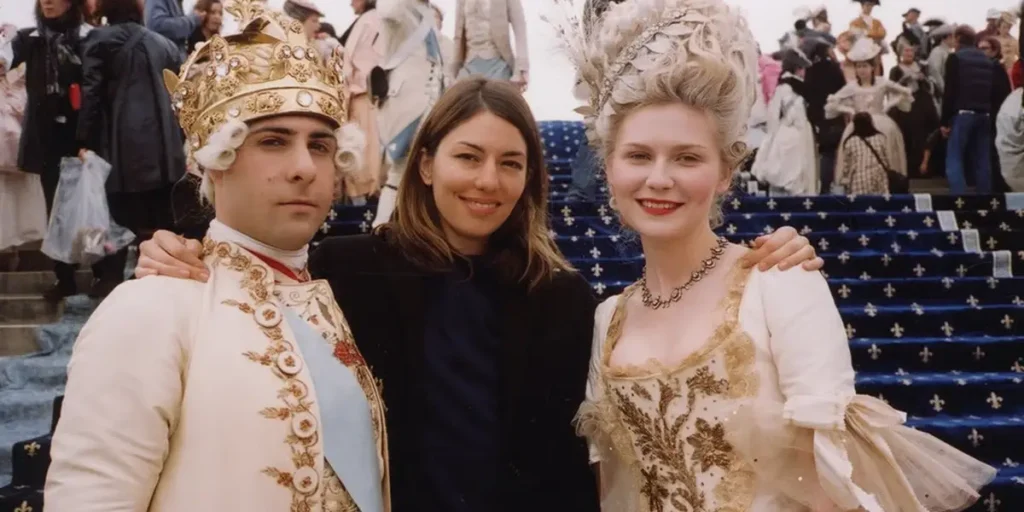
With Eleanor Coppola’s Making Marie Antoinette, we witness a posthumous conversation between mother and daughter, honoring one another’s talents.
Director: Eleanor Coppola
Genre: Documentary
Run Time: 86′
New York Film Festival Screening: September 29, 2026
Theatrical Release: October 23, 2026 in select theaters
Digital Release: November 6, 2026 on MUBI
Sofia Coppola’s work, for so many, is the embodiment of what it feels like to be a young person trying to navigate the world. Whether it’s a film like Lost In Translation, perfectly encapsulating what it feels like to feel stuck in a life you don’t even know how you found yourself in, or The Virgin Suicides, demonstrating the depths of emotion young people feel, her films strike something in audiences that makes them nostalgic for a more innocent time in their lives.
Her uncanny ability to capture this feeling makes one curious as to how Sofia has waded through the waters of young adulthood to become someone who so effortlessly can tap back into a sense of naivety and recreate the feeling of newness she experienced as the world changed around her. When Sofia took on her third feature film, the prodigious life story of Marie Antoinette, her mother, documentary director Eleanor Coppola, captured the entire shoot. In her final and posthumous documentary, Making Marie Antoinette, she gives audiences an in-depth behind-the-scenes look at the hard work, long hours and sprinkles of magic that go into making a Sofia Coppola film.
Making Marie Antoinette opens at the Palace of Versailles in March of 2005. A 34-year-old Sofia Coppola is glancing at a 22-year-old Kirsten Dunst as she has her wig powdered in a luxurious bathtub. Sofia has never worked on a project to this scale before. There are hundreds of extras, all needing to be in period-appropriate hair and makeup, a tight schedule delegated by a once-in-a-lifetime government approval to shoot on location and thousands of moving pieces needed to be approved by Sofia before any decision is definitively made.
This is only Sofia’s third feature film, and due to its wild ambition and unique circumstance, her mother Eleanor asked to document the entirety of the shoot. While Eleanor shot over 80 hours of footage in 2005, the documentary itself would not be set into motion until the 2020 Covid-19 lockdown mandates allowed her and Sofia to revisit the footage, uninterrupted, over 15 years later. When Eleanor passed in 2024, Sofia ensured the documentary would be complete and included diary entries from her mother at the time of the Marie Antoinette shoot to try and present the film as thoroughly through her mother’s eyes as possible.
What started as a movie a mother made to capture the genius of her daughter ended up being a daughter’s way of honoring the talent of her mother. Making Marie Antoinette is a final artistic conversation between Eleanor and Sofia, where the two women are able to see one another in their boundless complexities and pay homage to each other’s craft they so deeply admired.
Through the eyes of Eleanor, we understand Sofia’s genius lies in her ability to be opinionated, decisive and open to collaboration without sacrificing her vision. It’s a beautiful and nuanced way to paint her daughter and through the guide of Eleanor’s diaries we understand these things that make Sofia a great director were always present throughout her life. Eleanor talks about how their relationship was vaguely adversarial throughout her teenage years, and while it stung to be pushed away, she knows it was because Sofia needed to find herself separate from her identity as Eleanor’s daughter.
In this, Eleanor creates such a moving acknowledgement of these initially perceived faults that turned into Sofia’s greatest strengths. It’s in moments like this throughout the film that you, as an audience member, can understand Eleanor’s willingness to allow Sofia to find herself, regardless of how it affected their own relationship, is what allowed her to become such a formidable creative force to be reckoned with.
The real beauty of the film, however, lies in the way in which Sofia, with the help of editor Aaron Matthews, honors her mother with an equal amount of admiration in completing her final project. While throughout the film she may seem short with her mother or too tired to do the interview Eleanor is requesting she completes before a long day of filming, the way in which Sofia shaped the film in her mother’s artistic language is nothing short of extraordinary.
The use of her diaries allows an intimate look into the psyche of Eleanor as a filmmaker and her anxieties about proving her worth as a creative. Throughout the film, she admits she is nervous about the weight of the project that lies solely on her daughter’s shoulders and how monumentous movies like this seem to come so naturally to everyone in her family besides her. She paints a beautiful portrait of Sofia’s relationship with her brother Roman and father Francis, both renowned directors who seem to share a secret language between the three of them she’s never been completely in on.
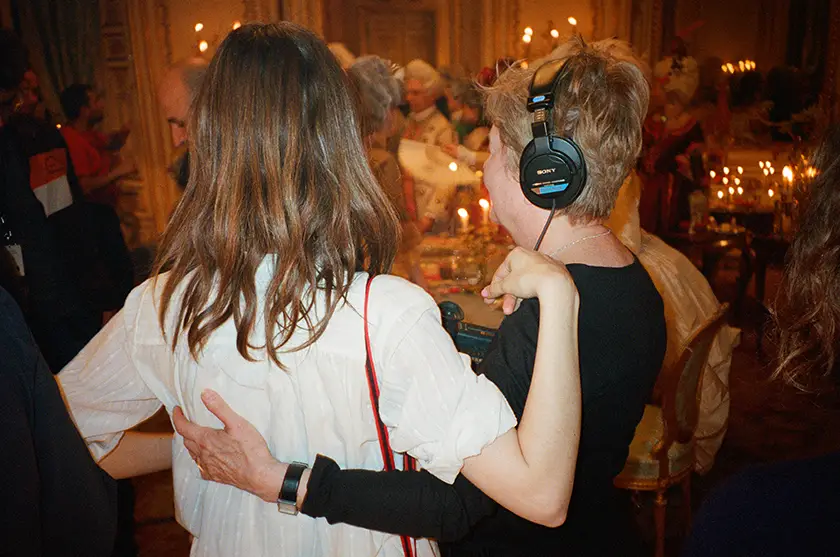
Eleanor notes that while everyone in her family feels so natural at the center of all this madness, she struggles not to feel like an irritant to the set. She’s an observer, not a mastermind behind the logistics and costumes and actors like her family is and there’s a sincere honesty in her admiration for her young daughter’s ability to be so clear in her vision while she still struggles to understand her own.
However, the film also contains countless moments where the cast and crew of Marie Antoinette alike welcome Eleanor’s camera with a warm smile or an excited hello that shows the anxieties she had surrounding her place on set were unfounded. It feels like an attempt from Sofia to posthumously reassure her mother that her place on that set had its own creative purpose, just as worthy as Sofia’s herself.
While Making Marie Antoinette is a spectacular documentary capturing a once-in-a-lifetime film shoot, it resonates as something much deeper and more personal. In Eleanor Coppola’s final film, we witness a mother’s admiration for her daughter’s talent, and a daughter’s posthumous honoring of her mother’s gift. It’s a truly special acknowledgement of one another as artists, people, women and filmmakers.
Making Marie Antoinette: Movie Plot & Recap
Synopsis:
Eleanor Coppola documents her daughter, Sofia Coppola, as she directs her third feature film, Marie Antoinette.
Pros:
- A moving love letter between mother and daughter, both appreciating the beauty and rarity in one another’s craft.
- A truly one-of-a-kind look at a once-in-a-lifetime film shoot.
- The type of behind-the-scenes footage you could watch for hours on end without getting bored.
- The inclusion of Eleanor’s diary entries creates a perfectly poetic narration to Sofia’s process.
Cons:
- None to name.
Making Marie Antoinette was screened at the New York Film Festival on September 29, 2026. The film will be released in select theaters on October 23 and on MUBI on November 6.