
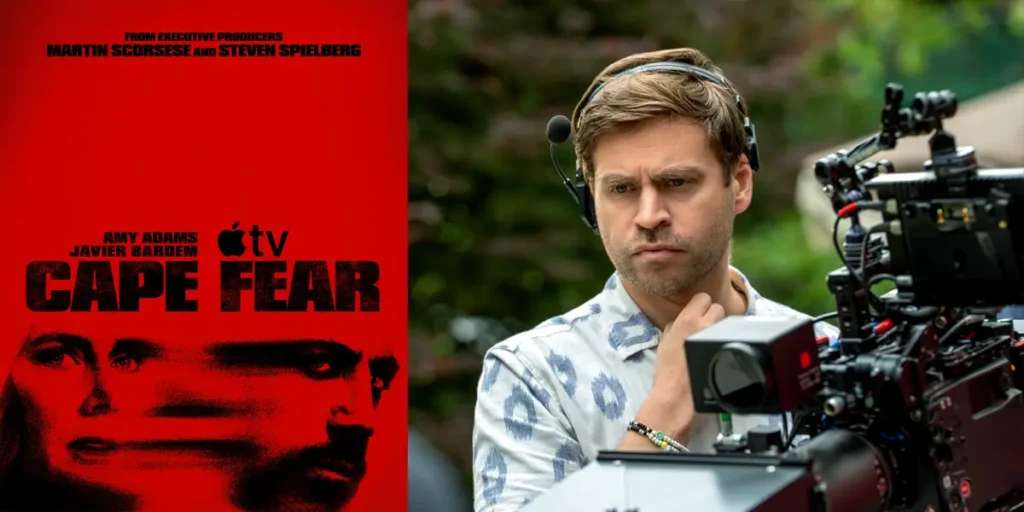
We interview Cape Fear lead Director of Photography Eben Bolter on the Apple TV show’s innovative and captivating take on a timeless classic.
In 1962, Robert Mitchum and Gregory Peck were set against the lush maritime forests and sticky humidity of Savannah, Georgia, to tell the story of a man on a blood-curdling quest for vengeance in J. Lee Thompson’s Cape Fear. In 1991, Robert De Niro and Nick Nolte took up the mantle of Mitchum and Peck, but brought us into an even darker, more deviant version of the Savannah jungle than we had previously seen as Martin Scorsese gave us his take on Cape Fear.
Once again, the story of Cape Fear has been reinvigorated by showrunner Nick Antosca, but this time as a television series for Apple TV. Javier Bardem stars opposite Amy Adams and Patrick Wilson in a version of this iconic story that proves to be more sinister, experimental and wildly entertaining than ever seen before.
Cape Fear follows the Bowden family, who serve as the perfect example of a shiny, smiley southern family. Anna (Amy Adams) and Tom (Patrick Wilson) are lawyers with two teenage children who all live on a lavish Savannah estate and bask in the adoration of their neighbors. While Tom finds great success in his practice, Anna is working tirelessly on a program to free wrongfully convicted felons.
Their perfect world, however, threatens to come crashing down when Max Cady (Javier Bardem) is released after serving 17 years in prison and comes back into town to seek retribution on the lawyers who forced him to take a bogus plea deal, despite knowing he was not guilty. The lawyers in question? The beautiful, beloved Bowdens. As Max Cady begins to worm his way into the good grace of the public, wedges are driven between and amidst the Bowden family as life as they know it is about to change forever.
We had the distinct pleasure of sitting down with Cape Fear’s Director of Photography, Eben Bolter ASC BSC, to discuss the reinvigoration of this timeless classic. In our interview, we talked about Bolter’s personal connection to the 1991 film, his efforts to make this iteration of the story uniquely cinematic and bold and what it was like to collaborate on a set blessed by the likes of Steven Spielberg and Martin Scorsese.
Eben Bolter on his first trip into Cape Fear and how he built his own version of it
Cape Fear is a story with so many iterations that have each become iconic in their own right. What was your first introduction to this world?
Eben Bolter: I think I saw Cape Fear 1991, right when I was falling in love with cinema. That love first started when I was around 10 years old with Jurassic Park, which sent me off on a Spielberg adventure where I fell in love with all his films. When I got a little older, I discovered Goodfellas, which brought me into Scorsese’s work and led me to Taxi Driver, Raging Bull and then Cape Fear.
I remember, at the time, being struck by how adventurous Scorsese was in how he shot the ‘91 film, how iconic the score was, and the really huge theatrical moments in that film. The movie is always kind of there in the back of my mind as this really interesting and really extreme vision, which really impacted the way I looked at cinema.
The series strikes a really hard-to-achieve visual balance between paying homage to the earlier adaptations of the story and introducing this very modernized look. How were you able to find that balance, and to create something completely fresh for this iteration?
E.B.: The ‘91 film is so visually bold, risk-taking and expressive that I think it was a great liberator for us. We thought this story, this tone and the influence of the ‘91 film would give us an opportunity to pay a little bit of homage to the bold way in which the film was made, but also move it forward and take it somewhere new. It then became a matter of studying the ‘91 and ‘62, which led us to look at other films with that sunset noir feel. We dove into that genre framing hot weather around dark stories, which holds a really nice dichotomy.
I think we were also lucky that our showrunner, Nick Antosca, liberated me as a DP to really take risks and be expressive, which became the theme of the shoot. The focus in television is often the script and the performance, and rightfully so, but in a story like Cape Fear, the atmosphere and visual storytelling really do enhance the story. It becomes so enriched by the feeling of Savannah and the presence of Cady, not through being told about the two, but through feeling it throughout the music and the visuals.
Nick really wanted us to get out of our comfort zones. We started asking, “How do we be bolder?” and it often boiled down to realizing it’s a 10-episode series of television, so we couldn’t be completely insane out of the gate and leave ourselves nowhere to go. We didn’t want to exhaust the audience watching in episode one, so we decided to plant seeds for the weirdness of things to come, and then we just built on that throughout the season.
It was just a great opportunity to have some really big swings, and all of the crew got on board with that immediately. We looked at both the ‘91 film and the television landscape that exists now and thought about what we could do that would be punchier and bolder.
From the use of black and white but also infrared filters to the dutch angles and voyeuristic shots to the amount of time the camera spends underwater, the ambition and intention behind each shot is so clearly shown. How did you make the decision to take these huge creative swings that enhanced the story rather than distracting from it, and was that a hard balance to strike?
E.B.: We set ourselves some hard parameters and an intentional set of rules. We allowed ourselves to be as extreme as was appropriate for the storytelling in that moment. The only times it felt like it didn’t work or didn’t make sense were when we were bringing a crazy camera angle or move, or an extreme lighting choice to a moment that wasn’t extreme. We tried to meet each moment with the shot and it then became a case of keeping ourselves in check.
We would find the moments of extreme visual sensation and make the most of those moments, but then know when to simmer down again and get into normal shots when having a simple conversation. In that sense, it all came down to pinpointing big moments to make something out of. As the show grew, our camera operators became co-creators in that. For example, Jarret Morgan, who was my ‘A’ camera operator, would come up to me and say, “Well, we did this crazy thing last time and this moment is kind of similar, so I had this idea to do something even crazier”.
It quickly became the show where I’d respond, “I love that; let’s do that”. There wasn’t anything too crazy that we could come up with, so long as the moment deserved it. When I worked on The Last of Us, that show was completely story and emotion-led in a subtle way. That was very much about staying out of the way and not making the visuals the thing you’re thinking about, but this was sort of the opposite of that at times.
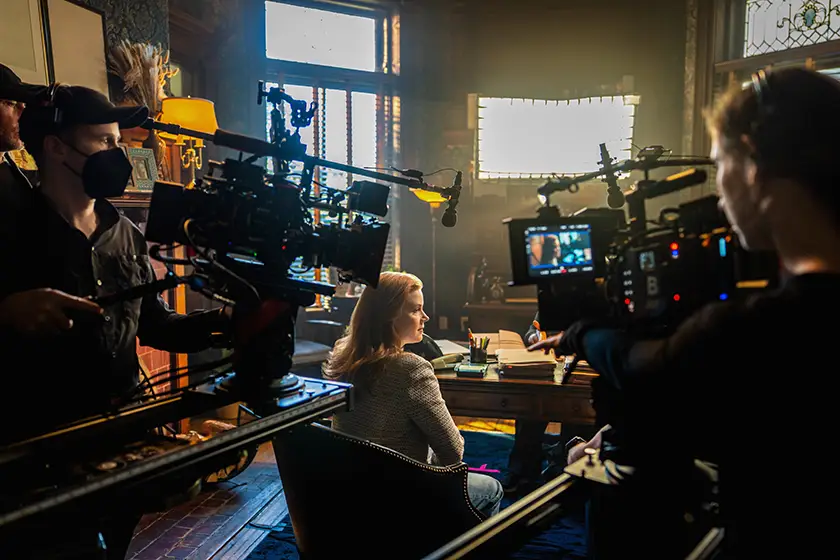
Eben Bolter on the creative collaboration within Cape Fear
When thinking about the older film version of Cape Fear, the green, wet, hot atmosphere of Savannah sticks out as one of the most memorable aspects of the story. While a lot of the series takes place within the Bowden household, it is notably reminiscent of a jungle landscape with deep greens and nature motifs.
How much did you collaborate with other creative teams, such as production design, to pull off these intentional aspects of the visual storytelling?
Eben Bolter: The location of Savannah was a huge component that we talked about often. It particularly struck me because I had the experience of shooting Slow Horses in February in the UK on a cold, wintry beach. We were in the middle of nowhere with massive coats and just freezing cold. I wrapped that job, I had one day off, and then I flew to Savannah, and it was incredibly hot.
There was Spanish moss on the trees and a thunderstorm every two hours; I was completely overwhelmed with everything just being so exotic and different and hot, and straight away felt like we had to convey this particular feeling to the audience. There are so many things that are integral to that feeling, but the big one for me was the humidity.
We came up with the idea that it would have either just rained or it was going to rain soon, so it became a case of wetting down every street in order to get the condensation to rise up in the shot, or wetting down all of the trees and the bushes outside, so you’d get little tinkles of water, even if it wouldn’t be actively raining.
All of that sense of moisture and heat just became this big thing that all the departments could jump off of. Makeup would be spraying sweat onto actors, costume would be dressing in sweat marks on clothes, and Jamie [Walker McCall], our production designer, was incredible to collaborate with. She was completely on board with that concept.
She would create glass that reacted differently with the water landing on it. Quite often on movie sets, you use a pretty matte paint so that it doesn’t reflect the lights, but she wanted to do the opposite. We were using glossy paints, so even indoors, there was this shimmering, sweaty shine with everything. Everyone, from every department, latched onto this and ran with it in their own way.
It seems that to create this vision in the most cohesive way possible, you’d need to get the creative departments all on board. Can you talk me through initially pitching the vision you had for the show to Nick?
E.B.: Usually, when a script comes to the cinematographer, it’s been with other people for a very long time. My approach is to read it like I’m the audience and it’s already been made; that way, you can’t help but imagine things the way you imagine them. Even though most of the story is already written in the script, you’re still perceiving it and imagining things in your own way and then I’ll go through it again and really start to think like a DP.
I start to mark off opportunities, potential themes and anything else sort of theoretically, but in a way that’s very loose because I don’t want to wander off in one direction when the showrunner, who has usually lived with this thing for years, has a completely different vision. My process is to do all that work, but then put it away before I interview so I can hear the showrunner out.
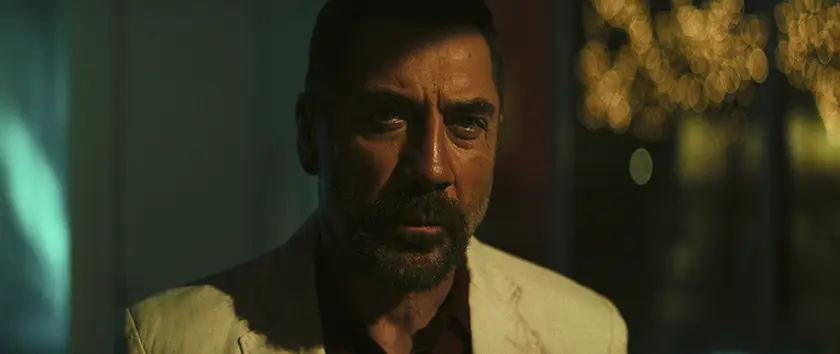
The first time I talked to Nick about the show, it was me asking a lot of questions about how he saw and imagines things. The big thing he told me that struck me, visually, was the idea of a family with a seemingly perfect life but skeletons in the cupboard and sinister things out there watching, almost hunting, them. It reminded me a lot of a panther in the grass, hunting its prey from far away. That led to me giving the idea of using zoom lenses through very far away trees to look through the foliage and zoom in on this family. We talked a lot too about the ‘91 Cape Fear and the tone, which led me to realize the things he was envisioning really were exactly how I imagined them, which really liberated me to bring more ideas forward.
Eben Bolter on Spielberg, Scorsese and what’s to come after Cape Fear
You mentioned earlier that your love for cinema is tied to your introduction to films like Cape Fear and, specifically, directors like Spielberg and Scorsese. How would you describe your experience being on the same project as them and did you feel any pressure working directly in correlation to them?
Eben Bolter: To be attached to a project with their names on it is so insane and completely surreal. They were incredibly involved at an executive level for decisions about what the show iswas where we were shooting, the cast, and the overall tone. I think, though, because they’re both such auteur directors themselves, they actually liberated the filmmakers to do their thing without hanging over them.
The idea of Spielberg or Scorsese being on set and looking at a monitor while I’m setting up a shot is just sort of absurd and to be honest, kind of unfair. I think everyone on set would just ask if they wanted to tell us what to do. They weren’t on set, but would watch dailies and give notes and be very encouraging. It was just crazy anytime that Nick would kind of pass something complimentary on from either of them. I wanted to see if there was a way I could get it printed and framed.
You’ve been a part of several projects that have fueled cultural conversations over the past few years, which I don’t doubt Cape Fear will join the ranks of. How do you go about selecting projects and what do you hope is next for you?
E.B.: I feel crazy lucky to have worked on some of the things I’ve worked on. I think the difficult thing in this job of being an artist is constantly questioning, is my art good? Does it have value? You’re trying to do the best you can do with every project, but also you can only do what’s most appropriate for that project, and I find the key for me has been a genuine love of what I do, and a genuine love of film and television.
With The Last of Us, that was an IP and a video game that I’ve known about since it first came out on the PlayStation, however many years ago now. I knew if they adapted that game, that would be a dream job for me. When that job did come along, I hunted it down. I really had my team get me in the room, and get me the interview, because I knew if I could speak about it; I had a good chance of getting the job and doing good work on it, because I was so passionate about that story. That kind of thinking has just carried along this path.
When Cape Fear came along as a project in my inbox, I was passionate about wanting to do it, because it’s a story that I think influenced me a lot in ‘91 and I thought the new version was a brilliant update to that story. I was passionate about wanting to be a part of it, and I think that passion comes across.
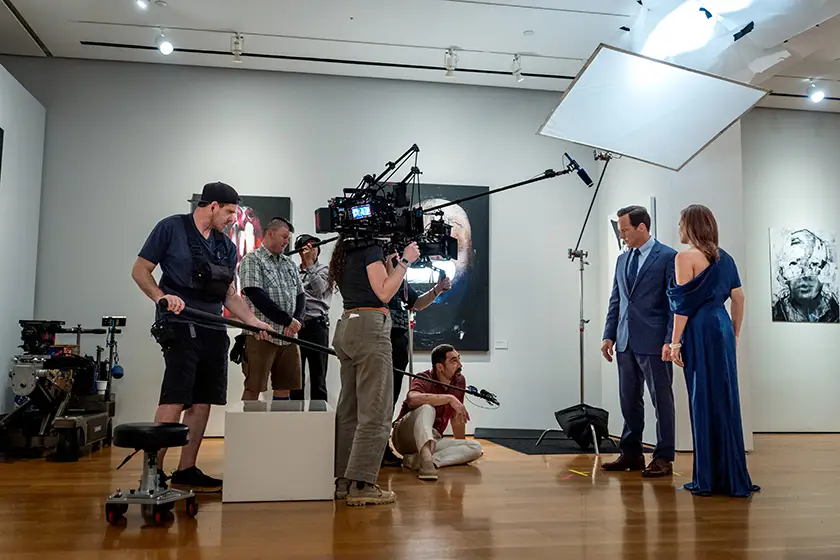
What we filmmakers do is an incredibly lucky, privileged job, but it’s also an all-consuming one. It’s a life where you end up having one day off work from a long series like Slow Horses and then fly to spend nine months in Georgia, so you only do that if you absolutely love what it is that you’re doing. That’s what it is, really. I like everything I’ve done and I’ve been lucky to be passionate about doing it. I think where it would be really difficult is if I ended up on a job where I didn’t believe in it. That’s where I think that’s a recipe for disaster.
What do you hope is next for you?
E.B.: I would love to do a film next. I was lucky to do Mike Flanagan’s last feature film, called The Life of Chuck, and the experience of doing a feature film with an auteur like that was why I got into this business. I wanted to make films, and something like Cape Fear feels like a film in that it’s such cinematic television. Still, I would love to go and do a film that people can watch in cinemas next.
This interview was edited for length and clarity.
Cape Fear is now available to stream on Apple TV.