
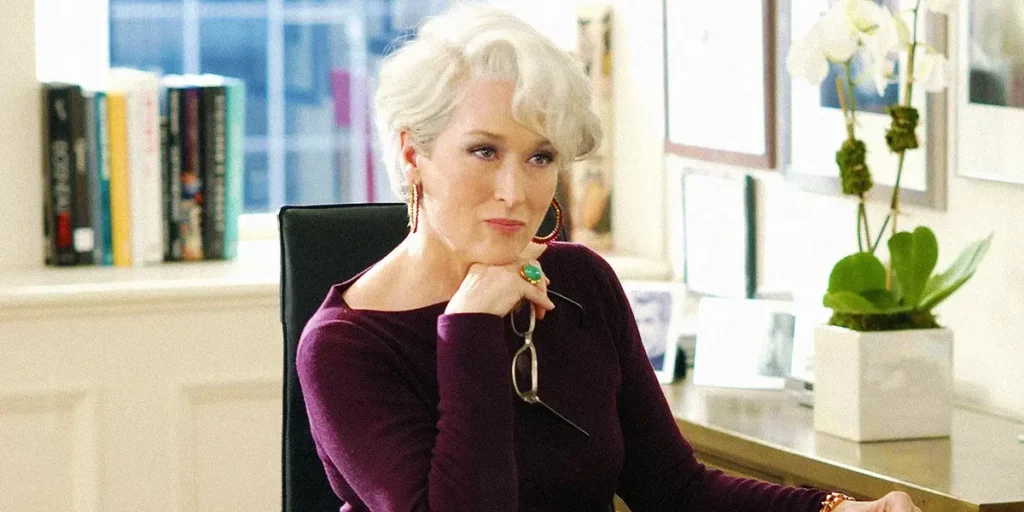
What are Miranda Priestly’s favorite movies? We imagined the Runway editor’s private watchlist ahead of The Devil Wears Prada 2.
With The Devil Wears Prada 2 arriving in theaters on May 1, 2026, bringing back Meryl Streep alongside Anne Hathaway, Emily Blunt, and Stanley Tucci, Miranda Priestly is about to reclaim her throne. So we thought it would be fun to ask a question nobody has ever thought to ask: what movies does Miranda Priestly actually love? Not the films she’d recommend in a magazine feature. Not the films she’d name-drop at a benefit. The films she actually watches when the apartment is quiet and the twins are asleep and nobody from Runway will ever know.
Miranda Priestly is one of the most fascinating characters in modern cinema. First brought to life in Lauren Weisberger’s bestselling 2003 novel “The Devil Wears Prada,” the fearsome editor-in-chief of Runway magazine became a cultural icon when Streep stepped into the role for the 2006 film adaptation directed by David Frankel. Streep’s performance earned her an Oscar nomination for Best Actress and a Golden Globe win, turning what could have been a one-note villain into something far more layered: a woman of terrifying competence, buried vulnerability, and an encyclopedic command of fashion history that could reduce a room to silence with a single whispered observation about cerulean.
This is a creative exercise, a love letter to a character who contains multitudes, and our attempt to peek behind the Hermes scarf. Here are Miranda Priestly’s 12 favorite movies.
1. Bring It On (2000)
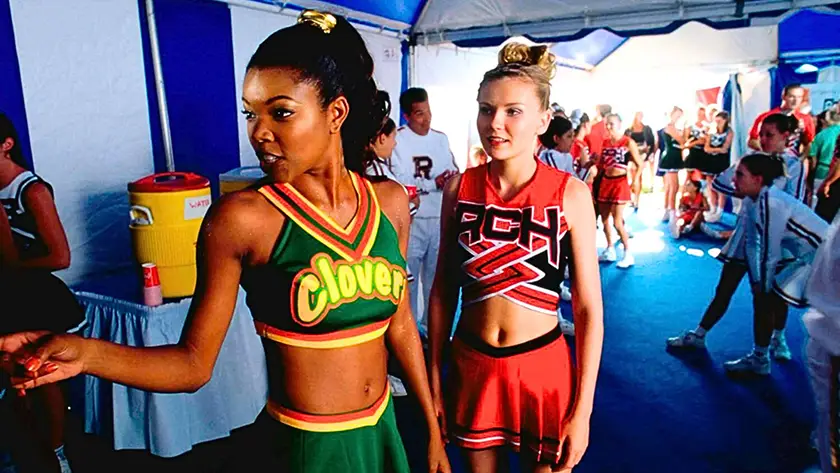
Miranda Priestly would tell you she has no idea why this film is on the list. She keeps putting it on for the twins, despite their protests that they’ve seen it “a million times, Mom,” which allows her to frame it as something they enjoy and she merely tolerates. The opposite is true. Peyton Reed’s cheerleading comedy follows Torrance Shipman, played by Kirsten Dunst, the newly appointed captain of a championship squad who makes a devastating discovery: every routine her team has won was stolen from a rival squad led by Gabrielle Union’s Isis. Every trophy, every reputation, every legacy she inherited was built on someone else’s work. Rather than collapse or pretend she didn’t know, Torrance scraps the entire playbook. She builds something original from nothing, under impossible pressure, with a squad that doesn’t fully trust her and a deadline that won’t move.
Miranda has lived that Tuesday. She also notices that Torrance doesn’t waste time tearing down her rival. She outworks her. Miranda would call that efficient. The twins, for the record, have asked if they can watch something else. Miranda has informed them they may not.
2. Parasite (2019)
Miranda first saw Bong Joon-ho‘s film when she served on the jury at Cannes, and it has been sitting in the back of her mind like a low hum ever since. Parasite follows the Kim family, four resourceful, underemployed people living in a cramped basement apartment in Seoul who see an opening when the son lands a tutoring job with the wealthy Parks. One by one, through elaborate schemes and manufactured credentials, each family member infiltrates the Park household as tutor, art therapist, housekeeper, and driver. They are competent, charming, and indispensable. The Parks welcome them into their home without verifying a single reference. The arrangement works beautifully, and then the seams tear, and when they do, the fall is sudden, violent, and irreversible.
Miranda found the Parks careless. Not cruel, not villainous, just careless. They let strangers into their living room because the strangers were polite and well-dressed, and they confused proximity with loyalty. When Miranda returned to New York, she had her Fifth Avenue penthouse thoroughly scanned for hidden spaces. She then had several of her staff followed for weeks to confirm they were, in fact, returning to their Brooklyn walkups at night. They were. Miranda did not apologize for the inconvenience, because Miranda did not inform them it had happened. What unsettles her about Parasite is not the deception. It is the reminder that the people closest to you are always the ones with the most access.
3. Funny Face (1957)
This is the obvious choice, and Miranda Priestly would want you to know that she finds obvious choices tiresome. But she’d also be incapable of leaving it off the list. Audrey Hepburn stars in Stanley Donen’s musical as Jo Stockton, an intellectual bookshop clerk in Greenwich Village who is discovered by a fashion magazine editor and transformed into the industry’s hottest model, whisked from her dusty little world to the runways of Paris. Kay Thompson plays Maggie Prescott, the commanding editor who orchestrates the whole transformation with the confidence of someone who has done this a hundred times before. Prescott practically invented the template Miranda would later perfect.
Miranda would tell you she admires the film for its visual composition and its understanding of Paris. What she wouldn’t tell you is that she sees both women in herself: the editor who commands the room and the bookish girl who was remade by the industry. Every reinvention has a before, and Miranda Priestly remembers hers.
4. The Leopard (1963)
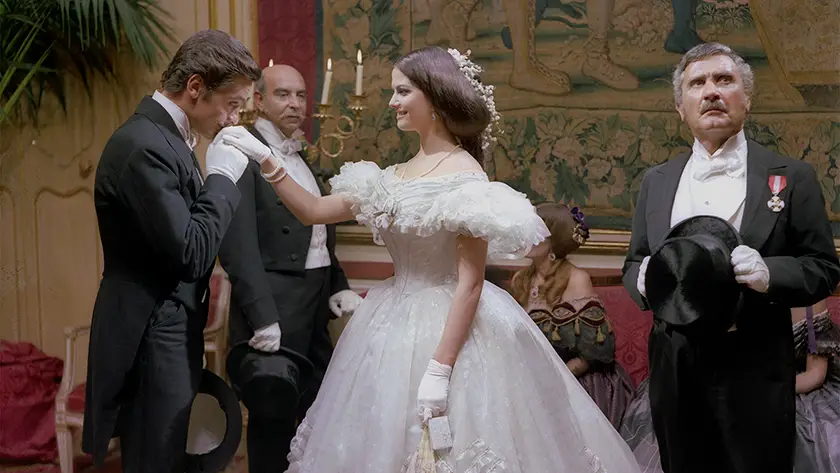
Luchino Visconti’s sweeping Italian epic follows Prince Fabrizio, a Sicilian aristocrat played by Burt Lancaster, as he watches the political upheaval of the 1860s Risorgimento dismantle the old order that gave his family its power. Rather than fight the inevitable, Fabrizio navigates the transition with grace, arranging alliances and marriages that will keep his bloodline relevant even as the world he built his life around ceases to exist. The film is gorgeous, unhurried, and deeply melancholic, anchored by a 45-minute ballroom sequence that ranks among the most beautiful stretches of filmmaking ever committed to celluloid.
This is the kind of film Miranda Priestly would reference at dinner with Donatella, and she wouldn’t be wrong to admire it. But the reason The Leopard stays with her is more personal than she’d let on. Prince Fabrizio understands something Miranda understands in her bones: that the world is always changing, and your only choice is to change with it or be left behind. Miranda has survived three decades in fashion by knowing exactly when to adapt. This film reminds her why.
5. Brief Encounter (1945)
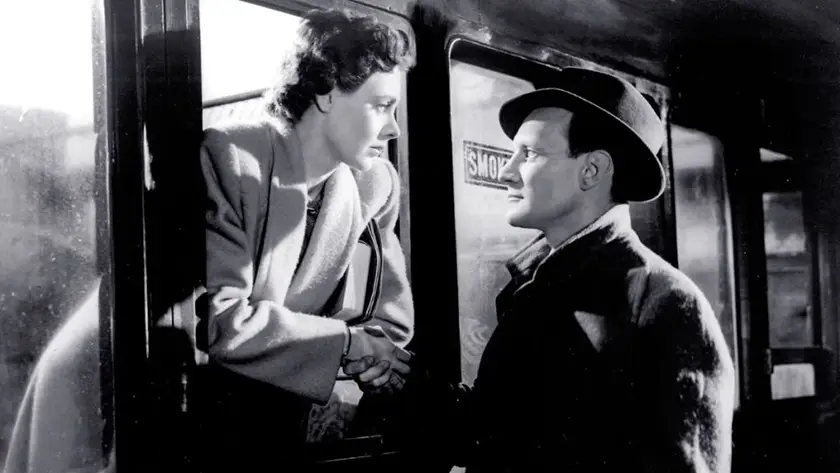
Of all the titles on this list, this is the one Miranda Priestly would be most reluctant to discuss. David Lean’s 1945 classic follows Laura Jesson, a married suburban mother in post-war England who meets a kind stranger named Alec at a railway station. What begins as a polite conversation becomes something deeper, a consuming emotional affair conducted over weeks of Thursday afternoon meetings. Laura is torn between the passion she feels for Alec and the stable, decent life she has built with her husband. In the end, duty wins. Alec leaves for a job abroad. Laura returns home to her living room, her marriage, and the quiet ache of a life she chose not to live.
Miranda has struggled through multiple marriages. She knows what it feels like to sit across from someone and choose the practical path over the passionate one. She watched Brief Encounter alone in the apartment after her husband left and didn’t cry. Miranda doesn’t cry. But she did pour a second glass of wine, which for Miranda is practically the same thing.
6. Terminator 2: Judgment Day (1991)
Yes. You read that correctly. Here is where the list gets interesting, because this is a film Miranda Priestly would only watch at 2 AM when she can’t sleep, and she would sooner fire every assistant in the building than admit it. James Cameron’s 1991 action masterpiece picks up years after the events of the original, with Sarah Connor, played by Linda Hamilton, locked in a psychiatric hospital. The authorities think she’s delusional for insisting that machines from the future are coming to kill her teenage son. She’s been stripped of custody, credibility, and freedom. And she is right about all of it.
Hamilton’s Sarah Connor is one of the most compelling portraits of a woman who has sacrificed everything, her softness, her relationships, her sanity in the eyes of the world, to protect her child. She does pull-ups in a locked room while men decide her fate. She escapes, arms herself, and fights alongside a reprogrammed killing machine to save her son from annihilation. The world dismissed her as crazy, and she saved it anyway. If pressed, Miranda would say something clipped about Hamilton’s physical commitment to the role. But late at night, alone with the remote, she watches a woman written off by everyone fight for her child, and she feels something she can’t quite name.
7. She-Devil (1989)
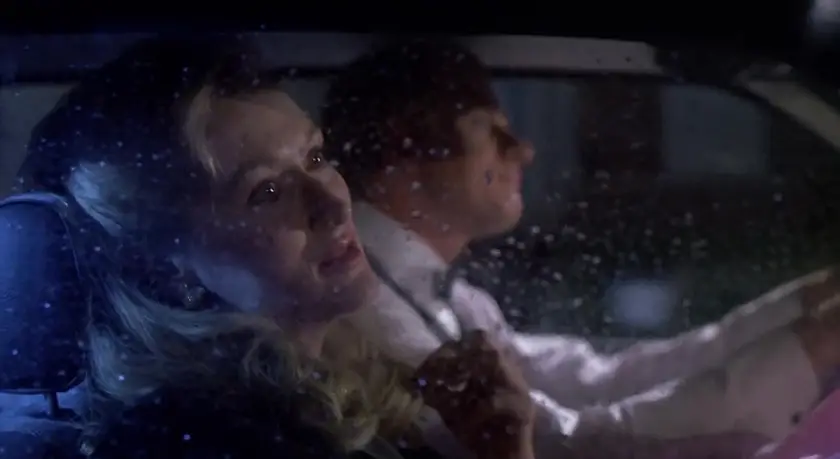
Miranda Priestly is aware that people say she bears a resemblance to Meryl Streep. People have said it at parties. Photographers have mentioned it at shoots. Streep herself once raised the comparison at a benefit, smiling warmly, and Miranda looked at her with genuine confusion. She simply does not see it. This is not false modesty or deflection. Miranda Priestly looks at Meryl Streep the way she looks at most people: politely, briefly, and without recognition.
But She-Devil is a film Miranda watches with great interest. In Susan Seidelman’s 1989 dark comedy, Streep stars as Mary Fisher, a glamorous, narcissistic romance novelist who lives in a pink mansion by the sea, wears pastel everything, speaks in a breathy purr, and has constructed an entire identity around being untouchable. Her life is upended when Roseanne Barr’s Ruth, a scorned and furious housewife, launches an elaborate, systematic campaign of revenge after Mary steals her husband. Piece by piece, Ruth dismantles everything Mary has built: her lover, her finances, her home, her reputation. Miranda watches this film and sees a cautionary tale about a woman who let her guard down. She identifies entirely with Mary Fisher’s lifestyle and misses the satire completely. She thinks the film is a tragedy.
8. Yentl (1983)
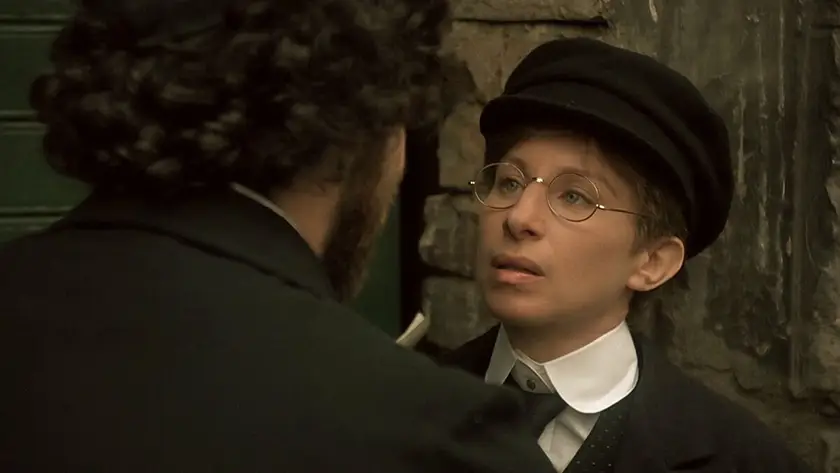
Barbra Streisand directed and starred in this 1983 adaptation of Isaac Bashevis Singer’s story about Yentl, a young Jewish woman in early 20th-century Poland with an insatiable hunger for religious scholarship. Because women are forbidden from studying the Talmud, Yentl cuts her hair, changes her name to Anshel, and disguises herself as a young man to enroll in a yeshiva. She excels. She falls in love. And she carries the weight of her secret identity through every interaction, knowing that the world she has fought her way into would expel her if it knew who she really was.
Fans of the original novel are aware that Miranda Priestly was born Miriam Princhek in the East End of London. Her family were poor but devout Orthodox Jews. Miriam saved what little money her siblings gave her, worked as an assistant to a British fashion designer, studied French at night, and clawed her way to a junior editorship in Paris. At twenty-four, she changed her name, replaced her cockney accent with a posh one, and reinvented herself so completely that the girl from the East End became invisible. Yentl sits on this list because Miriam Princhek put it there, and Miranda Priestly didn’t cross it out.
9. The Bitter Tears of Petra von Kant (1972)
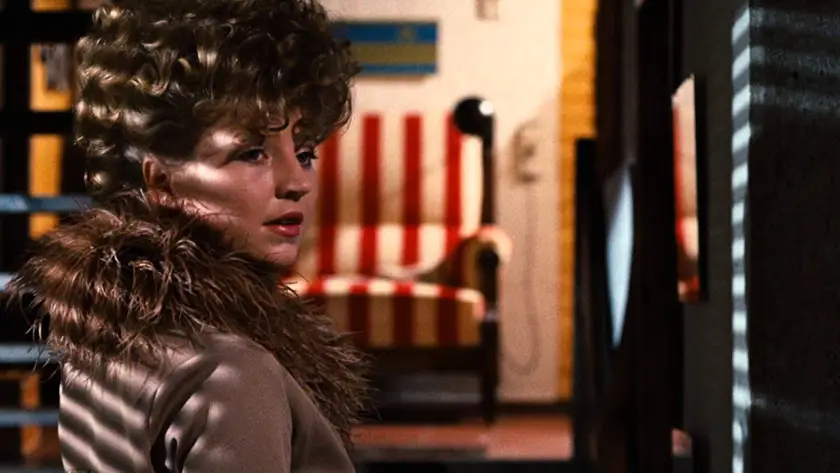
Rainer Werner Fassbinder’s claustrophobic 1972 masterpiece takes place entirely inside the apartment of Petra von Kant, a successful fashion designer played by Margit Carstensen. Petra is arrogant, caustic, and brilliant. Her silent assistant Marlene, played by Irm Hermann, does the actual design work, fetches drinks, takes notes, and endures constant humiliation without uttering a single word of protest. The entire film unfolds in one room full of mannequins and wigs as Petra spirals through a devastating obsession with a younger woman named Karin, destroying every relationship around her through sheer force of need and entitlement.
Miranda Priestly put this on the list without a shred of self-awareness. She admires Petra’s commitment to her aesthetic vision and finds Marlene’s loyalty “appropriate.” She considers the power dynamic between designer and assistant to be a natural and healthy working arrangement, and if you suggested otherwise, she would ask you to leave. If she showed this film to one of her “Emilys,” they would update their resumes before the credits rolled.
10. Grey Gardens (1975)
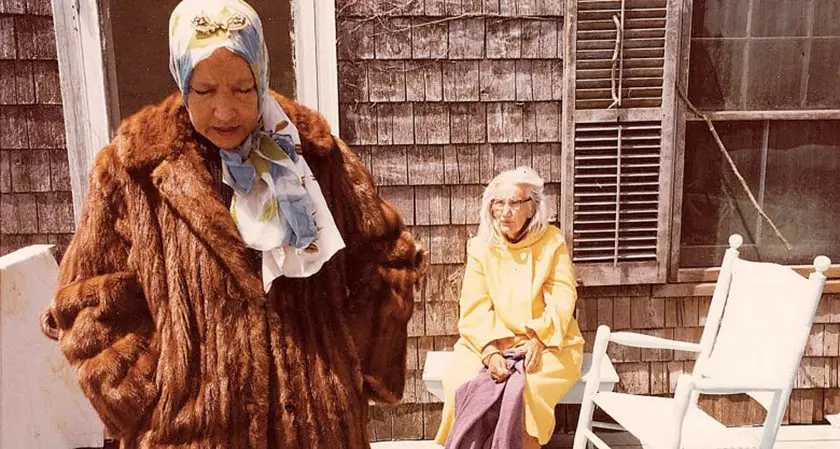
If The Bitter Tears of Petra von Kant is Miranda’s unconscious self-portrait, then Grey Gardens is her horror movie. Albert and David Maysles’ 1975 documentary follows Big Edie and Little Edie Beale, the aunt and cousin of Jacqueline Kennedy Onassis, living in a crumbling East Hampton mansion overrun with cats, vermin, and decades of neglect. The Beales were once featured in society pages, the kind of women Miranda would have seen photographed in the magazines she devoured as a young editor. They had wardrobes and influence and invitations to everything. And then something shifted. Standards slipped. Connections frayed. The world moved on, and what was left was a house full of faded glamour and raccoon droppings.
For Miranda, Grey Gardens is not a curiosity or a camp classic. It is a warning. Watching women she might have once admired reduced to living in squalor gave her something she carries to this day: an almost primal fear of losing everything she has built. She watches it once a year, the night before New York Fashion Week in September, when the pressure of the most important month in publishing is about to descend and the stakes of staying relevant feel sharpest. It is her pregame ritual. Each time, it makes her sit up a little straighter.
11. Babette’s Feast (1987)
Gabriel Axel’s 1987 Oscar-winning Danish film tells the story of Babette Hersant, a French refugee who flees political violence in Paris and lands in a tiny, austere village on the coast of Denmark. She works for years as a humble cook for two elderly sisters who lead a small, devoutly religious community. Babette’s meals are simple, plain, exactly what is expected of her. Then one day, she wins the lottery and spends every last franc on a single magnificent French dinner for the village, a seven-course feast of turtle soup, quail, fine wine, and flavors these pious Scandinavians have never encountered. Most of the guests don’t understand what they’re eating. Only one, a visiting general, recognizes the artistry for what it is.
Miranda saw Babette’s Feast in the late 1980s with Nigel (Stanley Tucci), back when they still had the luxury of a long lunch and the inclination to catch a matinee on the way back to the office. They laughed about it afterward, and Nigel said something about Babette being the only artist in history who spent her entire fortune on a single audience that didn’t deserve her. Miranda didn’t laugh at that part. She has spent her entire career creating something extraordinary for people who will seldom fully grasp what it cost her. Babette says at the end of the film that an artist is never poor, and Miranda would agree, and then she’d go back to the office and demand to know where her eggs are.
12. The Hunger (1983)
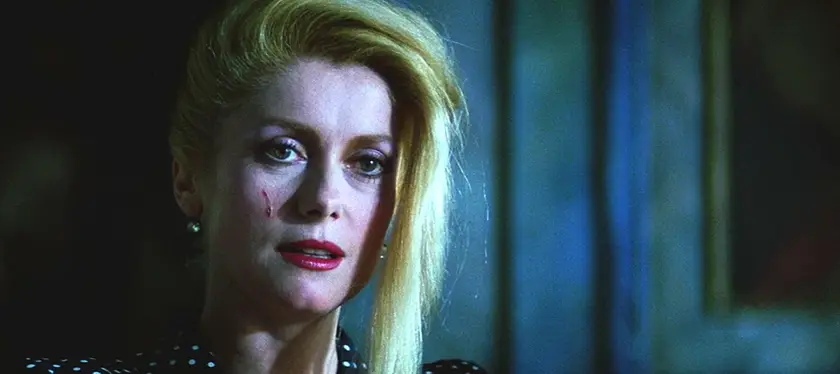
Miranda Priestly has always admired women who carry authority in their appearance. She once told an interviewer, in a rare moment of candor, that the ageless model Carmen Dell’Orefice and the unassailable elegance of Christine Lagarde were touchstones for her. But there is another reference point that may run deeper than either. In Tony Scott’s 1983 debut film The Hunger, Catherine Deneuve stars as Miriam Blaylock, an ancient Egyptian vampire living in a stunning Manhattan townhouse.
Miriam is impeccably dressed, preternaturally composed, and surrounded by beautiful things. She seduces lovers with the promise of eternal youth, but the promise is hollow: David Bowie’s John ages rapidly and horribly once she discards him, and Susan Sarandon’s Sarah is drawn into a cycle of desire and decay that will eventually consume her too. The film’s costumes, designed by the legendary Milena Canonero with key pieces by Yves Saint Laurent, are as sharp and deliberate as any runway collection.
Miranda attended an early industry screening of The Hunger because she had advised Canonero on a few of the bolder looks. She walked in with her natural hair pulled into a tight bun at the nape of her neck, the same restrained style she’d worn for years. When she got home that night and stood in front of the mirror, she noticed the first strands of grey catching the light. She called her latest assistant and informed her, without explanation, that she would need a hair appointment first thing in the morning. At noon the next day, Miranda walked into the Runway offices with a head of silver ice severity that would become the most recognizable silhouette in fashion publishing. She has not looked back since.
Twenty years after Miranda Priestly first made an entire office scramble into presentability with nothing more than a rumor she was in the elevator, she is back, and we cannot wait. If this list tells us anything, it’s that the woman behind the sunglasses has been watching, absorbing, and filing away more than anyone around her suspects. She contains multitudes. She just doesn’t owe you an explanation. That’s all.
The Devil Wears Prada 2 will be released in U.S. theaters, in U.K. and Irish cinemas, and globally in theatres on May 1, 2026.