

We interview writer-director Marcelo Martinessi about the Berlinale-premiering Narciso, the true story behind it, the Paraguayan film industry, and more.
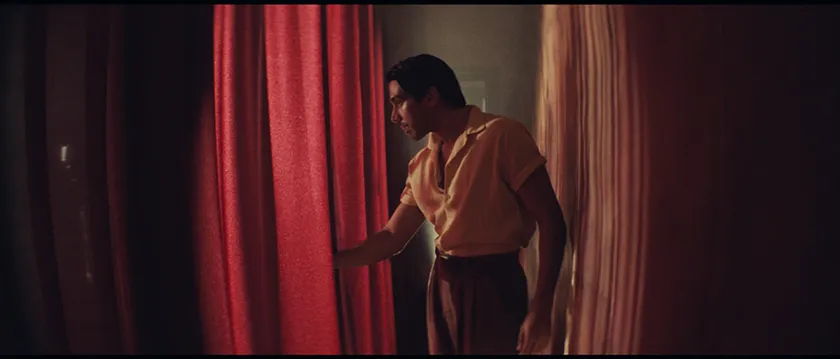
When Narciso Arévalos (Diro Romero) returns to Asunción, Paraguay, in 1959 and asks a radio station to let him play rock ‘n’ roll music on their program, little does he know that his whole existence is about to change. A year later, Narciso would die in mysterious circumstances – an event that takes place at the beginning of the movie – his burning body lighting up the night just like he used to metaphorically do on stage. Who killed Narciso? No one will ever know, but that’s not the point. The real mystery is the country itself, which, at the time, was under President Alfredo ‘El Rubio’ Stroessner’s control, in the longest dictatorship South America has ever experienced. And in a society that turns every single citizen in monsters and persecutors, the very idea of justice assumes a different meaning.
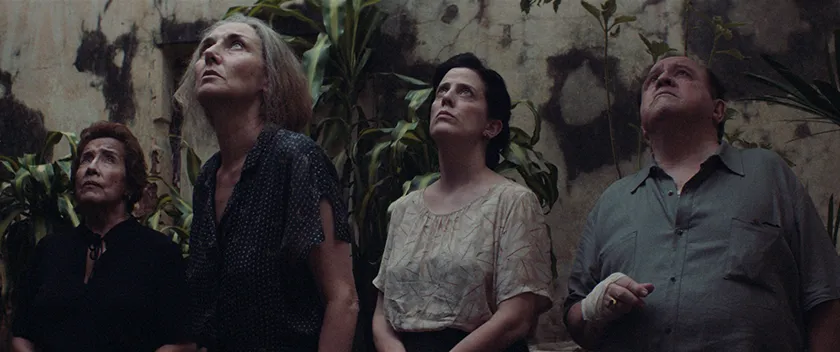
Writer-director Marcelo Martinessi draws from real life to craft the movie, whose protagonist is based on Bernardo Aranda, a beloved radio host whose body was found burned in his bed in 1959, leading to the government blaming 108 gay men for the fire and turning the entire country against them – an incident that is known as “Caso 108”. Narciso is freely inspired from a novel of the same name written by Guido Rodríguez Alcalá, who investigated Aranda’s death back then. But the movie is also its own beast entirely, with a stunning ensemble portraying the key characters that make up our family, each of whom leaves a mark on us by the end, and superb technical execution to draw us in. And it’s in Narciso‘s compassion towards its characters that its timely message emerges.
At the 2026 Berlin Film Festival, we sit down for an interview with Marcelo Martinessi, who returns to the Berlinale after the Silver Bear-winning The Heiresses. Read what he told us about telling the story of Bernardo Aranda, his research for the film, specific scenes of the movie, the film industry in Paraguay, working with the cast, and more.
Bringing Bernardo Aranda’s Story to the Screen and the Research for Narciso
What made you want to bring the story of Bernardo Aranda to the screen, and how did you approach adapting the novel?
Marcelo Martinessi: The case happened in the late ’50s in Paraguay, and though Guido Rodríguez Alcalá mainly writes historical novels, the book on which I based the film starts with fiction as well. In the novel, he’s not called Bernardo, but Narciso, and we see him from the point of view of one of the girls that look at him with desire; she’s really crazy for him. For me, working with an adolescent, the point of view was a challenge.
I think there’s great inspiration to be found in the book, which has to do with the social texture of Paraguay in the late ’50s’. Nowadays, people want to put all the responsibility of authoritarian regimes in the dictator only, but there’s a whole social structure that supports these regimes, and I felt this was portrayed really well in the book. I told the author, ‘I’d like to [adapt it to the screen], but let me do it from my perspective.
I love radio, especially radio soap-opera, and [the performative aspect of it all]. I started there, and I really strayed from the book when I started to create more characters around Dracula [a claustrophobic performance that regularly takes place at ZP10 Radio Capital in the film], and more characters around the radio.
A radio is also such a lovely field of dispute for a regime, and for a society, to make us aware of which model of society we want. There was no TV in Paraguay at the time, so with radio, I had the possibility of making a film that would inhabit the media of the time. This was key for me to also explore narrative possibilities.
You must have also done a lot of research on the history of Paraguay.
M.M.: Yes, we researched for a long time; we did some interviews, but we especially wanted to look into the visuals at the time. There was no cinema in Paraguay during the entire dictatorship, so we didn’t have any film footage to look at. So we basically looked at family’s archives and private archives, to see the costumes, the furniture, the walls, and to get a bit into that world. We didn’t want to make a very stiff period piece; we wanted the characters to be free and to just look like [someone would have looked in] the late ’50s.
I also did some research with a few people who were in the media at the time, which helped me understand that, to these people, there’s a myth around this case. No one really knows much about it, and no one knows who killed Bernardo. No one really knows about the love story between him and the owner of the radio either. When I started getting into the story, which in the book is not very respectful in terms of making assumptions [on Bernardo/Narciso’s personal life], I decided that the only way of making this movie was in public spaces, without really going too much into the intimacy [of the character].
‘Every Film is Almost a Miracle’ – Marcelo Martinessi on the Paraguayan Film Industry, and the Character of Narciso
Was it hard to create your version of Narciso, then, given the things from the book you wanted to leave out?
Marcelo Martinessi: It was a challenge to create Narciso, because I didn’t want to give him the weight of a character that we had to follow. We had to create Narciso through the gaze of everyone else around him. I feel that was also a challenge for the poor actor who plays him, Diro Romero – this was his first film! – as he had to play a protagonist who was ‘built,’ constructed [based on the people around him’s perception].
I think what you achieved with this character is incredible. It feels you’re so intentional about what you leave out of the story, as so many things about him are purposefully vague. But then, at the same time, you draw us to him as an audience as much as everyone else around him is drawn to him too.
How did you manage to achieve this?
M.M.: I spent a lot of time on making the movie. My first film was here in Berlin eight years ago, so you can imagine how long I’ve spent working on this! I wish I could make films faster, because if I make one every eight years, next time we see each other will be in quite a while! [laughs] Some of the people I met in Berlin eight years ago look so different now. [smiles]
I also have the privilege of working in a country where there isn’t much cinema. Every film is almost a miracle [in Paraguay]. I have great collaborators with whom I’ve been working for more than twenty years; I feel that everything I do is ‘protected’ by a group of people who love cinema, and love the same things I love, and we really have a strong desire to work together. It took me four years, on and off, to write the script, and that was while I was doing theatre – I’ve recently done a theatre piece in Paraguay [“MemoriaBranka (y el Fuego)”, about Slovenian-Paraguayan anthropologist Branislava Sušnik]. I also built a small local cinema. While doing all these other things at the same time, I was writing and researching Narciso.
I didn’t want to have a conventional narrative. We had a blank check to do whatever we wanted [with this film], and I said, ‘Let’s make use of that blank check’. Let’s make something that we want to make. I really treasure [the way we approached the movie], not only for the result but also for the experience of crafting a film that didn’t have to answer the right questions the way a film usually has to, nowadays, in the age of streaming platforms. It’s very difficult to do that.
You haven’t really had a film industry in Paraguay till very recently, right?
M.M.: Yeah, we really didn’t have the possibility of having a film industry, or a cinema environment, in Paraguay until very recently. We had a 35 years long dictatorship where we had some images of power that they created. Some of them disappeared; some of them are still with us. But when you look into any archive of Paraguay, all you see is what the regime wanted you to see. Then, the first possibilities came with video, and then we had our first film in Cannes, Paraguayan Hammock, in the early 2000s.
We’re still a very small group of people making films: I know almost everyone. It’s also very unusual to have a film from Paraguay in Berlin two years in a row [Juanjo Pereira’s Under the Flags, the Sun in 2025], as the films that come out of the country are even less. But I’m glad it’s happening. That’s a film that also can create a very good dialogue with Narciso, because it shows the context in which Narciso took place.
‘It was Really about Having a Dialogue with My Society.’ – Marcelo Martinessi on Creating Conversations, and the Berlinale Screening
Did you feel any pressure making the movie, knowing you’d be representing Paraguay since not many films come out of the country, and also keeping in mind the award you won for The Heiresses here in Berlin?
Marcelo Martinessi: I try not to; it’s on and off. I feel that we have to get rid of the idea that we need validation for our work. We sold The Heiresses to about 28 territories, and we won more than 50 awards for it. So I said, I’ve already been on this path. Now, I want to read things, and I want to grow. That’s the only way I didn’t feel the pressure of having to have the same success, because otherwise it could have been a ‘prison’. I feel that’s a prison. Many things took place at the time [that made The Heiresses so successful], like the all-female cast in the #metoo era, I’m very happy it happened.
But at the same time, I needed to be able to do something different and see what would happen with it. What Narciso approaches is different; it’s a lot more local, and I’m glad that it can be understood. For me, it was really about having a dialogue with my society.
That’s a society that has its own codes, and a lot of them are used in the film. Cinema lets me have a dialogue, especially with the elite of my country. What I did in my short films [Karai Norte (2009), Calle Última (2010), The Lost Voice (2016)] was always uncomfortable for that elite; there are things they don’t want to see, or they don’t want to talk about. I feel cinema is to create conversations around what you don’t want to see as well.
What also really helped was having a ‘cinema law’ that was established in July 2018, and then, since 2021, we now have, for the first time, a film fund, which we didn’t have it before. My previous film was done with an art fund and some other financial resources. As opposed to some other countries in the region, we are about to see a lot from Paraguay that’s going to come out. I’m very excited about that.
It feels like here in Berlin, many projects we’re seeing were difficult to make because of financial issues. I love that with Narciso it’s quite the opposite: it sounds like the Paraguayan film industry couldn’t wait for this movie to be made.
M.M.: I think we had 24 funds. We had to reapply for some of them, but it wasn’t a complication. This was an expensive film, and we had the privilege of being able to make a big movie like this. The biggest challenges were definitely creative. I finished the film almost a year ago, and then I spent a year re-editing a lot of scenes. It’s been a creative challenge.
What was the premiere like?
M.M.: Well, we’ve only just finished [putting the film together], so I’ve only just seen it, really. [smiles] The music was recorded on January 30th, in Budapest. We handed the movie to the Berlinale around February 10th, I think. Watching the film for the first time with all the new layers that we had added [really allowed me to see how they] benefited the film.
But it was also lovely to see a film like this for the first time with an audience. A lot of scenes of the movie that had lost meaning for me [because I had seen them so many times while editing it] regained meaning because I watching it with the public. And the Zoo Palace is so beautiful! The projection, the sound, and being in Berlin: technically perfect. I also had very good feedback after the screening, from many people that really connected or felt close to something that happens in it.
On Manuel Cuenca’s ‘Lulù’, and Some Difficult Scenes to Shoot
I really connected with the character of Don Luis ‘Lulù’ Bermudez, the radio manager, played by Manuel Cuenca.
Marcelo Martinessi: I really wanted him in the film because, in Spanish, Lulù can be both a man and a woman’s name. He’s not called Lulù in the book [but that’s why I chose that name]. This is a very special guy. A lot of filmmakers work with actors who make twenty-thirty films in two-three years. I deal with actors who make one film every five-ten years, so what they bring to the table is something very special. They bring themselves, their personality, their fears; for me, to manage that is a privilege, because each person gives you a lot.
Manuel Cuenca was a child star back in the ’60s, on TV, because we didn’t have cinema. He was always very famous, on TV: he did the news, and a lot of other things in Paraguay, and then he disappeared. I went to him thinking that he’d be a bit younger, and he wasn’t. [laughs] When I looked at him, I thought, ‘Oh, my God, this is an older Lulù! I might not be able to work with him’. So I started looking for younger Lulùs, but he was always on my mind. I said, ‘I need to go back to him and just build the character of Lulù around Manuel Cuenca’s personality. I feel that it was a good decision because I really like how he comes out on screen.
There’s a scene in particular, where Lulù is alone with another man from the radio called Isidro, played by Anibal Ortíz, that could have been controversial but that really wasn’t, thanks to the way it was filmed. In both that scene and another one that takes place in a taxi, you handled the character very well because you always treat him with compassion.
M.M.: That scene in particular was difficult for the actor, because on one hand, Many is very shy about everything. The taxi boy scene was easier for him, because the guy who played opposite him in the taxi is very open and very easy to work with. I love the way that scene came out, because I feel it flows very differently than the other scene you mentioned, which feels uncomfortable, even though Lulù is saying what he has to say. You can see in his face that he’s not completely sure of what he’s doing.
Minor spoilers in the next paragraph
When Anibal Ortíz he came to the set, he said, ‘Marcelo, I cannot have intercourse of any kind’. I said, ‘Okay, can we rehearse this?’ You can see his fear in the scene. He was like, ‘What is going on?’ all the time. When I shoot a scene like that, I try to either not rehearse a lot or rehearse very early – for example, three months before the film – so that, when they go on set, it’s not fresh anymore, and they can feel it for the first time. In this case, we had several cuts, and at the end, it came out very organic to the film. But it was a difficult scene, also in terms of where to position it in the narrative, as I had the impression that the perception of Lulù changed in many people after that scene. So I said, ‘Can we afford [to have people change their mind about Lulù] earlier or later in the film?’ I felt that we had to be careful on how we were dealing with that scene, but I’m happy with how it turned out.
No more spoilers from now on
Marcelo Martinessi on the Music and Timeliness of Narciso
I really love the music in the film, especially the combination of traditional Paraguayan music and rock ‘n’ roll. How did you choose the songs you were going to include and how to present them to us?
Marcelo Martinessi: The Paraguayan repertoire is quite strong: it’s the strongest songs of Paraguay. The one they sing to the American guy [a government official from the US embassy named Mr. Wesson, played by Nahuel Pérez Biscayart] when he arrives is “Bienvenido Hermano Extranjero”: that’s a classic from Paraguay. Whenever anyone famous goes to the country, they sing it to them at the airport. “Galopera”, the last song, is also a national anthem.
I love Paraguayan music; I didn’t want audiences to think [that the message of the film was that] ‘Oh, rock ‘n’ roll is lovely and Paraguayan music is awful’. I think they can both live in the same radio without any competition. I wanted the best Paraguayan music I know to be there. But at the same time, I didn’t know much about rock ‘n’ roll, the way I do now, and I got myself really into the music of Little Richard, Buddy Holly, Chuck Berry, and also their lives. I read their biographies and found out what they meant to that time, in order to understand the way they started representing freedom and transgression.
When I think about the late ’50s in Paraguay, I feel that it was a very provincial town, and something like rock ‘n’ roll came bringing a fresh air. It must have unsettled not only the bourgeoisie, but also the parents who were worried about their children shaking, and moving, and having sensual movements in a time when Paraguay was a very conservative Catholic society. All these things are in the film, but I didn’t want them to be in your face. I wanted them to just be part of the narration.
I feel the film really speaks to today as well.
M.M.: I feel that the persecution of people who are different has been happening in many places, in many different times. This is a very unsettled present; we don’t know what will happen. For me, the film is also about the fear of the future: we don’t know where we’re going, and I feel it’s important to talk about it. I really didn’t want Narciso to be put in a box. It is about a case that happened seventy years ago, but there’s a reason why we spent so much time, energy, money, and effort to make a film like this today.
We definitely need some of the compassion you showed in the film right now, in the world. I really love that you portrayed the characters who do questionable things – not just Lulù, but also some of the other people at the radio – in a way that makes us understand why they do it.
M.M.: Margarita Irún’s character [Goya, who also works at the radio] will be read as an awful person in Paraguay, because some people have the need to be politically correct. But I like what you said, that she can be a ‘gray’ character. I can understand her, and that’s weird for me to say, as I would really want to be away from the real character. But I like the fact that she’s someone that… And Margarita is also a very good actress; I had the honor to work with very nice people.
What’s Next for Marcelo Martinessi
Are you working on anything at the moment?
Marcelo Martinessi: Finishing Narciso took so long [that it’s too soon to tell now], but I started to draft ideas. I would like to make a film before the next eight years! [smiles] Something I discovered in Narciso is that I really like to work with collective stories, with many actors, and where you can create this dynamics between characters. Perhaps I will go towards that in my next project. I’m starting to write a few things that I’m interested in.
I love this! Thank you for speaking with us!
This interview was edited for length and clarity.
Narciso premiered at the Berlin Film Festival on February 17-22, 2026, where it won the FIPRESCI award in the Panorama strand. Read our Berlin Film Festival reviews!
Header credits: Quad Poster for Narciso (© La Babosa Cine) Director Marcelo Martinessi (© Sebastián Arestivo)