
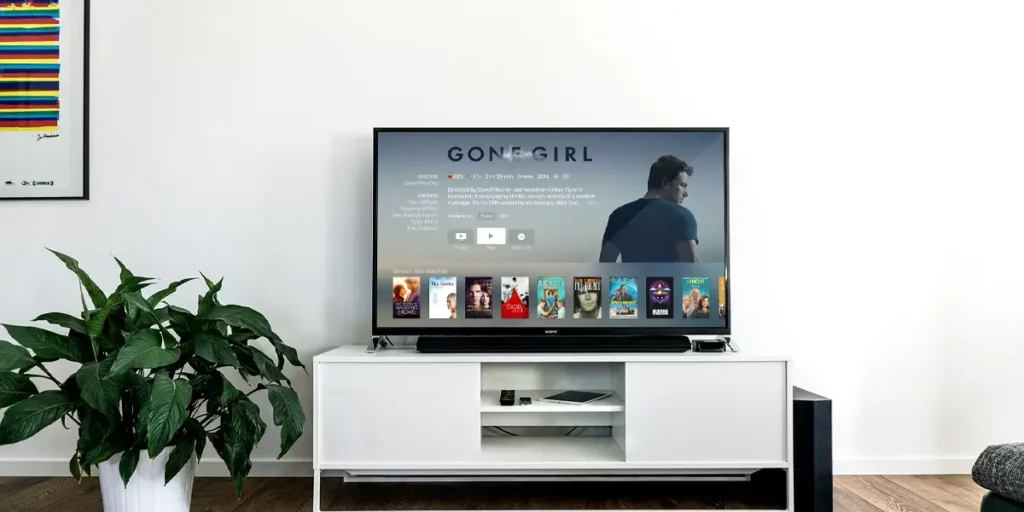
By Nathaniel Roarke | July 2026
I spent the better part of a Sunday evening last month trying to watch The Conformist. It’s not a rare film: Bertolucci’s masterpiece is a movie that film schools have shown for fifty years. It had drifted off the two services I actually pay for, surfaced on a third I’d cancelled in a fit of budget conscience, and sat, at that particular hour, behind a rental fee on a fourth. By the time I found a copy I could watch, the impulse had cooled. I no longer wanted to watch a movie; I wanted to lie down. That is the state of things: finding a specific film has quietly become part of the labor of watching one, and the search can outlast the appetite that started it.
The old promise was that streaming would end all this. One box, everything ever made, a flat monthly fee. What we got instead is the thing we cut the cord to escape. Exclusive licensing has scattered franchises and prestige titles across a dozen competing apps, so following a single director or a single genre can require three subscriptions. If that sounds like your old cable bill wearing a nicer interface, you are not imagining it.
The rest of the bad news arrives on a schedule. Industry trackers report that prices have climbed well above general inflation over the past year, and survey after survey now names cost as the leading reason people cancel. Catalogs rotate on rolling licensing windows, which means the movie you loved last spring may simply be gone, with no notice and no explanation. A streaming library is a lease, not a shelf. Subscriptions have stopped being furniture and started being tools, picked up for a job and put back in the drawer.
So the sane move, the one that trade guides and exhausted friends keep arriving at independently, is to stop chasing everything and build a deliberate stack instead. Not one service that does it all. A small set of layers, each doing the one thing it does honestly well. Here is how I’d assemble it.
The prestige anchor, and why it should be small
Every stack needs a home base for the good new stuff. In 2026 that means HBO Max, which remains the reliable address for HBO drama, limited series, and documentaries, and Apple TV+, which keeps a smaller library but a remarkably consistent one. Apple’s batting average is the argument for it. You are not paying for volume, you are paying for the odds that any given title is worth two hours.
The trap here is emotional, not financial. It feels responsible to keep the prestige apps running year-round, the way you’d keep the lights on. Resist that. New prestige films still follow a theatrical-then-streaming path, and they tend to land on predictable homes, often the distributor’s own platform. You can activate a service the month its flagship arrives and let it go when the season ends. The industry has a slightly grim name for this, churn-and-return, but for a movie lover it’s just common sense. Pay for the anchor when it’s carrying something. Drop it when it isn’t.
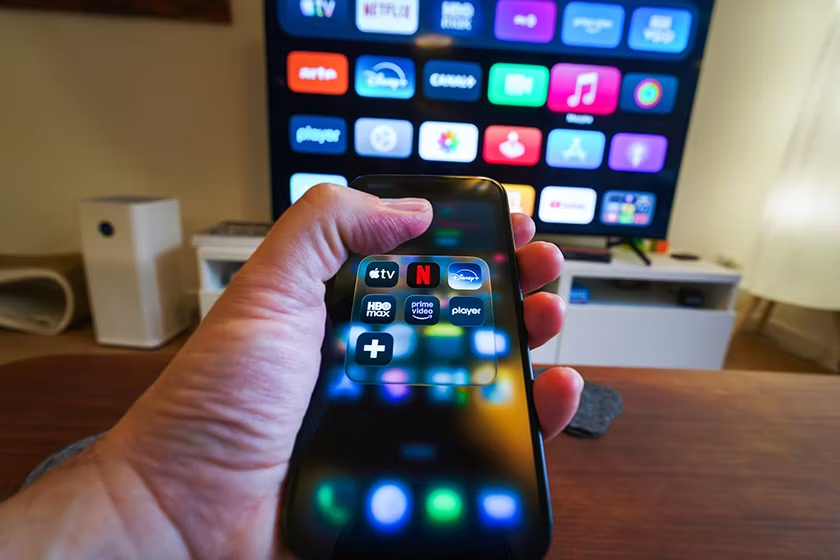
FAST channels for the long tail
Here is the layer most cinephiles underrate because it’s free, and we’re conditioned to distrust free. Free ad-supported television, the FAST services, has grown into a genuinely mainstream tier. Tubi, The Roku Channel, and Pluto TV each pull tens of millions of monthly viewers, and by one industry estimate total US FAST usage has climbed well past 100 million people. That is not a niche anymore. That is where a lot of the country actually watches.
What FAST does for a film lover is cover the long tail, the deep back catalog of studio pictures, genre curios, and forgotten mid-budget dramas that the prestige services quietly let expire. Tubi in particular has become an accidental archive of the strange and the out-of-print. You accept ad breaks in exchange for a library nobody is licensing away from you next quarter. For a certain kind of viewer, the one who likes to fall down a rabbit hole at eleven at night with no particular title in mind, this layer earns its keep. It won’t have this year’s Cannes winner. It will very often have the 1974 thriller you half-remember and can’t name.
The boutique layer, for people who care about how a film looks
Then there’s the layer for viewers who treat individual films as objects worth owning and presenting well. The boutique revival is real. Reporting on the physical-media market suggests the long slide in disc sales has slowed sharply, and the energy has moved toward premium, collector-minded releases. Criterion sits at the head of that table, running its recurring deep-discount sales and drawing a wave of new attention, some of it from younger collectors reacting against the instability of streaming. There is something clarifying about owning a disc. A shelf of films you own outright is the one part of your setup no algorithm can quietly edit while you sleep.
On the streaming side of this same instinct sits Mubi, which by 2026 works as both a curated arthouse service and a theatrical distributor in its own right. Its catalog rotates by design, a small set of hand-picked world-cinema titles rather than an endless scroll, and its breakout success with The Substance proved a curatorial brand can also move real box office.
What Mubi and Criterion share is a point of view. A person chose these films and stands behind them. That curation is the whole product, and it’s the thing an algorithm has never once replicated. Where this layer falls short is obvious: it is deliberately narrow. You do not come to Mubi to watch a football game or catch up on network sitcoms. You come for a specific kind of attention, and you pay for that focus by giving up breadth.
The breadth layer, for everything else
Which leaves the gap none of the above fills: live television, sports, news, the huge undifferentiated middle of what people actually watch on a given weeknight. Live events remain the last reliable engine of communal, appointment viewing, and in 2026 the major sports have been carved up across a maddening spread of platforms. The NFL alone is split across a handful of streaming services depending on the night, and assembling live coverage from the prestige apps is a losing game. They were never built for it.
Before you pay for any of it, one unfashionable option is worth naming: an antenna. Over-the-air broadcast still pulls in the big networks free, it costs about as much as a single month of a streaming plan and then costs nothing forever, and for local news and a lot of live sports it quietly does the job.
For the channels an antenna can’t reach, the licensed live-TV bundles cover it directly: YouTube TV, Hulu + Live TV, Sling, and Fubo all carry the major networks and most live sports, at prices that have crept up toward what cable used to cost. Weigh them on channel lineup and price, and read the fine print on which regional sports and local affiliates each one actually clears in your area.
There’s also a different category of app that pitches itself as a single, cheaper home for all of it. Services such as Apollo Group TV bundle a very broad live-channel lineup, US network feeds and sports alongside international channels, together with a large on-demand library of movies and series inside one app, on a no-contract monthly plan that runs well under a cable bill, with a lifetime option for people who know they’re in it for the long haul. Apollo TV publishes a channel list deep enough to cover most of what an antenna and a live-TV bundle would manage between them, which is the entire appeal. It suits a household that mainly wants the lights-on convenience of live television plus a deep well of things to fall back on, without running four logins to get there, and it installs on the hardware you probably already own, Firestick, Android TV, smart TVs, and phones.
Whatever you use to cover this layer, be clear-eyed about what it is not. Breadth will not curate for you the way Mubi’s programmers or even a good recommendation engine will. It hands you a vast menu and leaves the choosing to you, which is liberating on a lazy night and paralyzing on a discerning one. And it is not a substitute for a specific prestige release. When the film you want is this year’s awards contender opening exclusively on a distributor’s own service, breadth doesn’t help. Depth in one title beats breadth across thousands. Use this layer for what it’s good at, coverage and convenience, and don’t ask it to have taste.

Putting the stack together
The shape that emerges is not one service but four honest ones, and the discipline is knowing which is answering which need. The prestige anchor for the good new thing, kept lean and rotated. FAST for the free deep cut you stumble into. Criterion or Mubi for the films you want presented with care and a point of view. A licensed live-plus-VOD layer for sports, news, and the everything-else. Most households can comfortably run two paid services at a time before the budget starts to strain. The stack works because you’re never paying for all of it at once: you’re paying for the right one this month.
None of this is as tidy as the promise we were sold a decade ago, when a single app was going to hold the entire history of cinema. That promise is dead, and pretending otherwise just costs you money and Sunday evenings. The real price of fragmentation was never really the money anyway. It’s the slow erosion of the impulse itself, the nights the search outlasts the appetite and you give up and lie down. A viewer who accepts the fragmentation and builds around it, rather than fighting it, protects that impulse instead of grinding it down. I can still put on The Conformist tonight. It just takes a stack that knows its own layers, and a viewer who’s stopped expecting any one of them to be everything. That, more than any single subscription, is the thing worth owning.
This article was produced in partnership with Apollo Group TV. At Loud and Clear Reviews, we only work with partners that provide relevant, valuable content for our readers.
Header credits: Jens Kreuter, Unsplash