
Drawing from real life, Marcelo Martinessi’s Narciso tells a timely, poignant story of repression, rebellion, and the kind of society that turns us into monsters and persecutors.
Writer-Director: Marcelo Martinessi
Genre: Drama
Run Time: 101′
Berlin Film Festival Screenings: February 17-22, 2026
U.S. Release Date: TBA
U.K. Release Date: TBA
The defining event of Narciso Arévalos‘s (Diro Romero) life takes place at the very start of Marcelo Martinessi’s film, but that doesn’t make the movie any less compelling, poignant, and tragic. Because this isn’t just the story of a charismatic young man and how he came to be in Asunción, Paraguay, in 1959, trying to convince a radio station to let him play rock ‘n’ roll music, despite having no experience as a radio host.
It’s also, and more importantly, the story of the people around him: men and women of all ages who find themselves inexplicably drawn to this magnetic, seemingly invincible young man who brings with him the promise of freedom – listening and dancing to rock music not just as an act of rebellion, but also as a means to let some of the darkness out.
And there’s plenty of darkness is Narciso, a film that starts on the joyous notes of Buddy Holly’s “Peggy Sue” and “Oh Boy,” with our lead performing to adoring crowds at the radio, but that soon turns into a different beast when Narciso is found dead, his body burning just as bright as the infectious energy that had made his shows so successful. But who killed Narciso? And does it even matter, when society itself has already numbed half the country, and turned the other half into monsters and persecutors?
Soon, we’re shown exactly what led to these events, starting from Narciso’s arrival in Asunción a year earlier, when “ZP10 Radio Capital, la voz del pueblo para el pueblo” (“The voice of the people, for the people”) looked very different than what we experienced with Narciso at the helm in the film’s opening scene. “Why do we need Elvis if we have the great Justino Colmán, and the best folk groups of all Americas?” radio manager Don Luis ‘Lulù’ Bermudez (Manuel Cuenca) asks a younger Narciso, who had just returned to Paraguay after spending some time in Argentina, when they first meet.

But the choice isn’t Lulù’s alone; after all, the country belongs to President Alfredo ‘El Rubio’ Stroessner, the man responsible for the longest dictatorship in South American history. Soon, Asunción gets its own running water supply, and the station is visited by a government official from the US embassy who has “direct access to El Rubio” – at least, according to radio employee/audience motivator Goya (Margarita Irún) – and who, just like everyone else, immediately falls for Narciso. “I heard you miss a bit of rock ‘n’ roll,” Mr. Wesson (Nahuel Pérez Biscayart) tells him, and just like that, Narciso takes the stage.
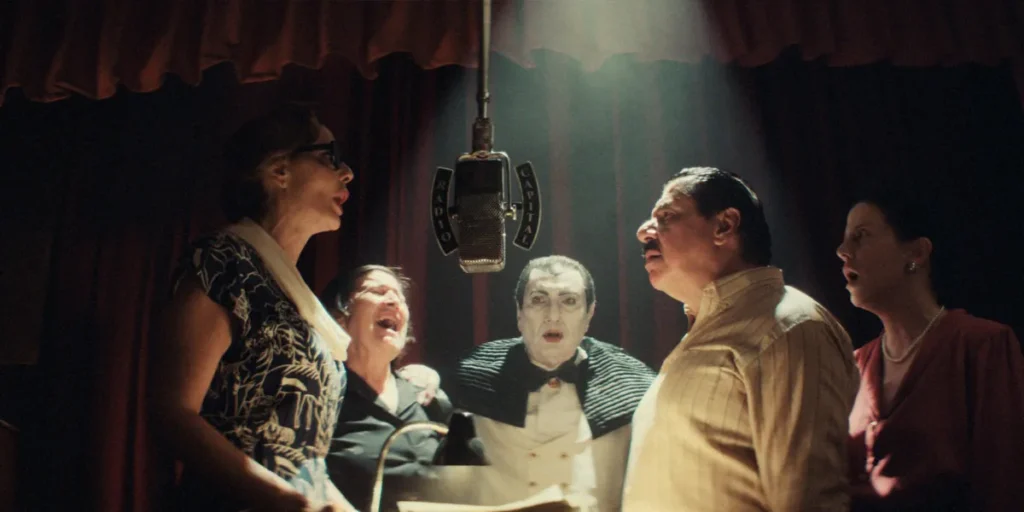
Radio Capital has other shows too, of course, which include not only folk music and the occasional propaganda, but also a disquieting, claustrophobic act that sees Count Dracula recite lines while other performers breathe loudly into their mics, to create an atmosphere of dread and anxiety that reflects fear and repression inhabiting the country. As the film unfolds, these sketches get darker and more urgent, mirroring all the emotions our characters aren’t allowed to feel, but that are desperately trying to emerge.
“El Rubio doesn’t like dark stories,” and Narciso decides to “always look good,” fighting repression with expression and presenting himself as an opposing force that embodies positive feelings, embracing everyone, both on and off stage. But rock ‘n’ roll is soon blamed for awakening “sin, degeneration, and every kind of immorality” in young people at a time when it wasn’t allowed to be gay, and Narciso isn’t the only one with a secret.
Narciso is freely inspired by the novel of the same name from Guido Rodríguez Alcalá, who investigated the death of a beloved radio host named Bernardo Aranda in 1959. Aranda was thought to be bisexual; his body was found burned in his bed one night, which led to “Caso 108”, when the government blamed 108 gay men for the fire, arresting and torturing them after spreading their names across Paraguay, getting the whole country to participate in chasing these so-called “degenerates.”
Narciso is the opposite of a bleak experience; on the contrary, it’s filled with energetic music, meaningful conversations and even irony. The entire cast delivers fantastic turns, including a fantastic Diro Romero as Narciso and a splendid Margarita Irún as Goya, who often serves as an audience surrogate.
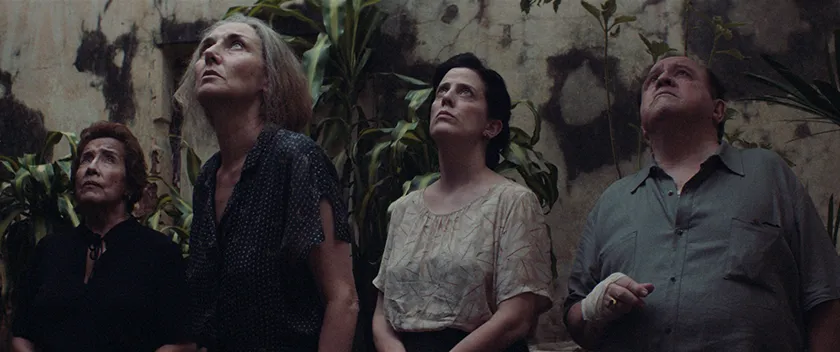
But the standout is Manuel Cuenca as Lulù, a character we immediately warm up to, and whose actions we understand even when he’s at his worst – a controversial scene is bound to make people talk, but this daring choice pays off in depicting the world in which the movie takes place. Cinematography (Luis Arteaga), production (Carlo Spatuzza and Babi Targino) and sound design (Zeltia Montes Muñoz) make for an effortless watch, placing us right there and then with the characters as the action takes place.
Yet despite the infectious music and comraderie, and our emotional investment in this narrative, Narciso ends on a sour note, and rightly so. We don’t get to see what exactly happens after Narciso’s death in Martinessi’s movie, but the writer-director cleverly sets the stage for the real tragedy to happen. By the times the end credits roll, it’s with much sadness that we bid farewell to the warm, flawed but oh so human crew of well-meaning people we’ve grown incredibly fond of during the film.
“ZP10 Radio Capital, the voice of the people, for the people,” says Lulù one more time, at the end of the film, but how can it be, when the people’s entire identity has been quite literally sucked out of their lives? With a story that couldn’t be more timely, Narciso asks all the right questions at exactly the right time.
Narciso (2026): Movie Plot & Recap
Synopsis:
A young man returns to Asunción, after spending some time in Argentina, in 1959, at a time when rock ‘n’ roll is starting to arrive in Paraguay but the longest dictatorship in South America is also taking place in the country.
Pros:
- A well-crafted story that gets us attached to all of its complex, multilayered characters before asking all the right questions
- A timely message about not letting society either numb us or turn us into monsters
- Superb performances from everyone, especially Manuel Cuenca, Diro Romero and Margarita Irún
- An unexpected narratives with developments you won’t expect despite a major event taking place at the start
- Fantastic control of genre and tones that doesn’t let this story get too dark, with immersive cinematography, production design, and sound design
Cons:
- Mona Martínez plays a character named Nenucha whose exact relationship to Narciso is left purposefully ambiguous, but she could have done with more characterization
Narciso premiered at the Berlin Film Festival on February 17, 2026 and will be screened again till February 22. Read our Berlin Film Festival reviews!