
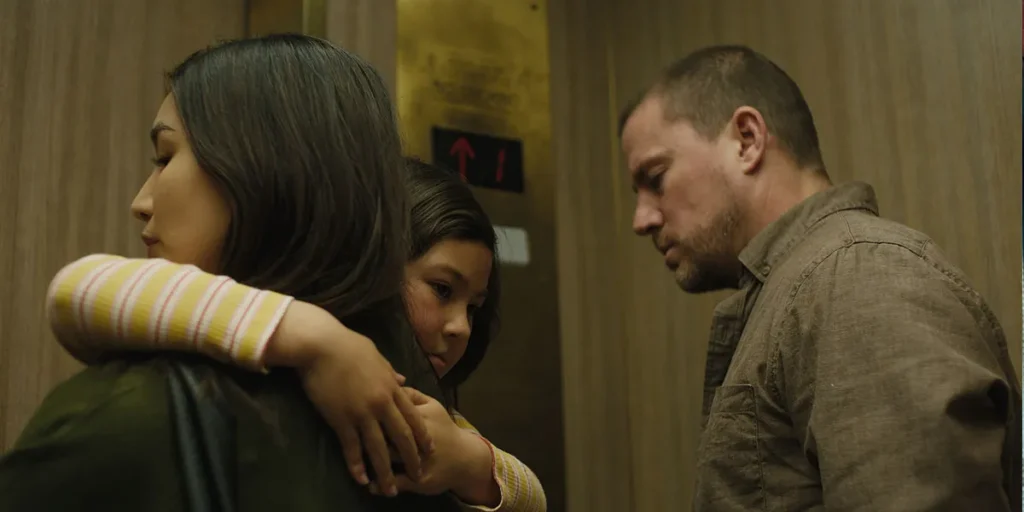
Josephine plunges into the darkest depths of childhood trauma with a masterfully acted, edited, and directed sophomore film from Beth de Araújo.
Director: Beth de Araújo
Genre: Drama
Run Time: 120′
Sundance Film Festival Screenings: January 23 -February 2, 2026
U.S. Release Date: TBA
U.K. Release Date: TBA
Josephine has the honor of being my most anticipated and most dreaded film of Sundance 2026, both for the same reason: its writer and director Beth de Araújo’s previous film was Soft & Quiet, which I praised as one of the most powerfully disturbing films I’d ever seen. I don’t assume a director’s work will all be of the same caliber, but I was bracing myself for whatever her follow-up, Josephine, might do.
It had me clenching my lower region and getting misty-eyed within the first twenty minutes, so I think that means I was onto something. And by the time I was finished, I was left as devastated as I was after Soft & Quiet, but for different reasons.
Josephine is about an eight-year-old girl of the same name (Mason Reeves) who witnesses a terrible crime in Golden Gate Park. While her well-meaning father (Channing Tatum, Roofman) and mother (Gemma Chan, Eternals) try to work past this event, Josephine’s trauma manifests in many different ways that force her to confront the nature of the world at far too young an age. Because of how vague the Sundance descriptors have been, I won’t reveal what exactly the event itself is. All I’ll say is that it’s one of the worst things any person – let alone a small child – could witness.
Though it happens right at the start, Josephine does a nightmarishly good job at having the violent act stay so fresh and raw in our heads that it might as well be happening on repeat for the entire movie. The immediate aftermath consists of lingering, uncomfortable silence that slows time to an agonizing crawl, and the rest of the film keeps us almost exclusively at Josephine’s point of view through peering, low-angled, often blurry cinematography from Greta Zozula.
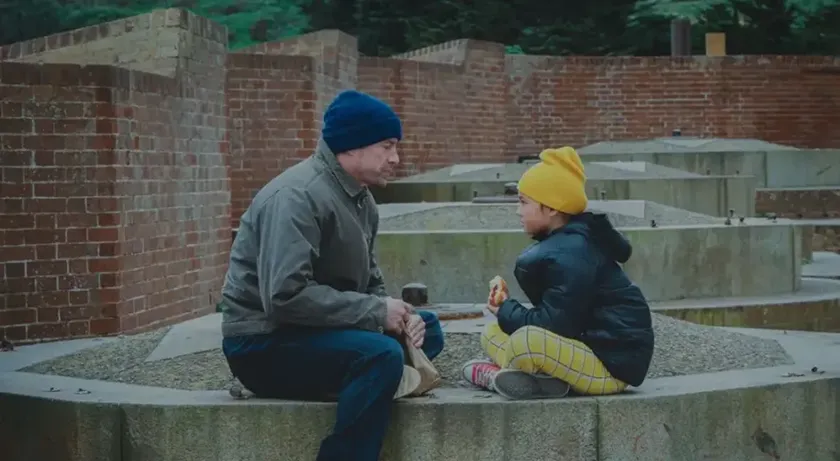
Channing Tatum is most associated with comedies like 21 Jump Street or Magic Mike, but his performance here is one of several that prove how great a dramatic actor he is. I’ve always liked Gemma Chan, but this is easily the best performance I’ve seen from her. They both play the parents so painfully believably as they struggle to even begin knowing what’s best for their child, with more and more of the aftermath demanding the entire family to revisit it. You can see their own life experiences steering them away from being the unified pair that’s needed, and they don’t even have to say much to get those experiences across.
But by far the actor with the hardest job is Mason Reeves. She needs to convey the mindset of a child who’s seen something clearly upsetting for the adults yet initially beyond her understanding, the lack of tact as she tries to sort through her emotions in ways a kid simply can’t, the blind lashing out of a child who sees so much in black and white, the erratic switches between numbness and volatility, and the pressure of all the attention she receives from everyone who wants something for or from her. It’s one of the best performances I’ve seen from any actor at any age this decade.
That entire mess of emotions is the constant, unwavering core of Josephine, so much so that it feels like it manifested straight from de Araújo’s own childhood consciousness. The world can be a terrifying, nasty place whose cruelty I’ve gratefully never seen at its absolute worst with my own naked eyes. But I know that even just reckoning with that cruelty takes its toll on you, threatening to turn you jaded and cynical or violent and hateful. Fully grown adults are given the responsibility of guiding their children through that struggle, even though they themselves are endlessly fighting that internal battle every day.
There are so many parenting mistakes in Josephine, including ones that are only possible in today’s world of nearly unlimited access to information. But you also recognize that no one can know how to perfectly handle something like this. This may be a coming-of-age story for Josephine, but with the way we’re taken through her coping process and let into the mind of a shattered child, we’re forced to revisit our own perceptions of the world around us. Do we still have growing up to do? How actually mature are we in viewing these things? What should we see as simple black-and-white and what needs to be viewed with complicated shades of grey?
Josephine may be more traditionally edited than Soft & Quiet’s real-time progression, but it maintains its highly realistic, uncompromising tone where there’s absolutely nowhere to run, hide, or even look away from the pain onscreen. It’s generally a more stylized film that plays with the cinematic language a little more. This includes an anxiety-inducing spinning shot as the weight of what’s needed from Josephine piles on top of her parents’ disbelief, and a recurring visual that’s so brilliant in its downplayed framing and subtleties that it quietly jolted me every time it showed up. The score from Miles Ross occasionally goes too big for what’s needed, but that’s only about 5% of the time.
Not a second went by in which I felt I could look away from Josephine but also didn’t desperately want to. The film breaks down an unfathomably difficult topic piece by piece, carving all the way to the heart of ugly truths and gutting you as a viewer in the process. But as difficult as it is to get through, it leaves you with many important reckonings and, yes, even glimmers of hope in the end. The sobriety I feel even now is only matched by the joy of remembering that a film this good is even possible, and the confirmation that Beth de Araújo is one of the best new directors we have. I recall saying Soft & Quiet is only for those who can stomach it. Josephine is for every adult, because we all should stomach it.
Josephine (Sundance 2026): Movie Plot & Recap
Synopsis:
A young girl is traumatized after witnessing a terrible crime, while her parents struggle to guide her through it.
Pros:
- Masterful acting through challenging material.
- Uncompromisingly blunt, realistic storytelling.
- A deep dive into child psychology and trauma.
- Every emotion lingers from start to finish.
Cons:
- Rarely overpowering score.
Josephine had its World Premiere at the Sundance Film Festival on January 23, 2026 and will be screened again, in person and online, until February 2. The film will also be screened at the Berlin Film Festival in February.