
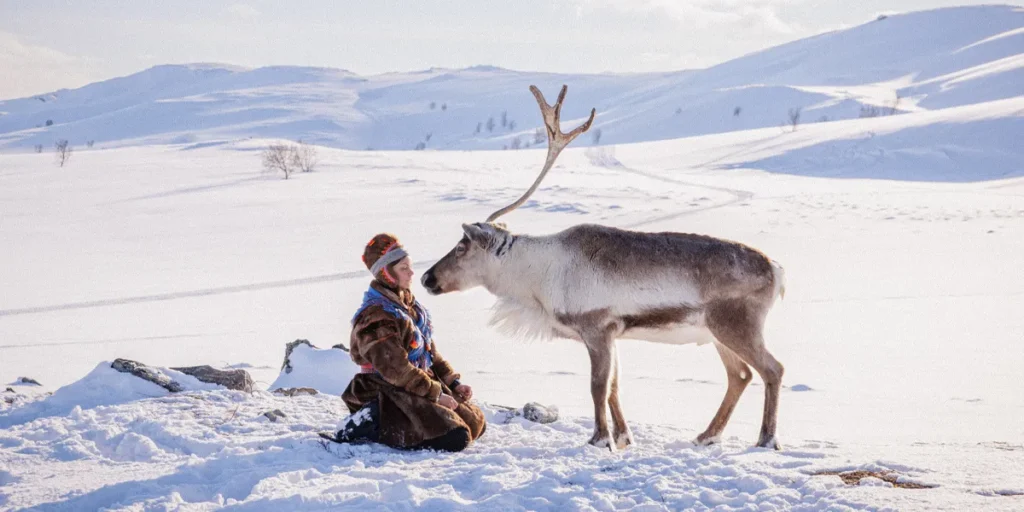
In Árru, Elle Sofe Sara uses the landscapes of Scandinavia to tell a story of corporate greed and familial abuse, but the two parts fail to cohere.
Director: Elle Sofe Sara
Genre: Drama
Run Time: 95′
Berlin Film Festival Screenings: February 16-22, 2026
Release Date: TBA
There are a lot of modern films that broach the subject of large corporations taking over rural lands, destroying centuries-old indigenous ancestral heritage in the process. Because of the abundance of them, there needs to be something fresh to proceedings to really stand out. In many ways, Árru is one of those films.
Elle Sofe Sara’s debut feature utilises music and dance to enhance the cultural traditions tied so tightly to the Sámi people living across the Sápmi region. It is rich in detail, but Sofe Sara’s bizarre screenplay, which parallels another story alongside this one, is too abrasive.
Árru feels like a documentary. The first ten-minutes are like an exquisite, emotive nature documentary, with Cecilie Semec’s graceful cinematography perfectly framing the breathtaking landscapes of a Norwegian region of Sápmi. This opening also sees the film’s three main characters—Maia (Sara Marielle Gaup Beaska), Dánel (Simon Issát Marainen), and Áilin (Ayla Gáren Nutti, Borderline)—break out into song whilst they herd their reindeers. The authentic singing is entrancing, and hints at something to come that will be bold and evocative.
Unfortunately, Árru loses its way shortly after this, with the introduction of Lemme (Mikkel Gaup, Breaking the Waves), Maia and Dánel’s uncle. It’s clear that there is some long-buried but still present trauma haunting brother and sister, and that it came through the abusive actions of Lemme. However, their uncle is here in a professional and personal capacity, using his career contacts to try and save their ancestral land from a mining company development. It presents a conundrum to Maia, who reached out to Lemme for help, but it just feels off. Being aware of the abuse of Dánel as a child, the fact that Maia even contacted him for assistance doesn’t fit with her character.
Their other family members have for a long time ignored the abuse, which makes for an intriguingly complex familial network that values tradition and reputation over doing the right thing. Árru feels like a film of two tales that never fit together properly. On their own, each one is well done, with the story surrounding the destruction of indigenous land particularly resonant. Together, they do not combine, jarring against each other as Sofe Sara jumps between the two.
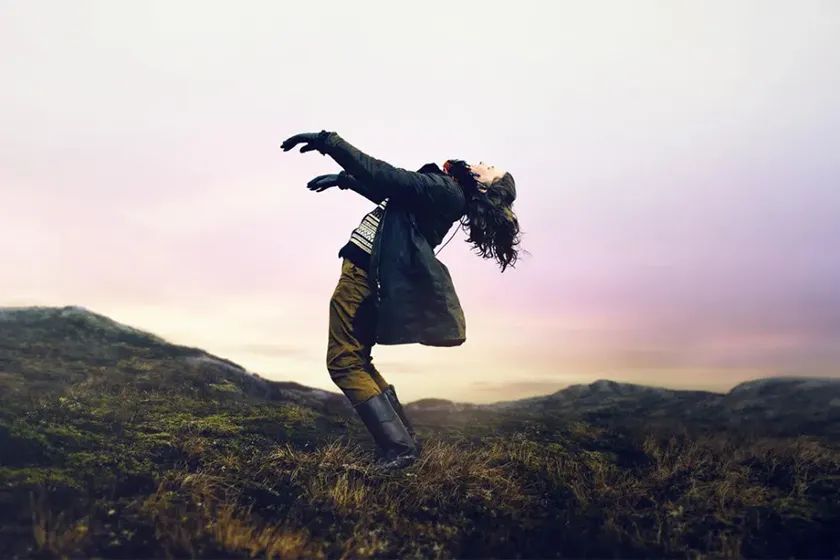
If Árru had just focussed on the stronger of its two stories, there would have been far more success here. It is a film that is rich with details of long-held traditions and a very specific way of life. There are moments that are strongly immersive. There are even some more experimental musical numbers that really shine. One involves the whole community dancing and singing at a celebration, whilst another finds Maia running across the landscape in distress, flanked by imaginary people who seemingly rise out of the ground.
John Erik Kaada’s (The Ugly Stepsister) music is one of the best aspects of Árru, with the lyrics of each of these songs shining with complexity and detail. The characters consistently find strength through movement and their heritage. The fact that Sofe Sara also uses actors such as Gaup, who are Sápmi activists and singers, further enhances these musical moments. These strengths make the transitions back to the trauma-based plot even more jarring. Whilst by no means bad or mishandled, this storyline feels less certain of itself. Sofe Sara can’t quite grasp that emotional payoff that it deserves, unlike the ancestor-based one, which frequently soars with catharsis and fierceness.
Árru (Berlinale 2026): Movie Plot & Recap
Synopsis:
In the Sápmi region, a small family of reindeer herders fight to protect their ancestral lands from a potential mining project. The return of another relative offers hope, but also causes past trauma to resurface.
Pros:
- Evocative cinematography amplifies the cultural depth to the Sápmi landscape
- Traditional song and dance are used well
Cons:
- Two stories that don’t fit together
- One of these stories lacks the necessary emotional depth
- Some of the dialogue is stilted and lacks realism
Árru premiered at the Berlin Film Festival on February 16-22, 2026. Read our Berlin Film Festival reviews and our list of 20 films to watch at the 2026 Berlin Film Festival!