
A Russian Winter is a crucial documentary that explores the silent impacts of the Russian invasion of Ukraine on the country’s youth.
Writer-Director: Patric Chiha
Original Title: Un Hiver Russe
Genre: Documentary
Run Time: 87′
Berlin Film Festival Screenings: February 17-22, 2026 (Panorama Dokumente)
U.S. Release Date: TBA
U.K. Release Date: TBA
Political cinema, particularly first-hand documentaries such as A Russian Winter, has never been more relevant than it is today. With so much conflict and oppression happening in the world, there will always be a place for stories that explore the victims of geopolitical violence. But A Russian Winter interrogates what it means to be a “victim” at all, raising important questions about who suffers in any given conflict and why those in a position of privilege are so quick to denounce entire cultures for the actions of their government.
On 24 February, 2022, the Russian military invaded Ukraine and triggered the deadliest conflict in Europe since the Second World War. Since then, Russia has been thrust into a position of villainy on the world stage; in the eyes of many, the country has absorbed the reputation of its government. Russian athletes have been banned from participating in sports, musical artists have been prevented from performing across the world, and the Russian youth has been tainted with the crimes of an undemocratic government it never had any chance to overcome. This is the central question at the heart of A Russian Winter: what happens to those whose government betrays them, leaving them without a national identity to be proud of?
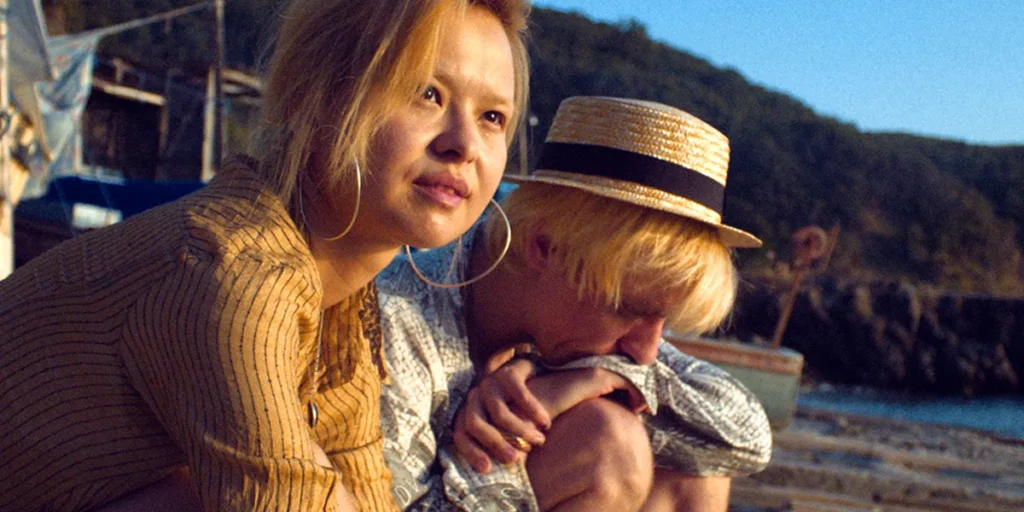
Directed by Patric Chiha, A Russian Winter follows two central characters: Margarita and Yuri. Unable to reckon with the actions of their country, these young friends are pushed into exile when they refuse to comply with the demands of the Russian regime. With nowhere to call home and nobody to open up to about their unique plight, the protagonists explore what it means to be truly without identity – and why the label “victim” is much more complex than the country one belongs to.
The first half of A Russian Winter is largely without form. The film consists of long, free-flowing interviews with those who object to Russia’s military actions and have paid some kind of consequence for it. It’s very slow and, for the most part, seemingly without a greater purpose. This may understandably be an obstacle for many audiences, but the film eventually rewards the viewer’s patience by displaying the value of the lessons discussed by the interviewees with a cleaner, stricter focus on Margarita and Yuri as their story takes a less nebulous form.
Admittedly, the slow pace and lack of narrative momentum make it very hard for viewers to fully realize the importance of this story until it’s perhaps too late. It’s a very demanding way to open a film that already requires a lot of patience and open-mindedness to fully appreciate, and this slow-burn really isn’t doing the film any favors.
Thankfully, once these characters become more than nameless interviewees and morph into developed individuals with their own internal conflicts and important stories to tell, A Russian Winter finally steps confidently into the shoes it was always trying to wear. It’s almost redundant to say this is an important story, but Chiha’s approach to this project feels genuinely crucial in the wider context of discussing how a country’s people (particularly the youth) are often forced into culpability for the actions of its politicians. If nothing else, A Russian Winter feels like it’s genuinely moving the needle of this discussion in a worthwhile direction through raw, vulnerable empathy instead of merely telling the audience what to think.
It’s frustrating that so many viewers will tune out of A Russian Winter before it truly starts, but the film doesn’t necessarily do itself any favors when it comes to getting the audience on board; it merely presents ideas as they come and hopes you’re already prepared to receive them. This can make Chiha’s documentary quite a challenging watch at times, but an undeniably rewarding one for those who have the patience to rewire their own perception of an entire cultural movement.
A Russian Winter (Un Hiver Russe): Movie Plot & Recap
Synopsis:
After the invasion of Ukraine in 2022, Margarita, Yuri and their friends are pushed into exile from Russia as they refuse to comply with the regime. Suspended between countries, they have nowhere to return, and nowhere they feel truly welcome.
Pros:
- A crucial message that audiences around the world could learn valuable lessons from about empathy, understanding, and geopolitics.
- A rewarding sense of patience that lets the audience form their own opinions throughout the film.
Cons:
- Very slow paced in a way that will likely deter many viewers from fully opening themselves up to the film’s often radical messages.
A Russian Winter (Un Hiver Russe) premiered at the Berlin Film Festival on February 17-22, 2026. Read our Berlin Film Festival reviews and our list of 20 films to watch at the 2026 Berlin Film Festival!