
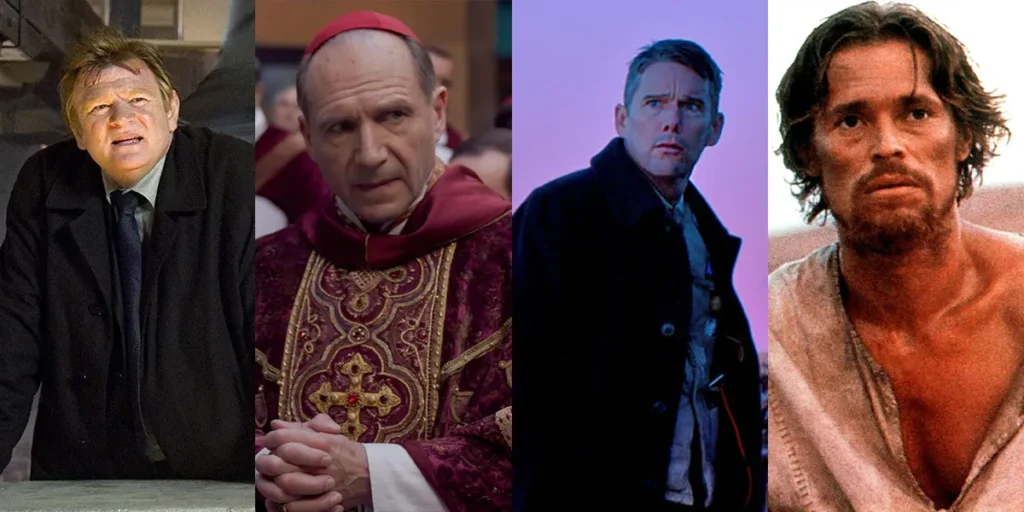
From Scorsese to Schrader, Berman to Malick, these are the Top 10 movies on faith and doubt from masters of the craft.
Western film history has long wrestled with the tension between faith and doubt, especially in a cultural moment where institutional trust in religion has faded, where belief is no longer assumed, and where skepticism often feels like the starting point for so many. Many of our greatest living filmmakers have explored this terrain, but rarely by providing easy answers or devolving into preachy diatribes. Instead the consistent propensity is to portray faith and doubt as deeply intertwined experiences, shaped by suffering, conscience, longing, and hope.
Film as a medium is uniquely suited to explore these sorts of experiences that resist easy articulation: spiritual struggle, existential wrestling, and the tension between belief and skepticism can be expressed through image, sound, editing, and storytelling in ways purely intellectual reflection cannot. In light of Rian Johnson’s recent exploration of these themes in Wake Up Dead Man, it seems fitting to trace this cinematic lineage and consider how filmmakers have wrestled with faith and doubt through the art they’ve created as expressive of the human condition. Here are the top 10 movies on faith and doubt.
10. The Last Temptation of Christ
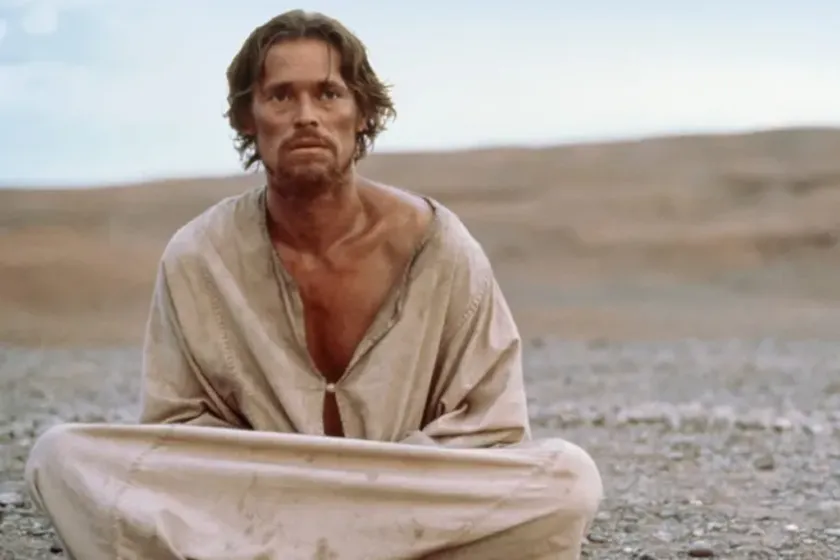
Martin Scorsese’s entire filmography could be viewed through the lens of faith and doubt, with frequent subtextual reckoning with the Catholic guilt and story of his upbringing. The Last Temptation of Christ, however, stands out as one of his most explicit explorations of this tension. Scorsese reimagines the life of Jesus (Willem Dafoe), emphasizing his humanity and his inner struggle with the calling to sacrifice his own comfort and security for the sake of the world. At the time of its release, many Christians were outraged by this inventive and revisionist portrayal, but today, with the benefit of hindsight, it is widely recognized as a masterwork from one of cinema’s greatest auteurs: an unflinching, profoundly human exploration of doubt, faith, and the burdens of calling, set within the most influential life story in Western history.
9. Calvary
An intimate but powerful film, Calvary opens with a bang (or at least a promise of one): Fr. James (Brendan Gleeson) hears the confession of an unseen man who suffered sexual abuse from a priest in his childhood. Given the seeming indifference of the Catholic Church, this man vows to kill an innocent priest in order to draw stronger outrage in response to his own abuse. It is implied, in this confession, that this man has Fr. James in mind, and the man gives Fr. James until the coming Sunday to get his affairs in order. The proceeding week follows James through his pastoral duties as he reckons with his own vocation, his worthiness as a priest, and his own deep and complicated past.
By forcing its lead to directly face his own mortality, Calvary vicariously invites the audience to do the same: if you knew you only had until next Sunday, what sort of existential reflections might it prompt in you? With rich and complex performances at its center from Gleeson, Chris O’Dowd, and Kelly Reilly, and a dynamite script from John Michael McDonagh, this one explores these central human tensions with remarkable humility and honesty.
8. The Mission
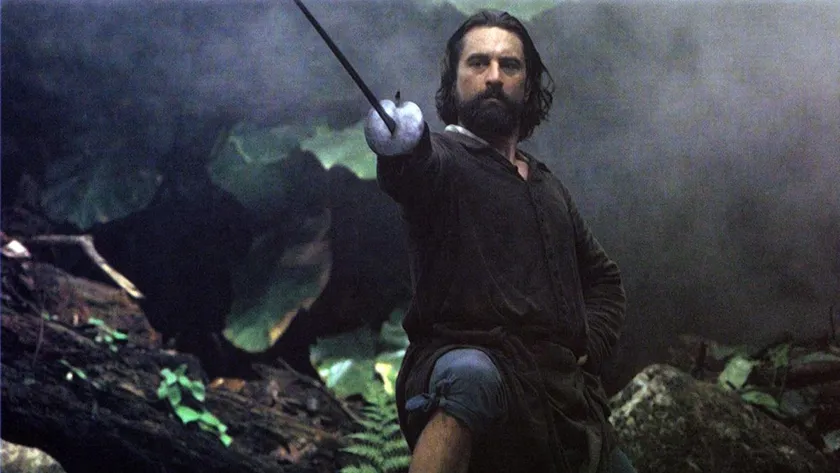
An exploration of the complicated relationship between Christian missionary efforts and colonialism, Roland Joffé’s 1986 drama The Mission is a sweeping, visually immersive exploration of faith, conscience, and the costs of religious conviction. Set in 18th-century South America, it follows Jesuit missionaries, led by Father Gabriel (Jeremy Irons), as they seek to protect a remote Guaraní community from the encroaching violence of colonial powers and imperial interests.
At the heart of the film is the tension between spiritual calling and worldly compromise. Gabriel embodies a quiet, sacrificial devotion, while the conflicted mercenary-turned-priest Rodrigo Mendoza (Robert De Niro) wrestles with guilt, redemption, and the possibility of forgiveness for himself. Through its lush cinematography, haunting score by Ennio Morricone, and morally complex storytelling, The Mission confronts the costs of living faithfully in an unjust world, asking audiences to consider what it truly means to follow one’s conscience, even when the path is fraught with danger, heartbreak, and doubt.
7. In Bruges
Martin McDonagh (brother of John Michael) gives a thrilling exploration of morality and fate in 2008’s In Bruges, interpreted by some as a metaphor for purgatory. Brendan Gleeson appears again on this list, this time playing Ken, a hitman who is tasked with hiding out in Bruges, Belgium with his mentee, Ray (Colin Farrel), whose hit of a priest goes horribly wrong and results in the death of a praying young boy. The film follows Ray and Ken as they walk together through the streets and sights of Bruges, awaiting judgment from their superior, Harry (Ralph Fiennes).
Both characters, through their dialogue, adventures, and misadventures in the city, serve as sort of templates for examining morality in a postmodern, increasingly post-Christian West. Where does right and wrong come from in a world increasingly moving beyond traditional religion? Is an inflexible standard of good and evil even moral itself? How do we navigate a complicated, gray world? Is there an approach to morality that avoids black and white while still maintaining some standard of justice and mercy? While the film may not explicitly answer such questions, it compellingly explores them in a dialogue-centric dark comedy, one that will bring laughs and existential reflection in equal measure.
6. The Seventh Seal
Ingmar Bergman’s The Seventh Seal is a meditation on faith, doubt, and the human search for meaning in the face of death. Set against the grim backdrop of the Black Plague, the film follows knight Antonius Block (Max von Sydow) as he returns from the Crusades, haunted by existential questions and struggling to reconcile belief in God with the suffering he has witnessed and inflicted. In a series of striking, allegorical encounters–including an iconic chess game with Death–Block wrestles with doubt, despair, and the longing for certainty, while those around him navigate their own small, fragile hopes.
Bergman’s austere black-and-white cinematography, stark landscapes, and piercing dialogue create a space where viewers confront the same ultimate questions as Block: How do we live and believe when life is fragile, the divine seems silent, and our own morality (or lack thereof) haunts us? The result is a profound exploration of doubt as an intrinsic part of faith, one that continues to resonate across centuries and cultures.
5. Conclave
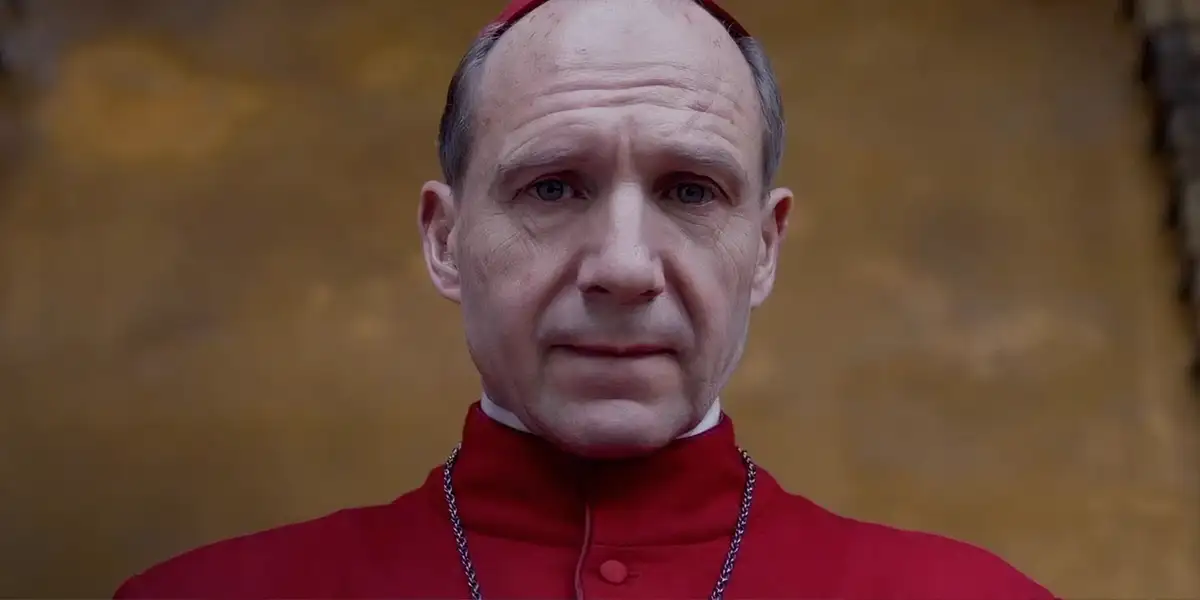
Edward Berger’s Conclave is a tense, beautifully crafted exploration of faith, doubt, and the human desire for moral clarity, set against the intricate politicking of a papal election. Following Cardinal Thomas Lawrence (Ralph Fiennes) as he navigates the sequestered Vatican conclave after the pope’s death, the film examines the interplay of ambition, conscience, and conviction among the Cardinals, each representing differing visions of the Church and its future. Into this highly charged environment enters Father Benitez (Carlos Diehz), a quietly radical outsider whose life of hidden ministry among the marginalized upends the carefully calibrated power dynamics of the election. Berger’s meticulous framing and close-ups, accompanied by a haunting score from Volker Bertelmann, create a palpable tension that mirrors the inner spiritual and ethical struggles of the characters.
At its heart, Conclave is about more than intrigue and protocol: it is a meditation on human fallibility, divine providence, and the enduring tension between faith and doubt. The film’s climactic moments, where divine promptings intersect with human decision-making, offer glimpses of grace and clarity amidst chaos, transforming what might have been a political thriller into a profound reflection on the Church, morality, and the quiet ways that the sacred can emerge even through human failings and doubts. In this way, the film reminds us that the exceptional often lies not in those who feel fit to lead, but in those who know their own limits and allow faith and conscience to guide them.
4. Wake Up Dead Man: A Knives Out Mystery
Rian Johnson’s Wake Up Dead Man uses the well-worn beats of a Hollywood whodunit as a canvas to meditate on truth, faith, and the ways both can be distorted, embodied, and ultimately redeemed. Set in a locked-room murder within a church, the film pairs the analytical detective Benoit Blanc (Daniel Craig) with Fr. Jud Duplenticy (Josh O’Connor), a deeply faithful and compassionate priest whose ministry is rooted in love, grace, and sacrificial service. Johnson stages a conversation between reason and faith, showing that neither alone can fully apprehend truth: Blanc’s empirical, investigative rigor uncovers facts, while Jud’s embodied love and moral attentiveness reveal the deeper, human and spiritual dimensions of justice, mercy, and grace.
In its climax, the film demonstrates that truth is not just what can be observed or proven: truth must be embodied in love. Moments of radical grace and sacrificial care illuminate the story’s central claim: that the truth of our lives, and of God’s reality, are found where intellect and heart, reason and faith, converge with one another, as our detective and priest converge. In a culture suffused with misinformation, cynicism, and polarized visions of reality, Wake Up Dead Man insists that honesty, humility, and love are essential to seeing the world and ourselves clearly. It is a mystery, a meditation, and ultimately, a call to reconcile doubt and belief as mutually necessary paths to understanding and human flourishing.
3. A Hidden Life
A sort of cinematic parable, made all the more urgent in our theo-political moment, Terrence Malick’s A Hidden Life follows the life of Austrian farmer, conscientious objector, and martyr Franz Jägerstätter (played by August Diehl), who refuses–due to his faith conviction–to swear an oath of loyalty to Hitler during WWII. Rather than simply providing a flat hagiography, Malick deeply enters into the experience of Franz the father, Franz the husband, and Franz the citizen, examining the extreme pressures and challenges of standing for what’s right in a culture that has become entirely complicit in evil.
Doubt and faith dance in every vibrant shot here, and Malick’s vision for detailed realism gets us literally and metaphorically close to these wrestlings to make us face the same sorts of questions. The film is a sort of visual sanctuary, and its dialogue will spiritually stir even the most skeptical viewer–the scene embedded above, from the middle of the film, remains among the most profound examinations of faith and doubt ever put to screen.
2. First Reformed
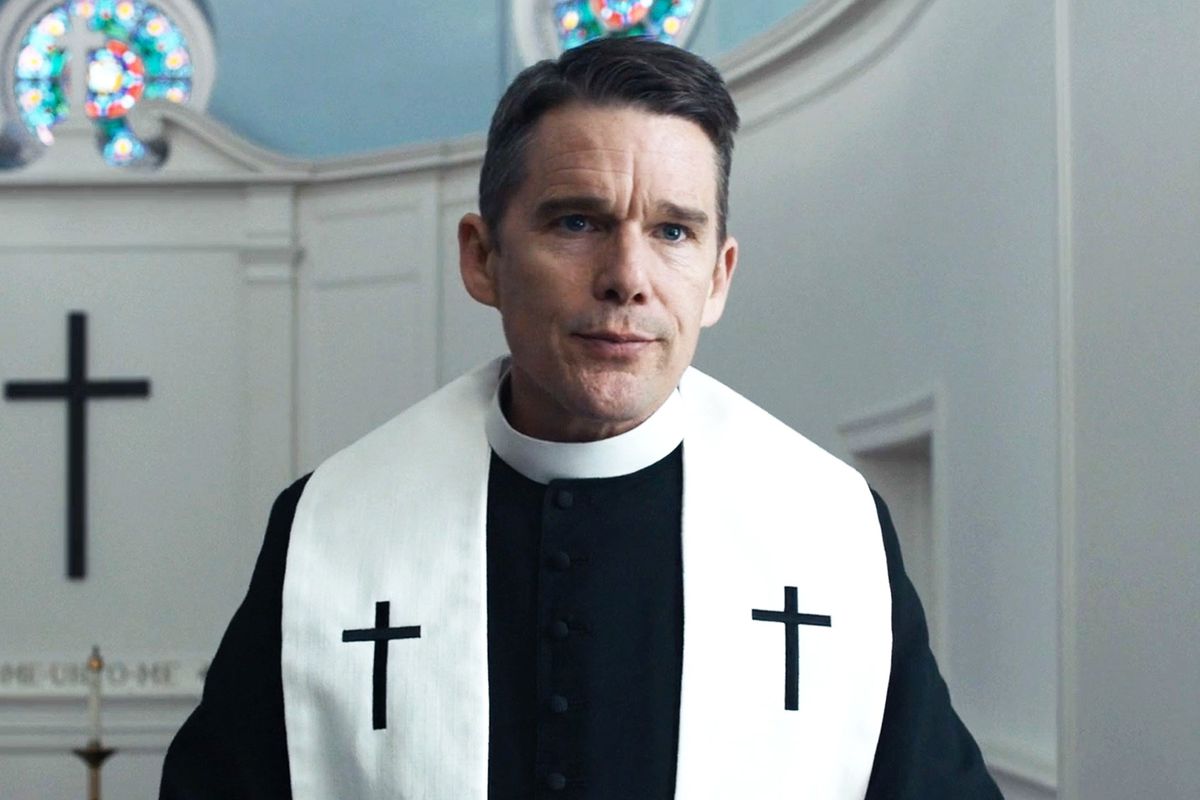
Paul Schrader’s First Reformed is a masterclass in spiritual storytelling, capturing the dark night of the soul with a precision and reverence rarely seen in cinema. Through lingering shots, deliberate inserts, and a meditative pace indicative of his patented transcendental filmmaking, Schrader immerses us in the psyche of Ernst Toller (Ethan Hawke), a pastor wrestling with despair, pride, and the desire to find meaning in a broken world. Hawke’s performance is enrapturing: his journal entries, private counseling, and moral reckonings reveal a man striving for purpose while confronting the limits of his own power and the consequences of his inaction. The arrival of Mary (Amanda Seyfried) in her vulnerability and openness offers a hopeful counterpoint, suggesting that love and grace can reach even the most desolate hearts.
Every detail in the film – the journal, the vest, the barbed wire, the recurring motifs of light and framing – serves a thematic purpose, highlighting the scriptural density of the story. Dialogue throughout, echoing the contemplative wisdom of trappist monk Thomas Merton, probes the tension between despair and hope, pride and humility, suffering and calling. Schrader’s use of space, light, and composition rewards attentive and repeat viewing, and that opening image of the cross on the steeple–emerging gradually into view from the darkness–becomes emblematic of the film’s central claim and its ambiguous ending: love can break into brokenness, even through suffering and pain, offering redemption in the midst of despair.
1. Silence
It seems fitting to start and end this list with Scorsese, seeing as his work is perpetually concerned with this intersection. Silence is a profound meditation on faith, doubt, and the presence and seeming absence of God in a suffering world. Following Father Rodrigues (Andrew Garfield) as he journeys to 17th-century Japan to support persecuted Christians, the film immerses us in a landscape where cultural barriers, language, and ritual complicate the practice and spread of faith.
Scorsese lingers on silence–in music, in dialogue, and in image–in order to make the audience feel both the weight of the priests’ devotion and the desperate longing of the Japanese Christians. Every detail, from the elevation of the priests to the extra food they receive, the reverence for images, and the subtle betrayals by Kichijiro, underscores the tension between true faith and religious performance, between God’s hiddenness and the visible structures of devotion.
Rodrigues’s journey mirrors Christ’s ministry: an arrival in a foreign land, acceptance by a few, rejection by powers, and a final, wrenching temptation to abandon his mission. In the silence, Scorsese suggests, God’s voice is both present and absent: “He is here. I just can’t hear Him,” Rodrigues utters in the midst of his turmoil. Yet even in eventual apostasy, in outward compliance with persecution, the possibility of grace persists, as Rodrigues and the audience confront the profound paradoxes of faith under trial. Through its quiet, meticulously composed images and moral ambiguity, Silence transforms doubt into a vehicle for deeper insight, forcing us to wrestle with the presence of God in a world of suffering and human frailty.