
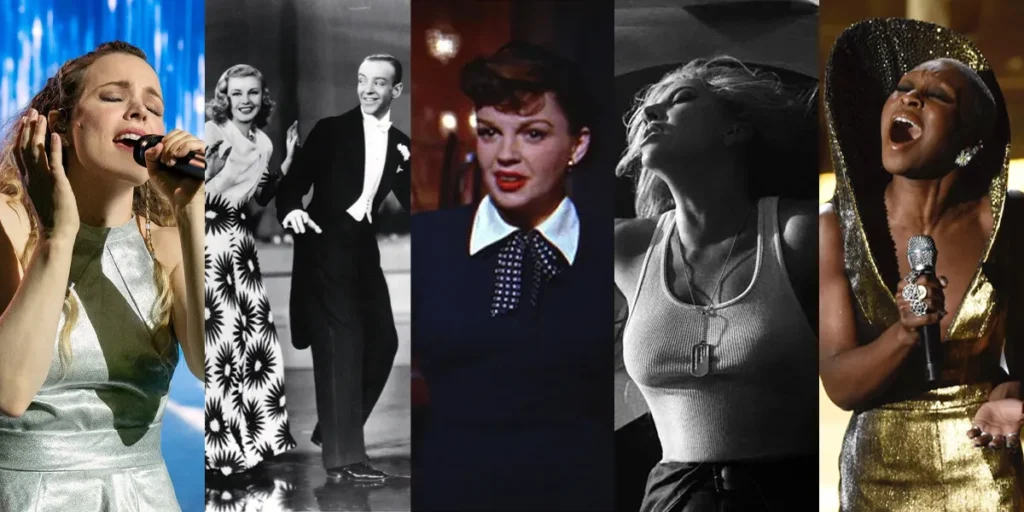
We ranked the best Original Song Oscar losers: here are 10 nominated movie songs that didn’t win the Academy Award but became classics anyway.
The Academy Awards have been handing out the Oscar for Best Original Song since 1934, which means nearly a century of composers writing music specifically for movies. Looking back across those decades, it’s also a history filled with Best Original Song Oscar losers, songs that were nominated, celebrated, and somehow still walked away empty-handed.
Some of those songs faded with time. Others quietly became standards anyway. And every so often the Academy got the decision exactly right. But not always. Every so often, the wrong song wins.
Oscar history is full of examples where the tune that endured lost the statue. Think about it: “Unchained Melody” losing in 1955. Carly Simon’s “Nobody Does It Better” missing out in 1978. Even in more recent ceremonies, the category has produced winners that left audiences wondering what Academy voters heard that the rest of us didn’t.
Sometimes the problem isn’t a bad winner so much as impossible competition. The 1980 ceremony had “9 to 5,” “On the Road Again,” and two songs from Fame battling it out. In 1988, “(I’ve Had) The Time of My Life” beat “Nothing’s Gonna Stop Us Now,” “Shakedown,” and “Storybook Love.” And then there’s 1985, when Stevie Wonder’s “I Just Called to Say I Love You” triumphed over “Against All Odds,” “Footloose,” “Let’s Hear It for the Boy,” and “Ghostbusters.”
Over more than ninety Oscar ceremonies, the list of Best Original Song nominees that lost is enormous. Narrowing it down isn’t easy. But these ten songs still feel like the Academy missed the mark, from respectable near-misses to one result that still makes almost no sense. Here are the 10 Best Original Song Oscar losers, ranked from worst to best.
Let’s start with the least painful loss.
10. “Cheek to Cheek” – Top Hat (1935)
Lost to: “Lullaby of Broadway” – Gold Diggers of 1935 (1935)
“Lullaby of Broadway” was exactly the sort of number the early Oscars loved to reward. Staged as a lavish Busby Berkeley production sequence in Gold Diggers of 1935, it’s big, flashy, and designed to dazzle audiences with kaleidoscopic choreography and sheer spectacle.
But Irving Berlin’s “Cheek to Cheek” achieved something more timeless. The song arrives during one of the most elegant dance sequences ever filmed, as Fred Astaire and Ginger Rogers glide across the ballroom floor in Top Hat. Berlin’s melody is deceptively simple, built around lyrics that capture the dizzying joy of falling in love: “Heaven, I’m in heaven…”
Over the decades, the song took on a life far beyond the movie itself. It became a cornerstone of the Great American Songbook, recorded by artists from Ella Fitzgerald and Louis Armstrong to Tony Bennett and Lady Gaga. “Lullaby of Broadway” won the Oscar and remains a dazzling movie moment. “Cheek to Cheek” became something rarer: a standard, and the one people still hum with their dance partner, often needing no orchestra at all.
9. “The Look of Love” – Casino Royale (1967)
Lost to: “Talk to the Animals” – Doctor Dolittle (1967)
Some Oscar wins merely feel dated with time. Others feel baffling almost immediately. “Talk to the Animals,” “sung” (and yes, that’s in quotes for a reason) by Rex Harrison in Doctor Dolittle, is a perfectly serviceable novelty tune about chatting with animals, light and whimsical, and about as weightless as the lumbering film it came from. The production itself was famously troubled and ultimately became one of the decade’s most expensive box-office disappointments.
Meanwhile, Burt Bacharach and Hal David were crafting something far more sophisticated. “The Look of Love,” performed by Dusty Springfield over the opening of the 1967 spoof Casino Royale, drifts through the film with effortless cool. Springfield reportedly recorded the vocal lying on the studio floor to capture its languid mood, and the result is pure Bacharach elegance, sensual, understated, and unmistakably stylish.
Neither film was exactly a critical triumph, but the music tells a different story. “Talk to the Animals” belongs firmly to its moment. “The Look of Love” quickly escaped its movie, becoming a hit single and one of the defining pop standards of the Bacharach–David catalog, recorded by dozens of artists in the decades since. The Academy rewarded the novelty. History rewarded the sophistication.
8. “Husavik (My Hometown)” – Eurovision Song Contest: The Story of Fire Saga (2020)
Lost to: “Fight for You” – Judas and the Black Messiah (2020)
Occasionally the Oscars reward urgency, and in 2021 that urgency belonged to H.E.R.’s “Fight for You,” a soulful anthem tied directly to the political tension surrounding Judas and the Black Messiah.
But “Husavik (My Hometown)” achieved something far rarer: it turned the emotional climax of a broad comedy into a genuinely stirring moment. Arriving late in Eurovision Song Contest: The Story of Fire Saga, and appearing to be sung by star Rachel McAdams (the vocals actually belong to Swedish singer Molly Sandén), the power ballad shifts the film from parody to sincerity, revealing the characters’ longing for recognition and belonging.
The nomination itself felt like a small underdog story. Fans of the film rallied behind the song in the weeks leading up to Oscar voting, helping propel it into the conversation almost like a grassroots campaign, an oddly fitting parallel to the fictional Eurovision team at the center of the movie. Sandén even traveled to Husavik itself to perform the song during the Academy Awards ceremony, underscoring the connection between the film and the real Icelandic town that inspired it.
What begins in the movie as a joke about Eurovision excess ultimately becomes an unexpectedly heartfelt tribute to home. The real town of Husavik embraced the song so enthusiastically that it briefly became a tourism phenomenon. For a comedy built on glitter, wigs, and key changes, that’s an impressive legacy and the kind of authenticity that often carries a song much further than the Oscar race.
7. “They Can’t Take That Away From Me” – Shall We Dance (1937)
Lost to: “Sweet Leilani” – Waikiki Wedding (1937)
If longevity decided the Oscar, this one wouldn’t be much of a debate. “Sweet Leilani,” performed by Bing Crosby in Waikiki Wedding, offered audiences a breezy romantic lark set against a postcard-perfect Hawaiian backdrop.
George and Ira Gershwin’s “They Can’t Take That Away From Me,” however, plays a very different role in Shall We Dance. Fred Astaire delivers it quietly on a dock, listing the small details he loves about Ginger Rogers’ character. Rather than a flashy musical number, it unfolds as an intimate confession set to music.
The song would go on to become one of the most beloved entries in the Gershwin catalog, but its power lies in its simplicity. Astaire barely moves, the orchestra swells gently behind him, and the melody lingers long after the scene fades. It also carries a poignant historical note: George Gershwin died only months after writing it.
The Academy rewarded the escapist fantasy and chose the lighter tune. The Gershwins left behind something far more lasting: a love song that feels almost like a goodbye.
6. “This Is Me” – The Greatest Showman (2017)
Lost to: “Remember Me” – Coco (2017)
This one feels less like a robbery and more like a philosophical debate. “Remember Me,” written for Coco, fits beautifully within the film’s emotional architecture, transforming from a lively show tune into a heartbreaking lullaby by the story’s end.
But “This Is Me” exploded far beyond its movie. Performed by Keala Settle in The Greatest Showman, the number arrives like a thunderclap of defiance, turning the film’s troupe of outsiders into a chorus of unapologetic self-acceptance. Written by recent Tony winners Benj Pasek and Justin Paul, the song plays like the classic Broadway showstopper the movie musical had been missing for years: big, brassy, and impossible to ignore.
In a film that became a gateway musical for a new generation of fans, the number functions as its emotional centerpiece. Settle’s powerhouse vocals, the swelling orchestration, and the song’s unapologetic message of identity quickly pushed it beyond the screen. “This Is Me” dominated playlists, talent competitions, and stage performances for months after the movie’s release, eventually winning the Golden Globe for Best Original Song along the way.
The Academy rewarded the song that best served its film’s narrative. Audiences have continued to embrace the one that felt like a genuine anthemic showstopper.
5. “Stand Up” – Harriet (2019)
Lost to: “I’m Gonna Love Me Again” – Rocketman (2019)
Every once in a while, the Best Original Song category feels less like a competition and more like a career celebration. That certainly seemed to be the case in 2020, when Elton John and Bernie Taupin finally won their long-awaited songwriting Oscar for “I’m Gonna Love Me Again.” The upbeat duet plays over the closing credits of Rocketman, functioning more as a victory lap for Taupin, since John had already won an Oscar decades earlier for The Lion King, than as a true narrative centerpiece.
Cynthia Erivo’s “Stand Up,” however, feels inseparable from the story it accompanies. Written by Erivo and Joshuah Brian Campbell for Harriet, the song arrives like a spiritual echo of the struggle the film portrays. Drawing on the cadence and emotional force of traditional freedom songs, it carries a sense of history and resilience that lingers long after the movie ends.
Not that it ultimately determines a song’s legacy, but Erivo’s performance of “Stand Up” at the Oscars remains one of the most electrifying live musical moments in the history of the telecast, her voice rising with the same determination the film celebrates.
“I’m Gonna Love Me Again” is undeniably fun. “Stand Up” carries the weight of something much larger.
4. “Hold My Hand” – Top Gun: Maverick (2022)
Lost to: “Naatu Naatu” – RRR (2022)
Few Best Original Song winners have generated as much crowd energy as “Naatu Naatu.” The exuberant dance number from RRR became a global phenomenon thanks largely to the electrifying choreography performed by the film’s two leads, and its Oscar win was greeted with genuine enthusiasm in the room.
But the award is not meant to celebrate choreography or viral dance challenges. It is meant to honor the song itself and how it functions within its film. By that standard, Lady Gaga’s “Hold My Hand” feels like the far more complete achievement.
Written specifically for Top Gun: Maverick, the song understands exactly what made Berlin’s “Take My Breath Away” so essential to the original Top Gun. It is a soaring power ballad that becomes part of the movie’s emotional through line. Gaga builds “Hold My Hand” the same way, with an irresistible hook, a patient verse, a swelling chorus, and a lush production that leaves plenty of space for her scorching vocals. By the time the film reaches its final moments, the song feels inseparable from Maverick’s journey through grief, legacy, and redemption.
“Naatu Naatu” became a sensation because of its choreography. “Hold My Hand” was a genuine movie anthem—one attached to one of the decade’s biggest blockbusters, a film widely credited with helping resuscitate theatrical moviegoing and even landing serious Best Picture buzz.
How that lost the Oscar remains one of the category’s most puzzling recent decisions.
3. “The Trolley Song” – Meet Me in St. Louis (1944)
Lost to: “Swinging on a Star” – Going My Way (1944)
“Swinging on a Star,” sung by Bing Crosby, is charming and catchy, the kind of cheerful novelty tune audiences adored during the 1940s. It’s light, playful, and easy to hum, exactly the sort of crowd-pleaser that often does well in this category.
But “The Trolley Song” represents something far more cinematic.
In Meet Me in St. Louis, Judy Garland bursts into the number as excitement builds for the city’s upcoming World’s Fair. What follows is one of the great musical sequences ever staged on film. The rhythm accelerates like the trolley itself gathering speed, the chorus echoes like the clang of its bells, and Garland’s soaring voice rises above it all with infectious exhilaration. Directed by Vincente Minnelli, the scene unfolds like a rolling symphony of motion and sound. The camera glides through passengers and performers as the song builds toward its jubilant climax and Garland’s clarion voice.
The number quickly became one of the defining musical moments of MGM’s golden age, a sequence that captures everything audiences loved about the studio’s lavish musicals: energy, romance, and a sense that the whole world might burst into song at any moment.
“Swinging on a Star” may have taken home the Oscar that year, but “The Trolley Song” became pure movie magic.
2. “The Man That Got Away” – A Star Is Born (1954)
Lost to: “Three Coins in the Fountain” – Three Coins in the Fountain (1954)
Some Oscar losses feel less like debates and more like historical oversights. “The Man That Got Away,” written by Harold Arlen and Ira Gershwin, stands as one of the most powerful torch songs ever composed for the screen. Nearly seventy years later, Garland’s performance still lands with staggering force.
In A Star Is Born, Judy Garland performs it in a smoky nightclub sequence that begins almost casually before building into something emotionally volcanic. Backed by a slow, bluesy arrangement, Garland leans into every line as if the heartbreak were happening in real time. The scene had to be filmed twice after Garland changed her hair color between takes, forcing the production to start over. The final version only heightens the raw electricity of the performance.
Meanwhile the winning song, “Three Coins in the Fountain,” accompanied a romantic travelogue set among the picturesque fountains of Rome. It is pleasant, melodic, and easy on the ears. Compared with Garland’s towering performance, it feels almost weightless. “Three Coins in the Fountain” is a postcard. “The Man That Got Away” is a storm.
1. “Till It Happens to You” – The Hunting Ground (2015)
Lost to: “Writing’s on the Wall” – Spectre (2015)
Every once in a while the Academy makes a decision that ages poorly. And then there are moments like this.
Sam Smith’s Bond theme “Writing’s on the Wall” divided audiences almost immediately, even among longtime fans of the franchise’s famously bold musical tradition. Compared with the swagger and scale of classic Bond themes, it felt strangely restrained, less a statement than a whisper.
Meanwhile, Lady Gaga and Diane Warren had written something devastating.
“Till It Happens to You,” created for the documentary The Hunting Ground, confronts sexual assault and the isolation survivors often face afterward. The song begins quietly before swelling into a chorus that feels less like a pop hook and more like a collective cry for recognition. Gaga’s vocal performance walks a delicate line between vulnerability and fury, capturing the emotional core of the film in a way few documentary songs ever manage.
The Oscar performance that year made the contrast even clearer. Gaga was joined onstage by dozens of survivors, transforming the moment into one of the most powerful musical statements the ceremony has seen in decades.
Against that backdrop, the result felt almost surreal. Nearly a decade later, the loss still stands as one of the most baffling outcomes in the Best Original Song category.
The Best Original Song category has always been unpredictable. Sometimes the Academy rewards the most cinematic number. Sometimes it rewards the biggest radio hit. And sometimes it simply reflects the mood of that particular year.
But movie songs have a funny way of outliving their trophies.
A melody written for a single scene can drift into popular culture, turning up decades later in concert halls, commercials, weddings, karaoke bars, or somewhere on a late-night playlist. The songs people remember aren’t always the ones that won the statue. They’re the ones that stayed with us after the lights came up and the credits rolled.
The Academy hands out the trophies.
Time hands out the classics.
The 98th Academy Awards will take place on Sunday, March 15, 2026. Download our printable Oscars ballot sheet!
Loud and Clear Reviews has an affiliate partnership with Apple, so we receive a share of the revenue from your purchase or streaming of the films when you click on some of the links on this page. This won’t affect how much you pay for them and helps us keep the site free for everyone.