
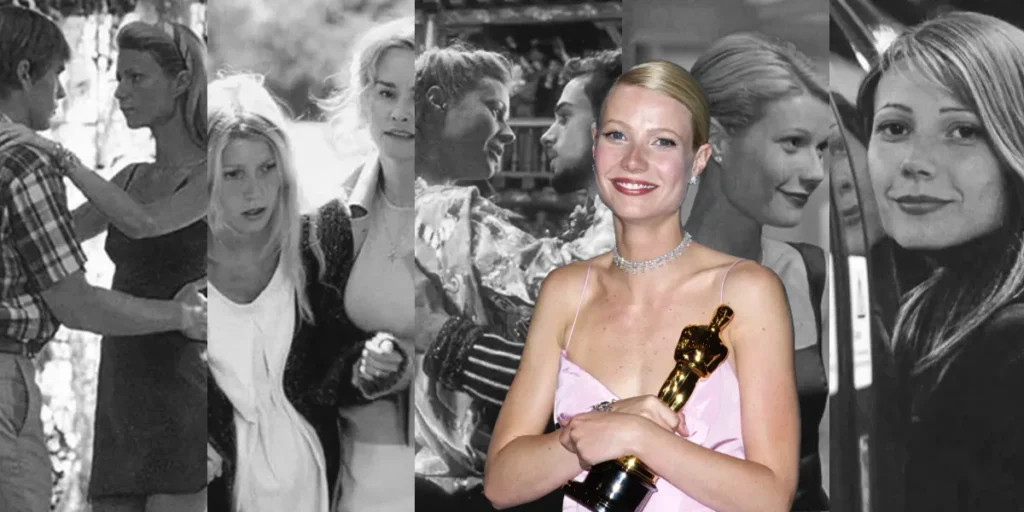
Before her Oscar win, Gwyneth Paltrow released five films in 1998, building one of the defining years of any modern movie star’s career.
With Marty Supreme arriving this Christmas, Gwyneth Paltrow returns to theaters for the first time since 2019’s Avengers: Endgame. At this point, her appearances feel intentional. She doesn’t need to work. When she chooses to, it’s because something caught her interest. That kind of selectivity tends to come after you’ve already proven everything you needed to prove.
Which is why 1998 still looms so large.
In the span of a single calendar year, Paltrow released five films. Five distinct performances, across genres, tones, and levels of studio expectation. She entered the year as a respected rising star and ended it holding the Academy Award for Best Actress. Not after a long campaign. Not after years of nominations. Just one relentless run of work that made her impossible to ignore.
What’s even more striking, in retrospect, is that she’s never been nominated again, though with Marty Supreme, a Supporting Actress nomination could be imminent. That Oscar wasn’t the start of a prolonged awards-season arc. It was the culmination of a moment. A year where every role sharpened the next, until Shakespeare in Love arrived as a kind of synthesis. Here’s how that year unfolded, one film at a time.
5. Great Expectations (January 30, 1998)
Director: Alfonso Cuarón
Character: Estella Havisham
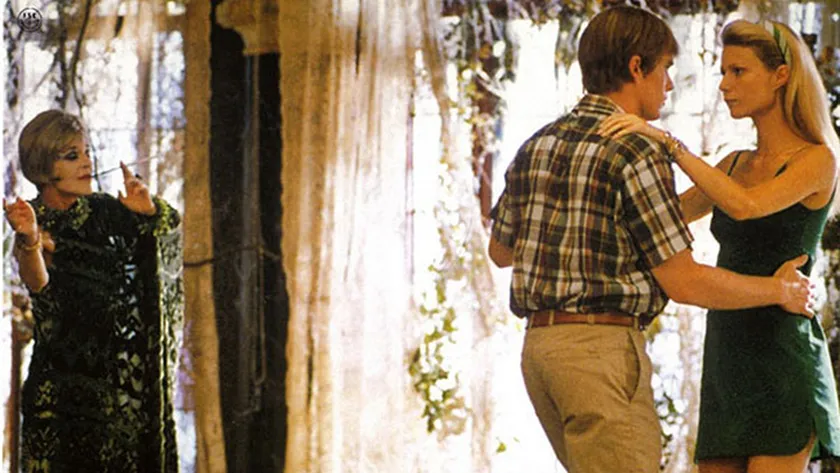
I remember how strange the timing was. Great Expectations opened barely six weeks after Titanic began swallowing the box office whole. James Cameron didn’t just dominate that winter; he reset the scale of romantic spectacle. Everything else felt smaller by comparison, and Alfonso Cuarón’s moody, modernized Dickens adaptation never quite found oxygen. That’s a shame, because Paltrow is mesmerizing here.
Ethan Hawke (Blue Moon) stars as Finnegan Bell, an orphaned artist whose life is shaped by an escaped convict (Robert DeNiro) and his obsession with Estella, the niece of a reclusive, heartbroken heiress played by Anne Bancroft (The Graduate). As Estella, Paltrow is styled and photographed like a myth. Draped in Donna Karan silk and captured by Emmanuel Lubezki with the care usually reserved for old Hollywood icons, she’s simultaneously the woman of Finn’s dreams and the architect of his heartbreak. She isn’t cruel so much as untouchable, and that withholding becomes the performance. The famous water fountain kiss, all yearning and suggestion, proved more effective than any bedroom scene could have been.
The film may have drowned in Titanic‘s wake, but Paltrow emerged looking like someone worth following. Great Expectations made it clear she could anchor a prestige literary adaptation while projecting pure star presence. Studios look for that combination for years. In 1998, she delivered it in January.
4. Hush (March 6, 1998)
Director: Jonathan Darby
Character: Helen Baring
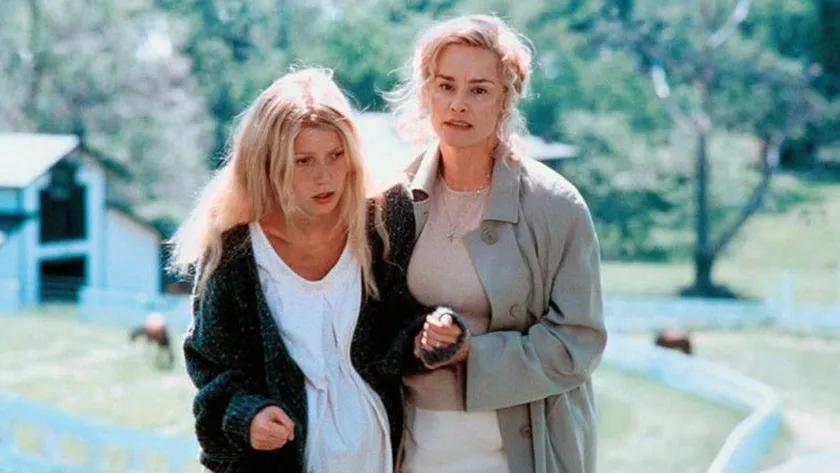
Every awards-bound actor needs a genre detour, and Hush was Paltrow’s. This psychological thriller casts her as Helen, a young woman who marries into a wealthy Southern family only to discover her mother-in-law has dangerous, possessive designs on her grandchild. Jessica Lange (Tootsie) goes operatic as the matriarch from hell, and Johnathon Schaech (That Thing You Do!) plays the oblivious husband caught between them. The film leans fully into gothic melodrama transplanted to Kentucky horse country.
Hush didn’t earn critical hosannas. After much studio tinkering, including numerous reshoots and a completely rewritten ending, the film was a flop and is barely remembered today, an odd blip on the credit list for all involved. What makes it interesting, though, is how Paltrow plays against Lange’s energy.
She keeps Helen internal, controlled, and observant. Where Lange devours the scenery and goes big, Paltrow keeps it grounded. That contrast is what makes the thriller elements work. Her fear feels justified, not exaggerated, and she never lets the performance tip into melodramatic hysterics. It’s the kind of “one for them” role that keeps an actor working in Hollywood, proof that Paltrow could open a genre picture and deliver what the marketing promised.
Hush wasn’t about acclaim. It was about calibration. It demonstrated she could survive, and even thrive, opposite a legend operating at maximum volume. That skill would matter later that year, when her co-stars included Geoffrey Rush and Judi Dench.
3. Sliding Doors (April 24, 1998)
Director: Peter Howitt
Character: Helen Quilley
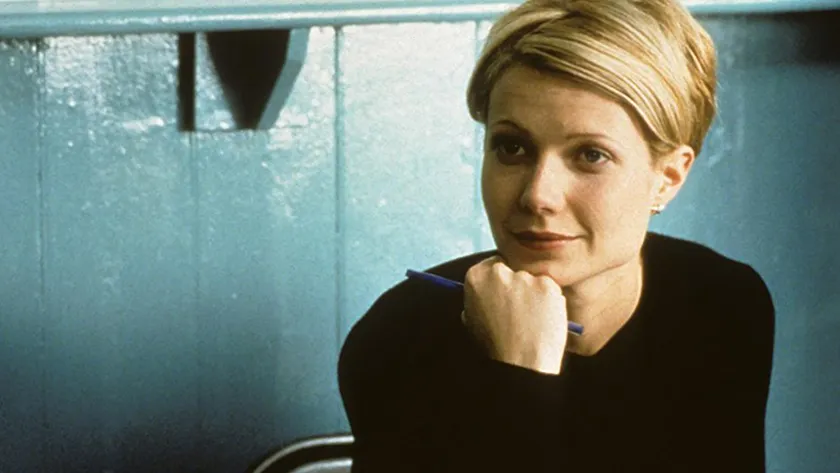
Peter Howitt’s clever romantic comedy splits its narrative at a London Underground platform: in one timeline, Helen catches her train and arrives home early to discover her boyfriend’s affair; in the other, she misses it and remains oblivious. The film follows both versions of her life in parallel, exploring how a single moment can redirect everything. It’s a high-concept premise that could easily have collapsed into gimmickry, but Howitt’s script finds genuine emotional stakes in both storylines, and Paltrow delivers the tricky dual performance with a breezy ease.
Sliding Doors revealed Paltrow’s romantic comedy instincts and her ability to generate audience sympathy on command. Both Helens are recognizably the same woman, but Paltrow finds subtle distinctions. By shifting posture, energy, and openness, she makes the parallel structure work, hardly needing the brunette/blonde haircuts to separate the storylines visually. She’s wounded but resilient in one timeline, blindly hopeful in the other, and the film’s emotional power comes from watching her navigate paths she can’t see.
The British setting also announced her comfort with accents and international productions, a versatility that Shakespeare in Love would exploit magnificently. This was the film that certified Paltrow could be charming, vulnerable, and commercially appealing all at once—the rom-com star turn that rounded out her range.
2. A Perfect Murder (June 5, 1998)
Director: Andrew Davis
Character: Emily Bradford Taylor
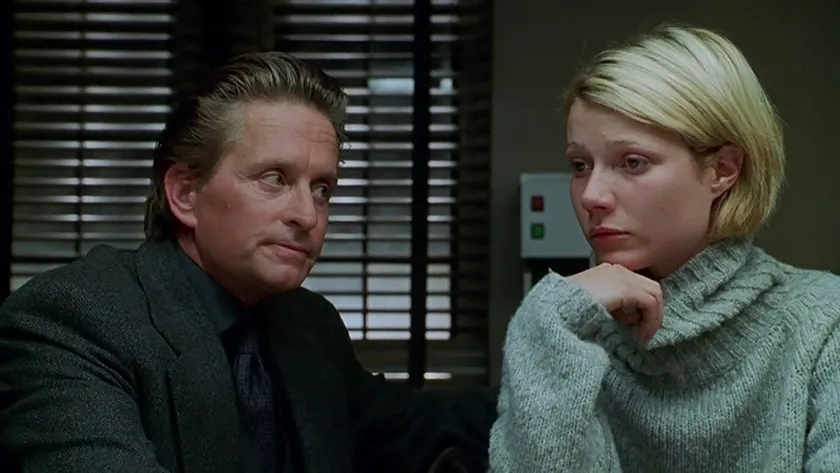
This is the most overtly glamorous role of Paltrow’s year, and she knows exactly how to use it. Andrew Davis, fresh off The Fugitive, directed this sleek update of Dial M for Murder with Paltrow as Emily, a wealthy translator trapped in a loveless marriage to Michael Douglas’s cold financier. When Emily begins an affair with a struggling artist (Viggo Mortensen, The Lord of the Rings), her husband doesn’t seek a divorce. He hires her lover to kill her. It’s a glossy, high-budget studio thriller, the kind of adult-oriented suspense picture that once filled multiplexes and now barely gets made.
As Emily, Paltrow moves through Manhattan penthouses and UN cocktail parties in designer gowns, embodying old-money elegance while navigating a plot designed to destroy her. The performance recalls Grace Kelly in the Hitchcock original: composed on the surface, sharper underneath. Opposite Douglas at full movie-star intensity, she never disappears, suggesting depths of intelligence and survival instinct beneath Emily’s polished surface.
The film itself is solid genre work, but what it contributes to the larger picture is confidence. A Perfect Murder showed Paltrow could hold center frame in a major studio production, matching A-list energy without trying to overpower it. When December rolled around, she was ready.
1. Shakespeare in Love (December 11, 1998)
Director: John Madden
Character: Viola de Lesseps
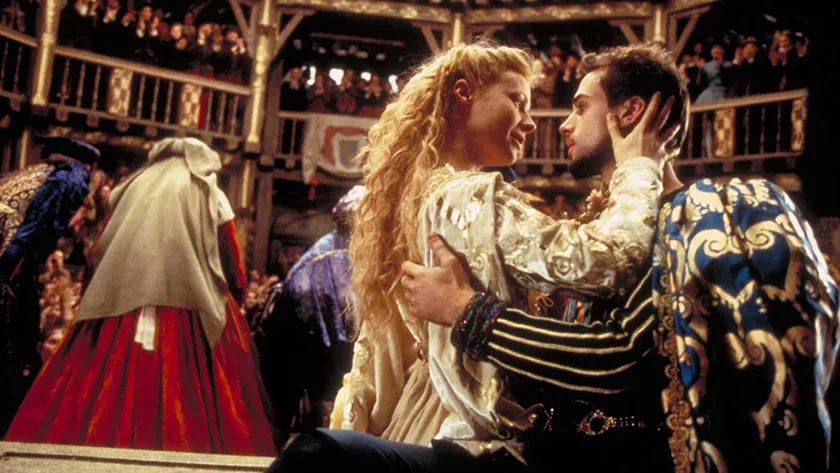
Everything converges here.
The film nearly happened years earlier with a completely different cast. Screenwriter Marc Norman first pitched the idea in the late 1980s, attracting director Edward Zwick and, eventually, Julia Roberts as Viola. But Roberts insisted that only Daniel Day-Lewis could play Shakespeare. When Day-Lewis declined—he was committed to In the Name of the Father—Roberts withdrew from the project six weeks before shooting was set to begin. The film languished in development until Miramax revived it with John Madden directing and a fresh cast.
The version that reached theaters imagines a young Will Shakespeare (Joseph Fiennes, Enemy at the Gates) struggling with writer’s block until he meets Viola de Lesseps, a noblewoman who disguises herself as a man to act on the Elizabethan stage. Their passionate affair becomes the inspiration for Romeo and Juliet, and the film interweaves their romance with the chaotic production of that play. The late Tom Stoppard and Marc Norman’s Oscar-winning screenplay is a marvel of wit and structure, layering theatrical in-jokes, genuine romantic longing, and bittersweet inevitability into something that feels both effortlessly entertaining and surprisingly moving.
Viola feels like a culmination, not because the role is louder or bigger, but because it asks for everything at once. Romantic longing. Wit. Disguise. Tragedy. Comedy. Paltrow threads all of it together with remarkable control.
She brings Estella’s elusive glamour, Helen Baring’s genre-savvy calibration, the romantic vulnerability of Sliding Doors, and the poised star presence of A Perfect Murder into a single performance. Her chemistry with Fiennes crackles, her period-appropriate accent holds beautifully, and her ability to move between comedy and heartbreak mirrors the play-within-the-play structure of the screenplay itself. Viola is passionate, intelligent, brave, and ultimately heartbroken, and Paltrow plays every register with conviction.
The Oscar win over Cate Blanchett’s Elizabeth remains debated in film circles, and probably always will be. Even I still feel Blanchett was the victim of being up against an actress whose studio spent more on the Oscar campaign than they did on the film itself. That’s not to take away from Paltrow’s work—her performance earned every bit of its recognition—but it does present how the playing field wasn’t totally equal. Regardless, Paltrow didn’t win because of one performance. She won because of a year. Because she spent twelve months proving, film by film, that she could do anything asked of her—and Shakespeare in Love asked for everything.
1998 wasn’t just Gwyneth Paltrow’s busiest year. It was her cinematic-thesis statement. Five films, five different facets of stardom, one golden statue at the end. Every choice that followed, the Marvel cameos, the work with Ryan Murphy, the extended breaks, the careful returns, makes more sense when you remember what she accomplished in those twelve months. She didn’t need to keep proving herself. She’d already done it, five times over, in a single year.