
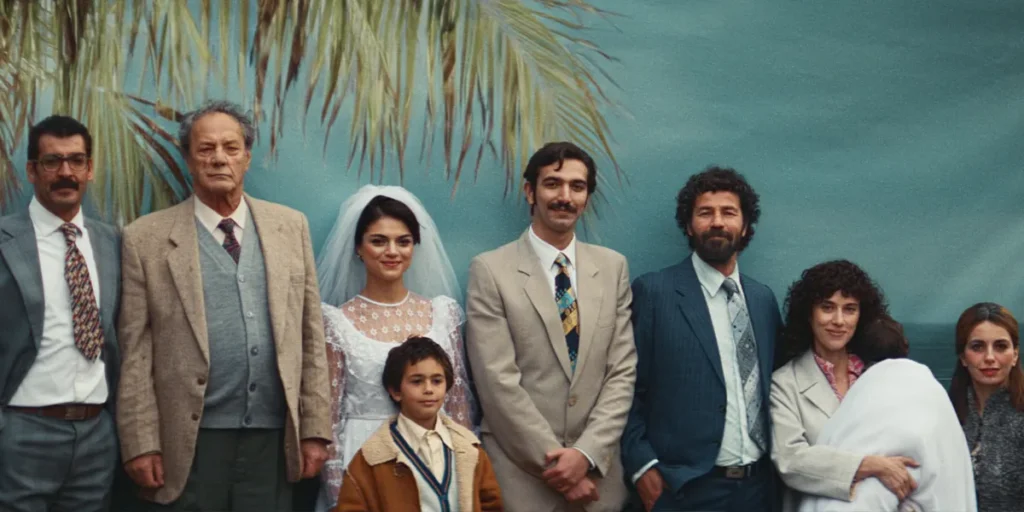
Cherien Dabis draws one of the most important movies of the year with All That’s Left of You, a difficult but necessary watch to bear witness to past and present atrocities.
Writer-Director: Cherien Dabis
Genre: Drama
Run Time: 145′
U.S. Release: January 9, 2026
U.K. Release: January 21 (limited) / February 6, 2026 (wide)
Where to Watch: In U.S. theaters and in U.K. and Irish cinemas
All That’s Left of You (Allly Baqi Mink) is one of the most challenging films you’ll watch all year. Even if writer/director Cherien Dabis stays within the language and confines of fiction filmmaking, this decade-spanning historical drama remains extremely powerful, showcasing the layers of the Israeli-Palestinian conflict through the eyes of a family that has lived through the Nakba and still carries the scars of its ancestors over seventy years later.
The film begins in media res as we observe two teenage boys chasing themselves through a settlement on the West Bank, only to be caught in the middle of a protest. One of them gets shot by Israeli forces. We don’t know who it is or what the significance of this scene entails, because Dabis, who also portrays Hanan, breaks the fourth wall to explain that this story will focus on who her son is.
The film then flashes back to 1948, in Jaffa, Palestine, where the story adopts a chronological turn, tracking the trauma of Hanan’s family left by the Nakba in 1978, 1988, and eventually in 2022. Dabis’ film is not entirely based on a true story, as the family depicted in the movie is fictionalized. However, the film’s experiences and stories are inspired by actual events and deeply steeped in history. The movie isn’t afraid to expose audiences to the physical violence Palestinians faced daily during their displacement and colonization of their land, demonstrating how many families did not want to fight back because they were genuinely afraid of the Israeli army’s military power, which was much stronger than Palestine’s own forces.
Any moment of respite – or peace – is quickly dissipated by almost routine bombings, about which a character will eventually say to someone, “We get used to it. It’s almost like Beethoven’s symphony.” The implications of this line are horrifying, but Dabis’s visualization is even more impactful. The agonizing screams of children as they only want to live a happy and peaceful life reverberate within your soul, as you sit there, helpless, asking yourself, “How did we let this happen?” and, more importantly, “How are we letting this happen?” The physical violence is one thing, though, because more critical issues are raised throughout All That’s Left of You’s 145-minute runtime.
One of them is the psychological violence that the Israeli army inflicts upon Palestinians daily, stripping them of their rights as human beings and consistently dehumanizing their very existence. This is illustrated in a scene where Hanan’s husband, Salim (Saleh Bakri), is apprehended by Israeli soldiers, who point a gun at him and his son, Noor (played by Sanad Alkabareti and Muhammed Abed Elrahman through the decades) and asks him to repeat lines, in front of Noor, such as “I am a jackass,” or “Your mother is a whore,” if he wants to live.
Salim acquiesces, afraid that he will be shot dead in front of Noor, and thinking he is protecting him, whilst his son thinks otherwise. This creates a fracture within the family that, unfortunately, the two will not recover from, with his young child going so far as to call him “a traitor,” before Dabis cuts to 1988, and the unthinkable occurs.
We then realize who the two teenage boys in the opening scene are, and it doesn’t take long for us to put two and two together. The rest of the movie showcases the administrative violence that Palestinians are subjected to, which was also a point illustrated in Kaouther Ben Hania’s Silver Lion-winning The Voice of Hind Rajab. The system in place will say it’s concerned about the rights of Palestinians, but will do everything in its power to stall as long as possible through needlessly complicated administrative channels just to get a green light to transport someone to a hospital in Israel, as the one in the West Bank does not have the capabilities to perform a CT scan.
I don’t even need to say anything else, because you know, deep down, that the length for approval takes far too much time and that the fate of the individual who needs to be transported to the hospital has already been sealed. What comes after, however, layers the conflict in ways I didn’t expect, showcasing Dabis’ humanity as a filmmaker and drawing textured, three-dimensional relationships that remind us that we carry the trauma of the Nakba within all of us. Many know Dabis for her directing work on television, such as in Hulu’s Ramy, Only Murders in the Building, and Netflix’s Ozark, but her feature filmmaking work deserves your attention and time.
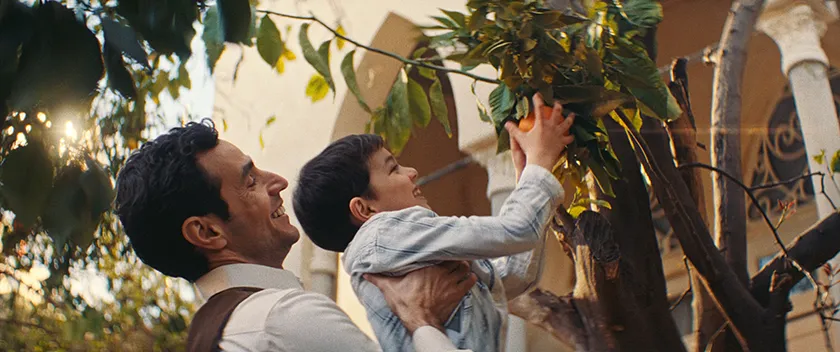
Her directing is patient and deeply human, ensuring each character is fully developed before tragedy strikes, changing the course of their lives forever. She’s also just as good an actor, portraying Hanan with as much depth as possible, especially during some of the film’s most tragic sequences. Instead of manipulating emotions and telling the audience how to feel at any given moment, Dabis prefers for the audience to sit with the characters, as they reckon with their individual choices, which, one way or another, will change their personal lives, and perhaps history, as a result.
There’s a moral, ethical, and religious conflict at the heart of Hanan and Salim’s most significant decision (which will not be revealed in this review), and whatever choice they make will impact them for the rest of their existence, even after they carry on, with the hope that things will get better, no matter if they will soon depart this earth.
The movie does get a little too long near its epilogue, set in the quasi-present day, as Hanan and Salim see Jaffa completely transformed, knowing who this land belongs to, but it doesn’t make All That’s Left of You less powerful. The final shot, in particular, is one to ruminate about, as Dabis leaves us with an image that perfectly demonstrates the family’s enduring resilience in the face of total oppression. It may not be the easiest movie to watch this year, but it’s one of the most necessary – and urgent – motion pictures made in this decade. I understand audience members who, because of the distressing, layered violence shown in this film, would want to avoid it entirely. However, if you’re able to see All That’s Left of You in an environment you feel comfortable in, you will never forget it.
All That’s Left of You: Movie Plot & Recap
Synopsis:
Spanning over seventy years, the film follows a Palestinian family through multiple time periods as their hometown of Jaffa is progressively colonized by Israeli forces. In the 1980s, the story takes a dark turn when the eldest son is caught in the middle of a protest, which will change the direction of the family’s lives forever.
Pros:
- A profoundly human story that draws textured, three-dimensional character relationships across multiple generations.
- Cherien Dabis is an equally powerful director, bringing to life Hanan with tangible emotional depth.
- The movie isn’t afraid to dismantle preconceptions on the Israeli-Palestinian conflict, going so far as to demonstrate the administrative violence the system has put in place against Palestinian families, depriving them of their rights as individual human beings.
Cons:
- Running at 145 minutes, the film can feel a bit long, especially during its present-day epilogue.
All That’s Left of You, Jordan’s Official Submission for Best International Feature Film at the 98th Academy Awards, will be released in U.S. theaters by Watermelon Pictures on January 9, 2026. The film will be released in UK & Irish cinemas by TAPE Collective on February 6, with a preview at the BFI Southbank on January 21.